

How to Mine Zcash: A Step-by-Step Guide

In 2026, Zcash mining is primarily an application-specific integrated circuit (ASIC) activity. Zcash uses Equihash, so miners need hardware built for that algorithm, a compatible wallet address, and — in most practical setups — a Zcash mining pool.
As of October 14, 2026, Zcash still targets a 75-second block interval, miners receive approximately 1.25 ZEC plus transaction fees for a mined block, and the network hashrate is about 26.59 GSol/s.
The practical answer to how to mine Zcash is therefore straightforward: select an Equihash ASIC, calculate the economics at the current network hashrate and ZEC price, choose a pool, configure its Stratum address in the miner, and set a compatible ZEC payout address.
Key Takeaways
- Zcash uses the Equihash (200,9) algorithm, so mining ZEC requires a compatible Equihash ASIC
- Zcash ASIC mining performance depends on the miner’s hashrate, network difficulty, electricity costs, and the terms of the selected pool
- To connect an ASIC to a pool, miners need to enter the Stratum server address, configure a worker, and add a compatible ZEC payout address
- Before starting, check whether ZEC mining is available in the relevant jurisdiction, review the pool settings, and verify the miner’s actual performance after connection
What Is Zcash Mining and How Equihash Differs From Other Crypto Mining
Zcash mining is the process of using computing hardware to perform Equihash calculations, compete for new blocks, and contribute to Zcash's Proof-of-Work consensus. Successful miners receive newly issued ZEC and transaction fees.
Zcash uses Equihash with the parameters N=200 and K=9, commonly written as Equihash (200,9), according to the Zcash reference implementation available in 2026. Equihash is based on the generalized birthday problem and was designed as a memory-oriented Proof-of-Work algorithm.
This makes Zcash mining different from Bitcoin mining. Bitcoin ASICs perform SHA-256 calculations and cannot simply be redirected to Zcash. Equihash hardware measures performance in solutions per second rather than Bitcoin's hashes per second.
To mine ZEC competitively, the device therefore needs to support Equihash (200,9).
Zcash ASIC Mining: Mining Hardware and Why GPUs Are Out
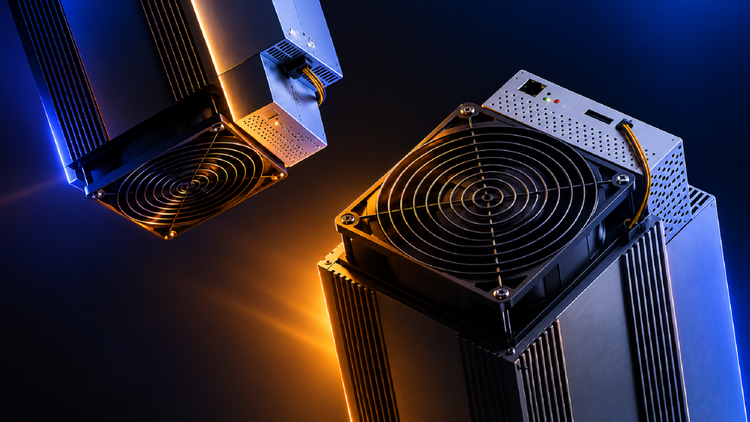
Zcash ASIC mining is the practical hardware standard in 2026 because specialized Equihash devices deliver far more computing power per unit of electricity than general-purpose GPUs. GPU mining remains technically possible, but it is generally not competitive with current ASIC hashrate.
The Antminer Z15 Pro provides a useful reference point. Bitmain specifications updated August 14, 2024, list a typical hashrate of 840 KSol/s, power consumption of 2,780 W at 25°C, and efficiency of 3.31 J/KSol.
That hardware consumes approximately 66.72 kWh over a full day when continuously operating at its listed 2.78 kW power level; this figure is calculated from Bitmain's August 14, 2024 specification.
ASIC selection should therefore focus on four variables: Equihash compatibility, hashrate, wall power, and efficiency. Older hardware can still produce valid shares, but whether it makes economic sense depends on its electricity requirement relative to the ZEC it can generate.
Is Zcash Mining Profitable in 2026?
It can be under some combinations of ZEC price, network hashrate, hardware efficiency, electricity cost, and pool terms, but there is no fixed answer that applies to every miner.
As of October 14, 2026, a live Zcash mining tracker reports network hashrate around 26.59 GSol/s, while another live pool data source shows ZEC near $1,214.80.
At the current 75-second target and miner reward of approximately 1.25 ZEC per block, the network-equivalent issuance to miners is about 1,440 ZEC per day before transaction fees, calculated from protocol and current reward data available on October 14, 2026.
Using a 26.59 GSol/s network hashrate, 1 MSol/s represents about 0.00376% of total network computing power and produces an estimated 0.0542 ZEC per day before pool effects and fees under the October 14, 2026 inputs.
At the same October 14, 2026 ZEC price of approximately $1,214.80, that theoretical output is about $65.79 in gross daily revenue per 1 MSol/s.
For a Z15 Pro at its specified 840 KSol/s, the same calculation gives roughly 0.0455 ZEC, or about $55.26 in gross daily revenue, using the October 14, 2026 network and price inputs and Bitmain's August 14, 2024 hashrate specification.
These are theoretical network-level estimates, not expected pool payouts. Pool luck, fees, rejected shares, downtime, difficulty changes, and ZEC price all affect actual Zcash mining profitability.
Zcash Mining Calculator: Electricity Cost, Network Hashrate, and Revenue per 1 MSol/s
A Zcash mining calculator estimates output by combining miner hashrate with network conditions and then subtracting operating costs. The most important inputs are hashrate, power consumption, electricity price, network hashrate or difficulty, ZEC price, and pool fee.
A simplified revenue model is:
Expected ZEC/day = miner hashrate ÷ network hashrate × blocks/day × miner reward
Using the October 14, 2026 network hashrate of 26.59 GSol/s, the current 75-second target, and the approximately 1.25 ZEC miner reward, 1 MSol/s produces an estimated 0.0542 ZEC per day before pool variance and fees.
Electricity can then be calculated as:
Electricity cost/day = power in kW × 24 hours × electricity rate
For the Z15 Pro, Bitmain's August 14, 2024 specification of 2,780 W translates to 66.72 kWh per day at continuous operation. If electricity is entered into the calculator at an illustrative $0.10/kWh, power alone would cost $6.67 per day; the $0.10 rate is a calculation assumption rather than a market electricity quote.
A useful calculator should be rerun rather than treated as a one-time forecast. A higher network hashrate reduces the expected share of issuance for the same ASIC, while a change in ZEC price changes the USD value of the same ZEC output.
Solo Mining vs. Zcash Mining Pool: PPLNS, PPS+, and FPPS
Solo mining gives one miner the full miner portion of a block when that miner finds it, while pool mining combines hashrate and distributes rewards according to a defined payment method. For most individual ASIC operators, a pool reduces the extreme timing variance associated with finding blocks alone.
At the October 14, 2026 network hashrate of 26.59 GSol/s, an 840 KSol/s Z15 Pro represents only about 0.00316% of total network hashrate, illustrating why solo block discovery is highly variable for a single machine.
Pool reward methods change how that variance is distributed:
- PPLNS (Pay Per Last N Shares) bases rewards on a window of submitted shares and the blocks actually found by the pool
- PPS+ combines share-based payouts with a variable component tied to blocks found by the pool
- FPPS pays based on submitted shares and includes a share of transaction fees in its calculation
The payment method matters because two pools can show similar headline fees but produce different short-term payout patterns.
How to Choose the Best Zcash Mining Pool: Pool Fee, Minimum Payout, and Servers
There is no universal best Zcash mining pool for every ASIC or location. A useful comparison starts with payout mechanics, effective fees, network connectivity, minimum payout rules, and the pool's share of Equihash hashrate.
When comparing an Equihash mining pool, check:
- Reward method and how pool luck affects payouts
- Current pool fee and any additional payout costs
- Minimum payout and payout schedule
- Servers available near the mining site
- Rejected and stale share rates
- Worker monitoring and hashrate statistics
- History of blocks found by the pool
- Support for the wallet address type you intend to use
Low fees alone do not identify the better option. A distant server that produces more rejected shares can offset part of the fee difference, while a very small PPLNS pool may show larger day-to-day variation because blocks are found less frequently.
How to Connect an ASIC to the Zcash Mining Pool at EMCD and Start Mining
The process of how to connect ASIC to the Zcash pool at EMCD is based on entering an Equihash Stratum endpoint and a worker name in the ASIC's pool settings. EMCD supports ZEC under PPLNS and provides dedicated Equihash connection settings.
To connect:
- Create an EMCD Mining account and identify the ASIC's IP address on the local network
- Open the ASIC's web interface and locate its Pool Settings or Miner Configuration section
- Enter the EMCD Stratum endpoint closest to the mining location
- Set the worker in the format username.workername.
- Leave the password field empty if the ASIC interface allows it
- Save the configuration and restart the device if required
- Check the Workers dashboard to confirm that shares and hashrate are reaching the pool
As of October 14, 2026, EMCD's ZEC setup guide lists Equihash TCP endpoints on port 8866 for its available regional servers. The same guide says a correctly configured ASIC should normally appear in the Workers section within about 20 minutes and may initially remain in the Unstable category during its first hour of synchronization.
Zcash Mining Payouts: Wallet Address and Transparent Address
Zcash mining payouts require a wallet address compatible with the pool's payout system.
Before adding an address:
- Confirm that the wallet or receiving service supports ZEC
- Confirm that the address is transparent and supported for mining payouts
- Copy the address rather than typing it manually
- Recheck the beginning and end of the address before confirming
- Review the payout transaction after it receives a transaction ID
EMCD's current guide also states that payouts are paused for 24 hours after a new payout address is added.
Where to Store and Exchange the ZEC You Mine
Mined ZEC can be sent to a compatible self-custody wallet, a provider-managed wallet, or a supported exchange account, provided the receiving address works with the pool's payout format. The address type should be checked before the first payout.
A transparent mining payout does not mean ZEC must remain transparent permanently. Zcash supports transfers between transparent and shielded address types, while Unified Addresses can contain different receiver types for compatible wallets.
If the plan is to convert or trade mined ZEC, check whether the receiving platform supports ZEC in the relevant jurisdiction and which address type it accepts. Privacy-focused assets can face different availability rules across services and jurisdictions, so wallet support and trading availability should be verified separately from mining-pool support.
FAQ
Can I Still Mine Zcash in 2026?
Yes, Zcash mining remains active in 2026 and the network continues to use Equihash Proof of Work. As of October 14, 2026, network hashrate is about 26.59 GSol/s and miners receive approximately 1.25 ZEC plus transaction fees per block. Specialized Equihash ASICs are the practical hardware standard.
Can I Mine Zcash With a GPU?
A GPU can technically perform Equihash calculations, but GPU Zcash mining is generally not competitive with modern ASIC hardware. Bitmain's Z15 Pro specification, updated August 14, 2024, lists 840 KSol/s at 2,780 W, while Zcash itself describes current mining as using specialized ASIC hardware.
How Much ZEC Can 1 MSol/s Mine per Day?
At the October 14, 2026 network hashrate of approximately 26.59 GSol/s, the current 75-second block target, and a miner reward of about 1.25 ZEC, 1 MSol/s corresponds to roughly 0.0542 ZEC per day before pool fees, pool luck, rejected shares, and downtime.
What Should I Check Before Joining a Zcash Mining Pool?
Check the reward model, current fee, minimum payout, server locations, pool hashrate, rejected-share rate, payout address requirements, and jurisdictional availability. A Zcash mining pool should also provide enough data to compare reported ASIC hashrate with accepted shares, because actual payouts depend on accepted work rather than only the hashrate displayed by the machine.
Does EMCD Support Zcash Mining?
Yes, EMCD Mining Pool supports ZEC through the PPLNS reward model.
Will Zcash Mining Economics Stay the Same After NU7?
Not necessarily, although the proposed block-spacing change is designed to preserve issuance over time. NU7 plans include a draft change from a 75-second to a 25-second block target, but it has not yet activated on mainnet. Mining calculations should therefore be updated if the final NU7 rules take effect.
Disclaimer: This material is provided for informational purposes only and does not constitute financial, legal, tax, or technical advice. Zcash mining results depend on factors including ZEC price, network hashrate, mining difficulty, hardware performance, electricity costs, pool fees, downtime, and jurisdictional restrictions. Calculations and hardware estimates are illustrative and may change as network conditions, market data, pool terms, and equipment specifications change.
without growing costs
cryptocurrencies