


Why Pool Hashrate Drops and How to Reduce Stale Shares
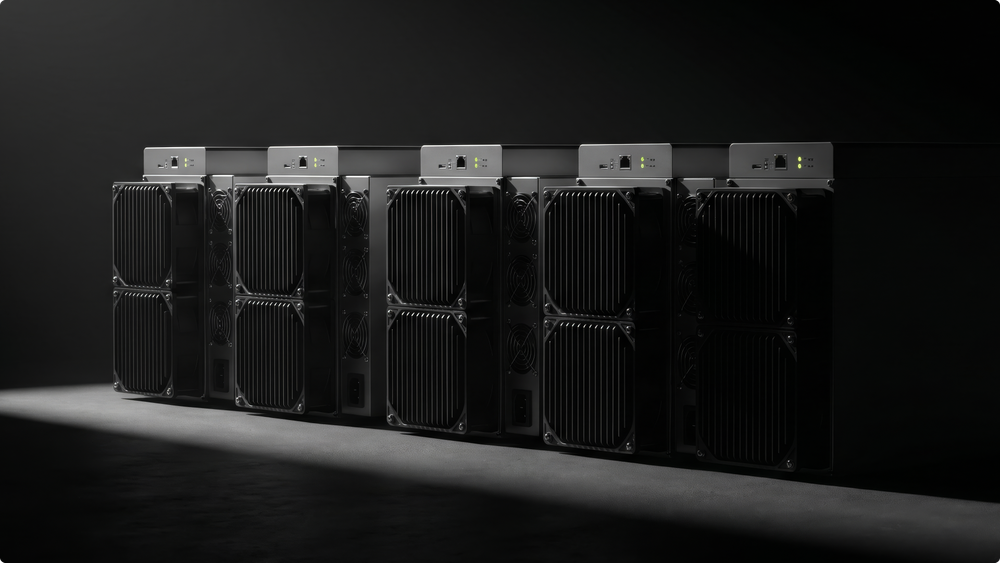

Mining operators often encounter a situation where the hardware appears to be running normally, yet earnings begin to decline. The mining pool dashboard shows lower pool hashrate, more errors, and a growing percentage of rejected shares. This does not necessarily indicate an Application-Specific Integrated Circuit (ASIC) failure. In most cases, the cause is related to network latency, configuration issues, or the distance to the pool server.
Understanding how mining pool statistics are calculated, why rejected shares occur, and what stale shares are is essential for evaluating mining performance accurately and minimizing avoidable losses.
Key Takeaways
- A drop in pool hashrate is not always caused by hardware issues. High latency to the mining pool server, an unstable internet connection, or synchronization problems are more common causes. Platforms such as EMCD recommend connecting to the nearest available server
- Differences between the local hashrate displayed on the mining device and the hashrate reported by the mining pool are expected. ASIC hardware displays an instantaneous hashrate, while the mining pool reports an averaged value. Small variations are normal, but a sustained decline requires investigation
- Rejected shares and stale shares reduce mining revenue. Neither type of share qualifies for a payout because rejected shares are invalid, while stale shares arrive after they are no longer usable
- Network latency is the primary factor affecting stale shares. The higher the ping, the greater the chance that a valid share becomes outdated before reaching the mining pool. This issue becomes more noticeable when connecting to remote mining pool servers
- Reducing the percentage of rejected shares requires a stable network connection, an appropriately located mining pool server, reliable hardware configuration, and consistent connection quality
Why Pool Hashrate Is Lower Than the Device Hashrate
An ASIC displays the local hashrate, which reflects the device's instantaneous computational performance. Because mining calculations fluctuate continuously, this value can change from one second to the next.
A mining pool calculates hashrate differently:
- Averaged data is collected over a defined period, usually 10–60 minutes
- Only accepted shares are counted, while rejected shares and stale shares are excluded
As a result, it is normal for the local hashrate to be higher than the reported pool hashrate. However, if the difference consistently exceeds 10–15%, the discrepancy should be investigated.
Another important metric is the effective rate, which represents the computational work credited by the mining pool. Payouts are based on the effective rate rather than the local hashrate. As of 2026, many mining pools use Pay Per Share Plus (PPS+) and Full Pay Per Share (FPPS) reward models.
What Rejected Shares and Stale Shares Mean, and Why They Are Not Paid
In cryptocurrency mining, every completed calculation submitted to the mining pool is called a share. The mining pool validates each submitted share and either accepts or rejects it.
The two primary categories of share-related errors are:
- Rejected shares are invalid shares that fail the mining pool's validation process. Common causes include:
- Calculation errors caused by excessive overclocking, overheating, or hardware faults
- An incorrect nonce or extranonce, values used to generate unique mining attempts
- Errors in the Stratum mining protocol, the communication standard between mining devices and mining pools
- Connection interruptions or network failures
- Stale shares are valid shares that arrive too late. Although the calculation itself is correct, another miner has already solved the block before the share reaches the mining pool. Stale shares result from network latency, high ping, connection jitter (variations in network delay), or processing delays on either the mining device or the mining pool server. Mining difficulty does not directly cause stale shares
Neither type of share receives a payout:
- Rejected shares fail the mining pool's validation requirements
- Stale shares lose their value because they are submitted after the block has already been accepted
These are distinct categories of errors and should not be treated as the same issue.
- Rejected shares usually indicate hardware problems or incorrect configuration
- Stale shares are primarily associated with network latency and connection quality
If the combined error rate exceeds 1%, further diagnostics are recommended. In a stable mining environment, the following benchmarks are considered healthy:
- Rejected shares: below 0.5%
- Stale shares: below 1%
Once either metric reaches 1–2%, the impact on mining revenue becomes noticeable.
A consistently high percentage of rejected shares reduces mining profitability even when the reported hashrate remains high.
How Ping Affects Errors and Pool Hashrate
Network latency is the most common reason for a decline in pool hashrate.
The process works as follows:
- The ASIC finds a valid share
- The share is transmitted to the mining pool server
- High network latency delays the transmission
- The mining pool has already switched to the next block
- The submitted share becomes stale
For example, if mining hardware is located far from the selected mining pool server, such as in another country, ping can increase to 150–300 ms. At that level of latency, the percentage of stale shares rises significantly.
Several factors influence network latency:
- Distance to the mining pool server
- Internet connection quality
- Network congestion
- Traffic routing and regional network restrictions
When the effective rate declines while the percentage of stale shares increases, network conditions are almost always the underlying cause.
Another Important Cause: Hardware Errors (HW Errors)
Another critical factor that is frequently overlooked is the number of hardware errors (HW errors).
These errors can result from:
- Excessive ASIC overclocking
- Overheating
- An unstable Power Supply Unit (PSU)
- Hardware wear over time
As hardware errors increase, they can lead to:
- More invalid shares, resulting in a higher percentage of rejected shares
- A lower effective rate
- Reduced mining profitability
An increasing HW error count points to a hardware issue rather than a network problem.
To reduce rejected and stale shares:
- Connect to the nearest mining pool server
- Test alternative server endpoints
- Use a stable internet connection with minimal latency fluctuations
- Monitor hardware temperatures and overall device health
- Reduce aggressive overclocking settings
- Check the power supply for stability
- If necessary, test a Virtual Private Network (VPN) or proxy with lower latency, verifying performance before permanent deployment
Conclusion
A decline in mining revenue accompanied by lower pool hashrate should not automatically be attributed to hardware failure. In many cases, the underlying cause is network-related, including high ping, an unstable internet connection, or an inefficient server location.
Hardware health is equally important. An increasing number of hardware errors (HW errors) reduces mining efficiency by generating more invalid shares and lowering the effective rate.
Monitoring rejected shares, stale shares, the effective rate, and connection stability provides a more accurate view of mining performance than local hashrate alone. Optimizing these factors improves mining efficiency, increases payout consistency, and minimizes avoidable revenue loss, allowing mining operations to perform closer to their full potential.
FAQ
Why Is the Local Hashrate Higher Than the Pool Hashrate?
A mining pool calculates hashrate using only accepted shares and averages the results over a defined time period. A small difference between the local hashrate and the pool hashrate is expected and does not indicate a problem
What Percentage of Rejected Shares Is Considered Acceptable?
A rejected share rate below 1% is considered acceptable, while maintaining it below 0.5% is a healthy target for stable mining performance
Why Did Mining Revenue Drop Suddenly?
The most common causes are an increase in stale shares, rejected shares, or hardware errors (HW errors). High network latency can also reduce the effective rate and lower payouts
Is It Possible to Eliminate Stale Shares Completely?
No. Some stale shares are unavoidable in any distributed mining network. However, connecting to the nearest mining pool server and minimizing network latency can reduce the stale share rate to a very low level
Which Metric Matters More: Hashrate or Effective Rate?
For profitability, the effective rate is the more important metric because it reflects the computational work recognized and credited by the mining pool. The local hashrate measures device performance but does not directly determine mining rewards
without growing costs
cryptocurrencies