

How to Mine DASH
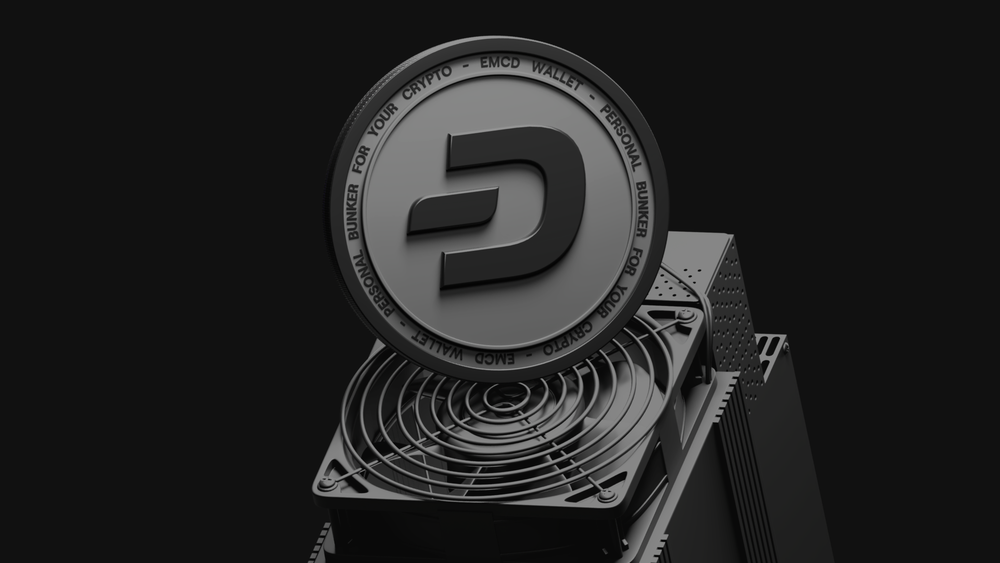

Mining Dash is a popular choice for those seeking a reliable, time-tested cryptocurrency. Thanks to the X11 algorithm, high transaction speeds, and a well-developed ecosystem, Dash continues to hold a strong position in the market. If you’re looking to learn how to mine Dash, it’s important to start with the basics — what equipment you need, how to connect to a mining pool, and how to properly set up your system for stable operation. This article covers everything from hardware selection to pool setup and mining optimization.
Key Takeaways
- Dash mines on the X11 algorithm and is ASIC-only today — always verify that a device is actually built for X11 before buying, because an ASIC designed for a different algorithm cannot mine Dash at all
- Current X11 hardware examples are the Bitmain Antminer D7 and D9 class of machines — whether any of them pays off depends on the live Dash price, network difficulty, and your electricity rate, so always run your numbers through an up-to-date calculator
- Dash’s optional privacy feature affects how some exchanges and jurisdictions treat the coin — check the rules that apply to you before mining, holding, or cashing out Dash
- Mining reward is never a fixed number — electricity cost and network difficulty dominate the outcome, and in most countries mining income is taxable
What Is Dash and How Does It Differ from Other Cryptocurrencies?
Dash is a decentralized cryptocurrency based on the Bitcoin code but with several key improvements. Its standout features include high transaction speed and the Masternode system, which powers InstantSend and the optional CoinJoin privacy feature. It uses the X11 algorithm, unlike Bitcoin’s SHA-256, which significantly reduces power consumption and adds to system stability.
Note on privacy and regulation: Dash Core includes CoinJoin, an optional feature designed to enhance transaction privacy by mixing funds without transferring their custody to a third party. It is not applied automatically to every DASH transaction.
The regulatory and operational treatment of DASH varies by jurisdiction and platform. Some exchanges may restrict availability, while others accept standard DASH transfers but reject deposits created through CoinJoin. Before mining, holding, or transferring DASH, check local requirements and review your preferred exchange’s current listing, deposit, and withdrawal policies.
Why Should You Mine Dash?
Mining Dash remains a viable option due to its strong market position and the availability of suitable mining hardware. The network has an established ecosystem, and major mining pools support Dash with regular payouts. Moreover, Dash is widely listed on exchanges and supported by many popular wallets, making storage convenient.
What Equipment Do You Need to Mine DASH?
As of now, Dash can only be mined using modern ASIC devices. Mining with CPUs or GPUs is no longer viable due to insufficient computing power for the X11 algorithm.
Always verify the algorithm before buying: an ASIC is built for exactly one algorithm, and a device designed for anything other than X11 cannot mine Dash at all, regardless of its hashrate.
X11 ASIC models:
- Bitmain Antminer D9 (1.77 TH/s, ~2839 W, released 2023) — the current flagship X11 machine
- Bitmain Antminer D7 (1.286 TH/s) — the previous-generation production model
- Bitmain Antminer D3 — a legacy model, long outdated and not viable at today’s network difficulty and electricity costs
When choosing an ASIC, you must consider not just the purchase price but also power efficiency. The lower the energy consumption per hash rate, the higher your potential margin.
Setting Up Mining Software for DASH
Once you’ve bought your ASIC miner:
- connect it to a power source and internet
- use an IP scanner to find the miner’s address on your local network
- access its control panel through your browser
In the settings panel, enter your mining pool info: server address (e.g., stratum+tcp://gate.emcd.io:8888), worker name (e.g., username.device), and a password (can be any string).
EMCD Mining Pool supports DASH. Once you save your settings, the miner will automatically begin mining Dash.
Profitability Calculation
Your Dash mining results depend on:
- ASIC model and hash rate
- Power costs (especially with 24/7 operations)
- Current Dash price
- Pool fees
There is no fixed daily income figure for Dash mining: revenue moves with the Dash price and network difficulty, and your net result depends on your electricity rate. Run your exact ASIC model through a live profitability calculator with today’s numbers, and remember that the payback period is not guaranteed — it stretches or shrinks as conditions change.
Common Mistakes and Issues
New miners often repeat costly mistakes:
- entering incorrect pool or worker details prevents mining from starting
- using outdated ASICs that can’t handle current network difficulty
- buying an ASIC without verifying its algorithm — a non-X11 device cannot mine Dash
- poor ventilation leads to overheating and hardware failure
- ignoring electricity costs can wipe out your profits
- storing coins on exchanges without two-factor authentication (2FA) exposes you to hacks
Wallets and Safe Storage for Dash
For secure storage, consider:
- The project's official wallet client — check Dash's official site for the current recommended download.
- A general-purpose software wallet with solid multi-coin support for everyday use.
- A hardware wallet for maximum protection against online threats, especially for larger holdings.
Enable 2FA, make regular backups, and avoid storing large sums on exchanges to minimize risk.
Dash Mining in 2026: Outlook and Market Position
Despite growing competition and declining altcoin hype, Dash remains resilient. Key reasons:
- active developer and user community
- regular updates and fast transactions
- optional privacy via CoinJoin (formerly PrivateSend) — keeping in mind the jurisdictional caveats above
In 2026, Dash remains an established Proof-of-Work cryptocurrency secured by the X11 algorithm and specialized ASIC hardware. Miners can connect to pools including EMCD, although fees, payout models, minimum thresholds, and regional availability should be compared before choosing a provider.
Dash mining conditions can change quickly as the coin’s price, network difficulty, total hashrate, pool terms, and electricity costs fluctuate. Profitability should therefore be estimated using current network data and the specifications of the individual ASIC rather than historical price or revenue figures.
Dash also continues to develop its payment use case through wallet, merchant, bill-payment, and payment-processor integrations. For example, its integration with AEON provides access to a broader merchant network in several markets, with payments converted for settlement in local currency. Such integrations expand where DASH may be spent, but they should not be treated as evidence of widespread direct merchant adoption or guaranteed demand for the coin.
FAQ
What’s the best ASIC for mining Dash?
Among X11 machines, the Bitmain Antminer D9 (1.77 TH/s) is the current flagship, with the D7 as the previous-generation option. Compare efficiency (J/GH) and price through a live calculator before buying, and always confirm the device is built for X11.
Is mining Dash still profitable in 2026?
It can be — with a modern X11 ASIC and access to cheap electricity — but it is not guaranteed. Dash’s price is volatile and network difficulty changes, so check current numbers through a live calculator before committing.
Do I need to register in a pool?
Depends on the pool. Some (like EMCD) require an account; others allow anonymous mining using just the worker name. Registration offers more control and monitoring.
How much power does a Dash ASIC consume?
Modern X11 ASICs typically consume around 2500–3000 W — for example, the Antminer D9 draws about 2839 W (roughly 68 kWh per day of continuous operation), so power cost is critical to your net result.
Can I mine Dash with multiple ASICs?
Yes. Mining with multiple devices increases your total hashrate and revenue — and proportionally increases power draw and cooling requirements. Ensure stable internet, power, and cooling.
How often do pools pay out?
Payout frequency depends on the pool. Most pay automatically when a minimum threshold (0.01–0.1 Dash) is reached. Some allow you to set the threshold manually.
Do I need to pay taxes on mining income?
Yes, in most countries, mining income is taxable. Keep records of income and expenses to comply with local tax laws.
without growing costs
cryptocurrencies