

GPU Mining Is Dead? How to Make Money Renting Out Your Graphics Cards for AI in 2026

GPU mining did not die.
The easy version did.
Before Ethereum moved to Proof-of-Stake, a decent gaming GPU could be pointed at ETH and treated like a small money machine. That era ended on September 15, 2022, when Ethereum completed The Merge and officially replaced Proof-of-Work with Proof-of-Stake on the Ethereum mainnet.
That did not make graphics cards useless.
It changed the question.
GPU owners are not asking, ‘Can I still mine Ethereum?’
They already know the answer.
They are asking something far more practical:
Can this graphics card generate more value than it costs to run?
This article is not about guaranteed GPU revenue. It is about checking whether your graphics card is better off than sitting idle.
For many home miners, the old GPU mining story is no longer the easy payback story it was. Electricity is expensive. The remaining GPU-mineable coins are a lot more competitive. Old cards are not worth the power they consume. At typical household electricity rates, many home rigs are not profitable.
But the hardware still has value.
A GPU is not just a mining device. It is a compute device. The same parallel processing that once mined ETH can now support AI inference, image generation, model training, 3D rendering, video workflows and decentralized compute networks.
That’s the real story of GPU mining profitability in 2026.
Not ‘mining is dead.’
More like: the money moved.
Key takeaways
- GPU mining profitability in 2026 hinges mainly on two variables: electricity cost and hardware efficiency.
- Ethereum mining on GPUs is done, but some Proof-of-Work coins still use GPUs, such as Ethereum Classic, Ravencoin, Alephium and Kaspa.
- Kaspa should be treated as its own setup topic. For practical steps, EMCD has a separate guide on how to mine Kaspa.
- At typical household electricity rates, most home GPU mining rigs need careful calculation before they make sense.
- AI compute rental and rendering have become serious alternatives for owners of powerful GPUs.
- Render Network and io.net are two examples of decentralized GPU networks, not the only options.
- RTX 4070, RTX 4080 and RTX 4090-class cards are more relevant for AI and rendering than older, power-hungry mining cards.
- RTX 4070 may be one of the more balanced options for performance per watt, but profitability still depends on utilization, electricity, platform demand and hardware cost.
- The most realistic way for most GPU owners is hybrid: mine when the math works, rent compute when demand is high, and quit when electricity kills the margin.
Is GPU mining still profitable in 2026?
Under some market conditions.
That’s the honest answer.
GPU mining is not dead in the sense that nobody can make money from it. But the home-mining gold rush is over. The easy Ethereum-era version is gone.
The better question is not, ‘Is GPU mining dead?’
The better question is:
Where can this GPU create more value than it costs to run?
That answer depends on five things:
| Variable | Why it matters |
| Electricity cost | The main expense that runs every hour the GPU is online |
| Hardware efficiency | Newer cards may deliver more compute per watt than older cards |
| Utilization | AI rental only works when the GPU actually gets jobs |
| Coin or workload demand | Mining and AI compute both depend on market demand |
| Hardware wear | Heat, fan stress, and uptime affect useful life and resale value |
The simple formula is:
Net result = gross mining or rental payout minus electricity, cooling, platform fees, downtime, maintenance and hardware wear.
If the calculation only works when the GPU is busy 24/7, the model is probably too optimistic.
What should GPU owners do in 2026?
There are three realistic paths.
| Your situation | Most realistic option |
| You own efficient RTX 40-series GPUs | Test AI rental, rendering and selective mining |
| You own old, power-hungry GPUs | Run the numbers carefully. Many setups may not justify the power cost |
| You pay typical household electricity rates | Be cautious. Mining often struggles unless the card is efficient |
| You have cheap power and tuned cards | A hybrid mining plus compute rental model might be worth testing |
| You are buying GPUs only for altcoin mining | High risk unless the payback model is very clear |
| You already own idle GPUs | Test mining, AI rental or rendering before selling the hardware |
This is the core decision framework.
Mine when the coin math works.
Rent compute when AI or rendering demand is strong.
Turn the rig off when both options lose to the power bill.
That last option matters. Sometimes the best move is not mining. It is not renting. It is not running.
It is stopping.
What changed when Ethereum moved to Proof-of-Stake
Ethereum used to be the center of GPU mining.
That mattered because ETH had liquidity, demand, tooling and a huge mining ecosystem. When Ethereum left Proof-of-Work, GPU miners did not get a new Ethereum-sized replacement. Hashrate moved to smaller networks, competition rose and margins fell.
A post-Merge study of Proof-of-Work networks revealed that GPUs and specialized mining hardware used on Ethereum had stopped being profitable on the Ethereum mainnet, and miners had to repurpose their hardware or move to other PoW systems. The study also found a sharp drop in profitability after The Merge.
The used GPU market changed too. Graphics card prices fell sharply after The Merge, and there were reports of steep drops in some markets, with a drop of as much as 60%. The actual drop varied by model, geography, timing and resale demand.
The price drop was painful for people who bought cards near the top.
But it also brought about a second life for GPU hardware. If you already have the card, the question is no longer, ‘Can I recover the 2021 purchase price?’
It is:
Can this card still produce enough value to justify electricity, heat, maintenance and time?
That is where profitability becomes more honest.
GPU mining profitability 2026: electricity comes first
GPU mining profitability starts with electricity.
Not coin price.
Not hype.
Not a screenshot from a calculator.
Electricity is the cost that hits every hour the rig is on. If your local power rate is high, most home rigs struggle, especially if they are using older cards with weak performance per watt.
You may encounter rough thresholds of, say, $0.08 to $0.10 per kWh discussed in mining communities, but they shouldn’t be treated as universal rules. The real threshold depends on your card, algorithm, coin price, difficulty, cooling and whether you already own the hardware.
A better rule:
If your electricity is close to typical household pricing, assume GPU mining is hard until your own numbers show otherwise.
If you can access cheap power, efficient cards and good tuning, GPU mining can still work in limited windows.
If you have expensive power and old cards, it is better to turn off the rig and rent compute only when demand justifies it, if at all.
Hardware efficiency is more important than raw power
A GPU that looks powerful on paper can still be a really bad mining card if it wastes electricity.
Older cards can still run. That doesn't mean that they should.
A card that provides good hashrate but draws too much power may lose to a newer card that produces less raw output and uses less electricity.
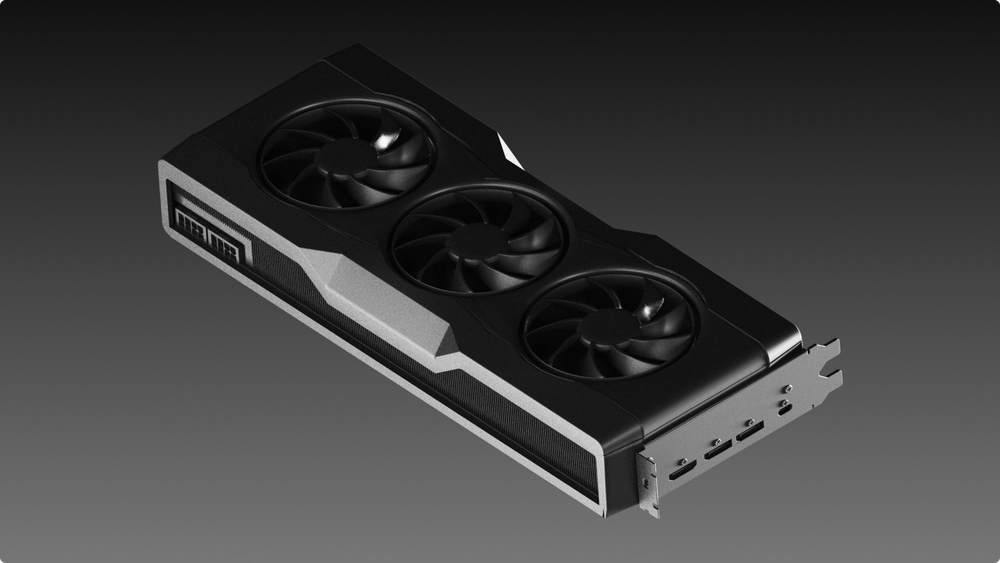
In a lot of 2026 setup scenarios, RTX 4070, RTX 4080 and RTX 4090-class cards can be more relevant than the old mining-era GPUs, since they are more likely to be used for AI rental and rendering than just coin mining.
The RTX 4070 is often referred to as a good balance of performance, power consumption, availability and resale profile. That is different from saying it’s ‘the best’ card. There is no universal best GPU for mining or AI rental. There is only the card that suits your electricity rate, workload, platform demand and payback target.
Cooling is also important. EMCD’s GPU lifespan guide tells us that long GPU life is dependent on temperature control and maintenance, as well as preventing excessive heat stress.
That means the profitability question is not only:
How much can this GPU make today?
It is also:
How long can it run without damaging its own economics?
What can you still mine with GPUs?
GPU mining is still possible in 2026, but it is narrower and more situational.
Some popular GPU-mined or GPU-relevant coins are:
Ethereum Classic (ETC), Ravencoin (RVN), Alephium (ALPH), Kaspa (KAS), although ASIC competition has changed the picture, and smaller Proof-of-Work coins with lower liquidity and higher risk.
This is not a setup guide. For example, Kaspa needs its own walkthrough because hardware, software, pool settings and ASIC competition all affect the real setup. EMCD covers that separately in its guide on how to mine Kaspa.
The bigger question is profitability.
A coin can be mined and still not be worth mining.
Before running a GPU rig, check: power draw at the wall, not just software readings; local electricity rate; coin price; network difficulty; pool fees; exchange or liquidity access; heat and cooling cost; hardware age; resale value; uptime and maintenance.
This is where many home miners get burned. They look at daily coin output but ignore the power bill.
A rig can be technically mining but financially bleeding at the same time.
Renting out GPUs for AI: the new alternative
AI transformed the GPU conversation.
Modern AI workloads need parallel compute. Image generation, video rendering, inference, fine-tuning, data processing and small-model training all depend on GPU resources. That demand has created a new route for GPU owners: to rent compute instead of mining coins.
This is not exactly mining. But for the hardware owner, the financial question is familiar:
Can my GPU turn electricity into revenue?
The difference is what is driving demand.
In mining, revenue depends on block rewards, coin price, network difficulty and pool economics.
In AI rental, revenue depends on compute demand, platform rules, job availability, GPU quality, uptime, bandwidth and whether your card matches what customers need.
That can be attractive because it reduces dependence on one coin’s price. But it also introduces new risks. Your GPU may not be selected for jobs. Platform terms can change. Demand may be uneven. Some networks may favor data-center-grade GPUs over consumer cards. Payments may be token-based and volatile.
In other words: AI rental is not free money.
It is another compute market.
But it is a real alternative.
Render Network and io.net: renting GPUs for AI and rendering
Render Network and io.net are two examples of the broader shift from mining-only GPUs to distributed compute.
Render Network describes itself as a high-performance distributed GPU rendering network that creates a compute marketplace between GPU providers and GPU requestors. Its node-operator materials also describe contributing GPU power for machine learning and AI workflows.
For GPU owners, the practical point is simple: Render creates another possible buyer for GPU time. If the network is busy and your hardware is suitable, rendering or compute jobs may compete with mining some altcoins. If the network is quiet, the rig may sit underused.
Utilization is everything.
io.net is another example of the same broader shift. Its documentation states that teams can scale workloads across a GPU network, with support for preprocessing, distributed training, hyperparameter tuning, reinforcement learning and model serving, with an emphasis on AI and machine-learning workloads.
That matters because AI workloads are not all the same.
Some need a single powerful GPU. Some need many GPUs working together. Some need fast memory. Some need uptime more than raw speed. Some need enterprise-grade reliability.
For GPU owners, that means not every card will be equally useful. A gaming GPU that is fine for mining may not be ideal for every AI workload. VRAM, bandwidth, drivers, stability and platform requirements matter.
So yes, Render Network, io.net and similar networks can create new demand for GPU owners.
But the same rule applies: do not assume revenue. Check requirements, expected utilization, power cost, token risk, platform fees and payout mechanics.
Mining vs AI rental: which is more profitable?
There is no universal answer.
But there is a useful comparison.
| Option | What drives revenue | Main advantage | Main risk |
| GPU mining | Coin price, difficulty, block rewards, power cost | Simple if you already know mining | Thin margins and high electricity sensitivity |
| AI rental | Compute demand, GPU quality, platform utilization | Less tied to one coin’s mining economics | Uneven demand, platform risk, token volatility |
| Rendering networks | Creative workload demand, GPU availability | Useful for powerful GPUs and visual workloads | Job availability and verification rules |
| Hybrid model | Switching between mining, AI rental and idle time | Better use of hardware | More management and monitoring |
The hybrid model is the most realistic model.
Mine when the coin math works.
Rent compute when AI or rendering demand is strong.
Turn off the rig when both options are not going to pay the power bill.
That’s when GPU owners have to stop thinking like one-coin miners and start thinking like compute operators.
GPU mining profitability 2026: the hybrid model
For many GPU owners, the 2026 strategy is not one lane.
It is a switching strategy.
A miner might run ETC or Ravencoin when mining profitability is temporarily favorable, review Kaspa only if hardware and efficiency make sense, send as many GPUs as possible to Render or io.net when compute demand is strong, and keep the rig idle when electricity turns the math negative.
That is not as exciting as the old Ethereum era.
It is also more honest.
The smartest GPU owners in 2026 are not the ones chasing every coin or every AI token. They are the ones treating GPUs like flexible compute assets.
That means asking:
What is the best use of this card this week?
Is mining profitable after electricity?
Is AI rental demand available?
Is the card efficient enough for the workload?
Is the payout liquid enough to matter?
Does the extra heat create cooling cost?
Am I wearing down hardware for a tiny return?
This is also the place where tuning matters. EMCD’s Nvidia and AMD GPU settings guide covers mining hardware basics, power-limit logic, temperature monitoring and stability checks. Tuning is not guaranteed to make money, but poor tuning can destroy it immediately.
Should you buy a GPU for mining or AI rental in 2026?
The answer is quite blunt.
If you already own GPUs, it may be a good idea to test a hybrid setup.
If you are buying new cards only to mine altcoins, be careful.
The market is no longer forgiving. You need cheap electricity, efficient hardware, a realistic payback model and a plan for what happens when profitability drops.
In some cases, it would make sense to buy GPUs for AI rental, but that is not automatic. You need to understand platform demand, hardware requirements, uptime expectations, token or payment risk and resale value.
A new GPU is not a revenue plan.
It is a cost.
It is the utilization that generates the revenue plan.
Before buying hardware, think through three scenarios: mining-only revenue after electricity, AI rental or rendering utilization after platform costs, and hybrid use with idle periods included.
If the model only works when the rig is busy all the time, it may not be a model.
It may be wishful thinking.
For hardware comparison context, EMCD’s GPU mining guide can help readers understand how cards differ by hashrate, power use and mining use case before making assumptions about payback.
So is GPU mining dead?
No.
But the old model is.
Ethereum moved to Proof-of-Stake and GPU owners had to stop thinking like one-coin miners and start thinking like compute operators.
In 2026, a graphics card can still be useful. It can mine the remaining Proof-of-Work coins. It can support rendering. It can be rented into AI workloads. It can also sit idle when electricity makes every option irrational.
The two things that determine everything are still the same: electricity cost and hardware efficiency.
Everything else is secondary.
For GPU owners, the winning strategy is not nostalgia for Ethereum mining. It is repurposing. The graphics card is no longer just a mining tool. It is a piece of compute infrastructure.
And compute still has buyers.
Bottom line
GPU mining is not dead.
But easy GPU mining is.
The Ethereum era rewarded a simple setup: buy cards, point them at ETH, wait for payouts. The 2026 market rewards a different mindset: calculate first, run only when math works and treat the GPU as flexible compute.
That may mean mining ETC, Ravencoin, Alephium or Kaspa when economics make sense. It might mean testing Render Network, io.net or another compute marketplace when demand is strong. It might even mean turning off the rig when electricity wins.
That’s not a bad end to GPU mining.
It is a much more mature market.
Mine when it works.
Rent when demand is present.
Stop when the power bill says no.
FAQ
Is GPU mining dead in 2026?
No, but the old Ethereum-style GPU mining model is dead. Some Proof-of-Work coins still support GPU mining, but profitability is much more limited and depends heavily on cheap electricity, hardware efficiency, coin price and network difficulty.
Is GPU mining still profitable?
GPU mining can be profitable in specific cases, especially with cheap electricity and efficient hardware. At typical household electricity rates, many home rigs struggle to stay profitable. Always calculate power cost at the wall before assuming profitability.
What coins can still be mined with GPUs?
Common options include Ethereum Classic, Ravencoin, Alephium and Kaspa. Kaspa is a separate topic because ASIC competition has changed the profitability picture. For setup details, EMCD has a separate guide on how to mine Kaspa.
What happened to GPU mining after Ethereum moved to Proof-of-Stake?
Ethereum completed The Merge on September 15, 2022, replacing Proof-of-Work with Proof-of-Stake. That ended GPU mining on Ethereum mainnet and pushed miners toward other Proof-of-Work coins or alternative uses for their hardware.
Did GPU prices fall after The Merge?
Yes. GPU prices dropped sharply after the Ethereum mining market changed, though the size of the drop varied by model and market. Some reports described declines close to 60%, while specific cards and used-market conditions moved differently.
What is Render Network?
Render Network is a distributed GPU rendering network that creates a compute marketplace between GPU providers and GPU requestors. It gives GPU owners a way to offer compute resources for rendering and related workloads.
What is io.net?
io.net is a decentralized GPU compute network focused on AI and machine-learning workloads. Its documentation says it supports workloads such as preprocessing, distributed training, hyperparameter tuning, reinforcement learning and model serving.
Can I make money renting out my GPU for AI?
Possibly, but it depends on your GPU, electricity cost, platform demand, job availability, payout rules and token or payment risk. AI rental can be a useful alternative to mining, but it is not guaranteed revenue.
Which GPUs are useful for AI rental and rendering?
RTX 4070, RTX 4080 and RTX 4090-class cards are often more relevant than older mining cards because they offer stronger performance and better efficiency for modern workloads. RTX 4070 can be one balanced performance-per-watt option, but there is no universal best card.
Is it worth buying GPUs for mining in 2026?
Only with a clear payback model. If you already own the GPUs, testing mining, AI rental or a hybrid setup may make sense. Buying new GPUs only for altcoin mining is risky unless electricity is cheap, utilization is realistic, and the hardware can remain useful outside mining.
What is the hybrid model?
The hybrid model means using GPUs across several revenue paths: mining altcoins when the math works, renting compute for AI or rendering when demand is strong, and staying offline when electricity makes running the hardware unprofitable.
What decides GPU mining profitability in 2026?
The biggest variables are electricity cost and hardware efficiency. Coin price, difficulty, cooling, fees, uptime, resale value and platform demand also matter.
without growing costs
cryptocurrencies