How to Protect Crypto Assets: 5 Wallet Security Rules
Blockchain is often described as the gold standard of security — a digital stronghold where everything’s encrypted and every action is irreversible and tamper-proof. That’s why millions believe: if something valuable needs storing, the safest place is always “on the blockchain.”.
But reality hits harder. Every week, people lose hundreds of thousands of dollars. In 2025 alone, over $2.17 billion has already been stolen — more than in all of 2024. What’s worse is that hackers are now targeting not platforms, but regular crypto wallets. According to recent data, 23.35% of all stolen funds this year came from personal users. That’s nearly one out of every four dollars gone straight from someone’s wallet — not an exchange.
And most of the time, the issue isn’t faulty code. It’s because of bad habits. Clicking too fast. Saving passwords in screenshots. Trusting the wrong app.
This article covers 5 simple but crucial rules to keep a crypto wallet safe and out of the wrong hands.
What Is a Crypto Wallet (And Why the Type Matters)
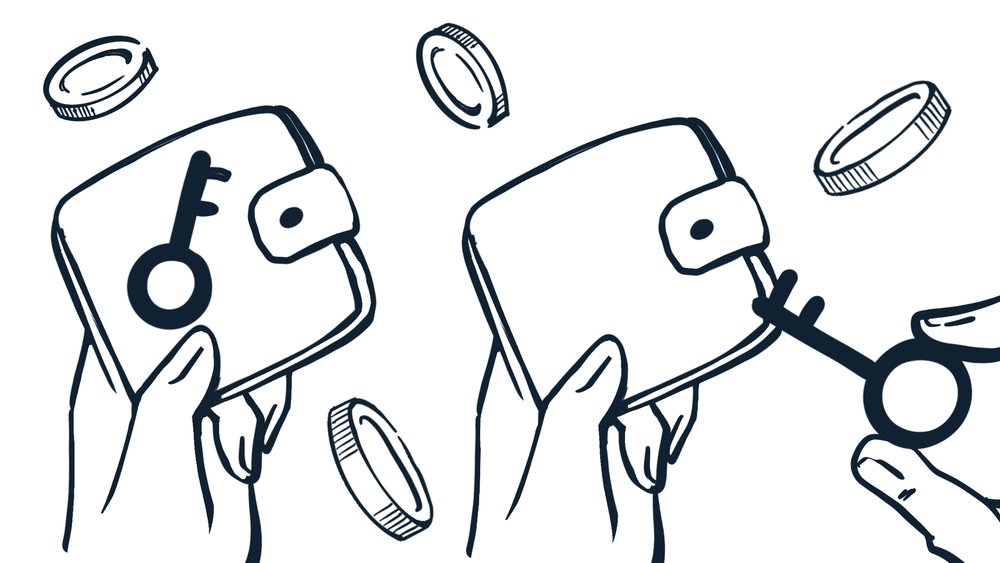
A crypto wallet isn’t like a regular wallet, it doesn’t “hold” cryptocurrency. Instead, it stores the private keys that give access to crypto locked on the blockchain. Lose the key, lose the coins. Simple as that.
There are several types of wallets, and each has its own use, pros, and risks:
- Hot wallets – apps or browser-based wallets that stay connected to the internet. Super convenient for daily use, but more vulnerable to hacks and phishing attacks. EMCD Wallet is a hot wallet, online, flexible, and made for easy crypto management. It works fast, supports P2P transfers, and even connects with mining tools
- Cold wallets – wallets that stay offline. These include paper wallets or software kept on devices with no internet access. A better choice for storing large amounts over the long term
- Hardware wallets – physical devices that keep private keys completely isolated. They’re built for security with strong software and hardware protections
Comparison of Crypto Wallet Types
| Wallet Type | Security Level | Ease of Use | Key Risks | Best For |
| Hot Wallets | Medium | High | Hacking, phishing, data leaks | Daily transactions, small amounts |
| Cold Wallets | High | Medium | Loss of the device or recovery key | Long-term storage of larger assets |
| Hardware Wallets | Very High | Medium | Physical damage, lost PIN or seed phrase | Safely storing larger crypto sums |
Using a combination of wallets is often the smartest move. It spreads the risk and gives the right balance of convenience and security depending on how you use your crypto.
Private Keys: Why Protecting Them Is Everything
A private key is the one thing that grants access to a crypto wallet. It’s a long, unique cryptographic code that links a person to their digital assets. Lose it, and there’s no way back. If someone else gets it, they own the funds.
No password reset. No support chat. No second chance. That’s why protecting private keys is the single most important part of crypto security.
Safe ways to store private keys
- Use offline storage: USB drives, external hard drives, or paper copies (just not left lying around)
- Rely on hardware wallets that never expose the key to the internet
- Choose password managers with encryption, if storing digitally
What not to do:
- Don’t save keys in cloud storage.
- Don’t paste them into text files or screenshots.
- Don’t share them, not even with "support" or "a trusted friend."
And remember: a password alone isn’t enough. For any online wallet, enabling two-factor authentication (2FA) and backing up the seed phrase (the 12–24 word recovery phrase) is critical. Without them, even a minor mistake can cost you everything.
5 Rules to Improve Crypto Wallet Security
No matter what type of wallet is used (hot, cold, or hardware), there are a few essential rules that drastically reduce the risk of losing funds. These are not “nice to haves.” They’re basic security hygiene.
1. Store Large Amounts in Cold or Hardware Wallets
For serious savings, cut off all outside access. That’s the whole idea behind cold wallets and hardware wallets: they stay offline, out of reach for hackers.
But even the safest wallet is useless if handled carelessly.
Here are a few real-world lessons:
In The Big Bang Theory, genius Sheldon Cooper and friends realize they once mined Bitcoin, only to forget where the wallet is. Comedy, sure, but totally believable.

- James Howells, a UK engineer, accidentally tossed a hard drive with the keys to 8 000 BTC in 2013. He’s still trying to get permission to dig up a landfill. That’s over $500 million buried in the trash.
- In 2021, Stefan Thomas, a programmer in San Francisco, had just two password attempts left to access a wallet with 7 002 BTC on a locked IronKey drive. He’s now stuck watching the balance but never touching it.
- In July 2025, an anonymous investor bought a suspiciously cheap cold wallet from Douyin (China’s TikTok). It was preloaded with malicious code. Result? A loss of $6.9 million the moment the wallet was activated.
Same mistake every time: trust in the device, but no system for storing or protecting it.
How to Use Cold and Hardware Wallets Safely
- Buy only from official sources
- Check the packaging and seals
- Write the seed phrase on paper only (never digitally)
- Make at least two copies, stored separately
- Never plug it into public or unknown computers
- Never share the device. It’s like a passport or a credit card
Hardware wallets are safe, but only if used like pros do: with structure, backups, and zero shortcuts.
2. Two-Factor Authentication Is a Must
Nothing gives a false sense of security like the phrase ‘I’ve got a strong password.’ That’s like putting in a steel door and forgetting to lock it. One data leak, one exposed database, and that password won’t mean much.
2FA, two-factor authentication, is the extra layer that steps in when something goes wrong. It’s the digital equivalent of a second lock, one only the real owner can open.
Without it, things can go downhill fast. A user who forgets to enable 2FA can lose a large amount of crypto in just minutes, all it takes is one compromised password. A session got hijacked, email was accessed, and funds vanished. 2FA would’ve stopped it cold.
How to Actually Use 2FA Right
- SMS codes can be intercepted, not the safest option.
- Email is a bit better, but if your inbox isn’t secure, it won’t save you.
- Apps like Google Authenticator, Authy, or 1Password are much more reliable.
- Hardware keys are easier to trust, they work on their own and don’t rely on an internet connection.
Platforms like EMCD Wallet make enabling 2FA easy: Quick setup through the app, a backup via email, and real-time login checks. If your password ever gets compromised, 2FA becomes your line of defense.
Should 2FA Be Enabled?
- If the cryptocurrency is worth anything at all, yes.
- If the wallet is connected to the internet, definitely yes.
- If the goal is to sleep without waking up to a push notification saying, ‘Confirm login from Nigeria’, then it’s not even a question.
3. Setting a Strong Password is the Foundation of Security
It usually starts with a noble thought: “I’ll come up with a really strong password.” Then comes the formula ー favorite word + birthday, maybe throw in an exclamation point. If someone’s feeling bold, maybe the cat’s name in English.
And just like that, the funds vanish faster than Black Friday discounts.
A secure password should be random, long and hard to remember. Ironically, if it’s easy to recall, it’s probably easy to guess.
By the way, no crypto wallet, especially online ones, is secure if the password is weak. Even with 2FA.
What Actually Works:
- At least 14–16 characters
- Random strings of letters, numbers, and symbols
- No personal info, no names, cities, or birthdays
What Doesn’t Work: qwerty123; crypto2025 ;PasswordForEverything (Yes, these are all in leaked databases, you can check on haveibeenpwned.com).
The best move is to let a password manager do the work:
Tools like 1Password, Bitwarden, KeePass, or even built-in browser managers generate and store encrypted passwords. Just don’t forget your master password, and no sticky notes on the monitor, please.
Platforms like EMCD Wallet support password login strengthened with 2FA. But even the best system won’t help if the password is bitcoin2025.
And one last rule: never reuse the same password across services. If someone gets into your email, they get into everything.
4. Checkups and Tracking: Basic Crypto Hygiene
A crypto wallet doesn’t need daily attention, but that doesn’t mean it should be ignored. Think of it like crossing the street: most of the time it’s safe, but one missed check can change everything.
In 2025, as phishing websites and fake platforms get sneakier, monitoring wallet activity becomes more than a habit; it’s a built-in alarm system.
One unexpected withdrawal. One unrecognized login. And it’s too late. Especially for hot wallets connected to the internet, where even a short delay can mean a total loss.
What to Check Regularly:
- Transaction history – unknown movements, new addresses, or strange amounts
- Devices and sessions – where and how logins are happening
- Account security – password updates, 2FA status, email access
- Notifications – real-time alerts via email, push, or Telegram bots
Platforms like EMCD Wallet offer customizable alerts and dashboards to help users keep track of their crypto flows. It’s especially useful for those managing larger amounts or wallets used for frequent transactions.
5. Ignoring Fake Apps, Phishing, and DMs from “Support”
In crypto, trust is often the weakest link. A phishing site can look exactly like the real thing. A fake app might feel like a polished product. And that “support team” messaging in Telegram? Yeah, that’s not supported.
The playbook is simple: trick someone into sharing their private key, password, or approving a transaction, and then empty the wallet.
Common Traps:
- Apps downloaded outside of official app stores
- Email attachments ending in .apk or .exe
- Clone sites that mimic real crypto platforms
- “Verification transfers” – requests to send crypto to “unlock” an account
What Actually Works:
- Always double-check the website address before logging in
- Download only from trusted sources: Google Play, App Store, official websites
- Avoid clicking on links in emails or DMs, especially if they sound urgent or offer gifts
- Never enter private keys into a website or app, no matter what it claims
- Avoid sharing wallet info, balances, or transactions publicly or in group chats
Phishing plays on trust. When it comes to protecting crypto, one rule always applies: a legitimate service will never ask for private keys. Not in any form. Not under any circumstances.
Safety Starts with Habit
In 2025, when crypto lives on every smartphone, protecting digital assets is essential. Safe storage doesn’t come down to luck or fancy tools. It’s about digital hygiene: private keys, strong passwords, 2FA, transaction monitoring, and caution with apps.
Internet-connected wallets are convenient, but they demand extra attention. Even the most secure system won’t help if basic rules are ignored. At the end of the day, it’s less about tech and more about discipline. A crypto wallet works best when managed mindfully, not on autopilot.
FAQ
Where is it safe to store cryptocurrency?
The safest options are hardware or cold wallets. For regular use, trusted hot wallets with two-factor authentication are a good fit.
Can crypto be stored on exchanges?
Yes, but it comes with risks. Exchanges are frequent targets for hacks, so for long-term storage, non-custodial wallets are a safer choice.
How to check if a platform is reliable for storing funds?
Look for public audits, encryption systems, 2FA support, and a solid track record. It also helps to check user reviews and support responsiveness.
Where is it more cost-effective to make purchases with crypto?
Look for platforms with low fees, fast transactions, and high liquidity, they’re usually the most cost-effective for spending crypto.
Is it better to store assets in one wallet or spread them out?
It’s smarter to combine both: one wallet for active use, another for storage. This reduces risks and gives more control over your funds.
When is the right time to withdraw crypto from a platform?
If the amount gets significant, it’s better to move it to a more secure wallet — especially if there are no plans for immediate transactions.
What to do if the crypto balance is lower than expected?
It could be a platform error, a fee, or a hack. Either way, it’s important to quickly find out the cause and take action.