

Why Are Graphics Cards Used for Crypto Mining?
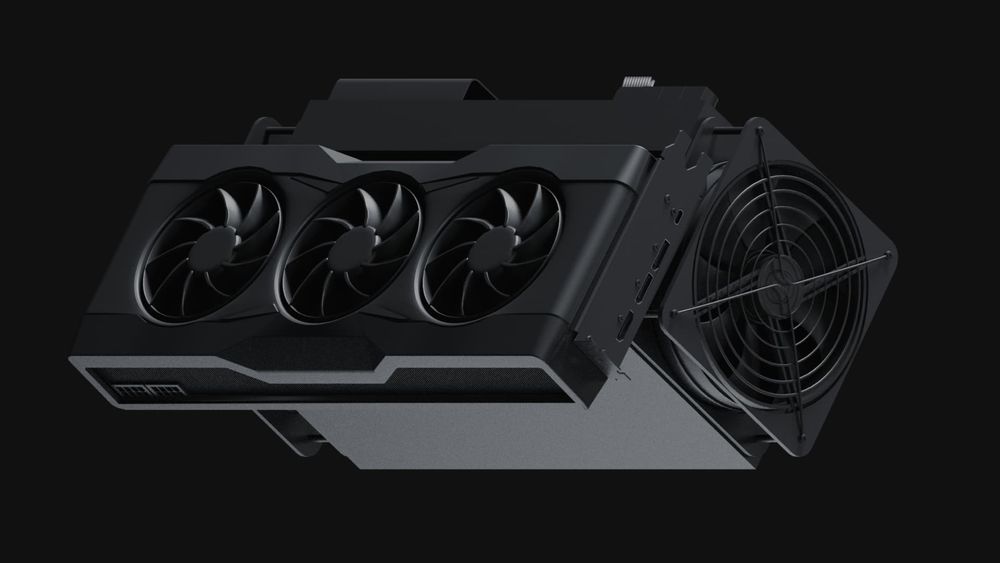

The idea that graphics cards exist solely for gaming is outdated — they are just as associated with crypto mining. Here is how GPU mining works and what actually makes graphics cards effective at it.
Mining began with Bitcoin in 2009, when the first miners were enthusiasts running ordinary computers. Today the market includes many Proof-of-Work coins — Ethereum Classic, Bitcoin Cash, Dogecoin, Kaspa and others — but an important distinction gets lost in most introductions: which of them a GPU can actually mine competitively.
Key Takeaways
- GPUs are not universally better for mining — they are better for specific algorithms. Bitcoin (SHA-256) and Litecoin/Dogecoin (Scrypt) are ASIC territory, where GPUs are not remotely competitive. GPUs remain relevant on Blake3 (Alephium), Autolykos (Ergo), KawPow (Ravencoin) and Etchash (Ethereum Classic) — Kaspa's kHeavyHash has shifted to ASIC dominance as purpose-built miners entered the network
- The architectural reason is parallelism: thousands of simple GPU cores running the same operation on different data suit hash search far better than a handful of complex CPU cores. But an ASIC built for one algorithm beats both by orders of magnitude on that algorithm
- Proof-of-Work is not “solving a puzzle” in any meaningful sense — it is brute-force search: repeatedly hashing a candidate block with a changing nonce until the output falls below the network’s difficulty target. There is no shortcut and no cleverness involved, which is exactly why raw parallel throughput wins
- A fast internet connection reduces stale shares (work submitted after a block was already found elsewhere) — it does not increase your hashrate or your odds of finding blocks. Bandwidth requirements for mining are minimal; latency and stability are what matter
How Proof-of-Work Mining Actually Works
Miners assemble a candidate block from pending transactions and then hash it repeatedly, changing a small field (the nonce) on each attempt, until the resulting hash falls below the network’s current difficulty target. There is no puzzle to be clever about: the only method is trial and error at enormous volume, and the difficulty target is what makes valid results rare. When a miner finds one, it broadcasts the block; other nodes verify it in milliseconds (checking the hash and the validity of every transaction) and, if valid, build on top of it. The miner receives the block subsidy plus transaction fees.
Difficulty adjusts automatically as total network hashrate changes, keeping block production near the protocol’s target interval. This is also why an individual miner’s income falls when others join: the same hardware wins a smaller share of a fixed reward stream.
Preventing double-spending is the purpose of all this: the chain with the most accumulated work is the one the network treats as canonical, which makes rewriting confirmed history economically impractical.
GPU vs CPU: The Architectural Difference
CPUs have a few powerful cores optimized for complex, branching, sequential work and for switching rapidly between different tasks. GPUs have thousands of simpler cores optimized to run the same instruction across many data elements at once — the workload they were built for (shading millions of pixels) turns out to resemble hash search closely: many identical, independent operations, no branching, no coordination.
This explains GPU dominance over CPUs on most mining algorithms — with one systematic exception: algorithms deliberately designed to resist GPU and ASIC acceleration. Monero’s RandomX is the main example, built around random code execution, large cache working sets, and AES instructions that favor general-purpose CPUs.
Where GPUs Are Competitive — and Where They Are Not
The claim that GPUs are better “for mining” in general is too broad to be useful. Hardware competitiveness is decided per algorithm:
- ASIC-dominated, GPUs not viable: SHA-256 (Bitcoin, Bitcoin Cash), Scrypt (Litecoin, Dogecoin), and increasingly kHeavyHash (Kaspa), where ASICs now set the efficiency bar. A GPU pointed at these algorithms competes against machines thousands of times more efficient per watt — the electricity bill exceeds the earnings by a wide margin
- GPU-relevant: Etchash (Ethereum Classic), KawPow (Ravencoin), Autolykos (Ergo), Blake3 (Alephium), and other algorithms designed to be memory-hard or ASIC-resistant. These are where a graphics card can still earn, subject to electricity price
- CPU-favored: RandomX (Monero) and similar cache-and-AES-dependent designs, where GPUs offer no advantage
Whether a GPU-relevant algorithm is profitable for you is a separate question from whether GPUs suit it technically. Net income equals coin revenue at your hashrate minus electricity at your tariff — and since GPU-mineable coins are typically low-margin, the electricity price often decides the outcome by itself. Check with a live calculator using your exact card, chosen algorithm, and rate.
What a Fast Connection Does — and Does Not Do
Mining needs a stable connection, not a fast one: the data exchanged with a pool is tiny (new work templates and submitted shares). What connection quality affects is stale shares — work you submit after the network has already accepted a block, which earns nothing. Lower latency to your pool server and fewer dropouts mean a lower stale rate, typically a small single-digit percentage effect on income. It does not raise your hashrate and does not improve your odds of finding a block: those depend on your hardware’s hash output relative to the network. Choosing a pool server geographically close to you is the practical takeaway.
Can You Mine with a CPU?
Yes, on algorithms built for it. Monero’s RandomX is the primary example: it depends on fast cache access and AES instructions, which modern processors provide, and it deliberately resists GPU and ASIC acceleration. Outside that family, CPU mining does not compete. As with GPUs, viability depends on your electricity price — verify with a calculator rather than assuming.
A Short History of Mining Hardware
GPUs were designed for graphics — rendering 3D scenes in games — and the market is dominated by Nvidia and AMD. The term itself gained currency after Nvidia’s GeForce 256 launch in 1999, the first single-chip processor integrating transform, clipping, lighting and rendering.
GPU mining took off around 2010, when miners realized graphics cards were far better suited than CPUs to hash search. The same year, the famous 10,000 BTC pizza purchase became the first real-world Bitcoin transaction. Rising participation drove difficulty up, hardware requirements followed, and by 2011 FPGAs — configurable chips offering markedly better efficiency than graphics cards — began displacing GPUs for Bitcoin. FPGAs in turn gave way to ASICs, purpose-built chips that by around 2015 had made Bitcoin mining exclusively ASIC territory.
The pattern is consistent: each generation of mining hardware is displaced on a given algorithm by more specialized silicon. That is why the useful question is never “GPU or ASIC?” in the abstract, but “what hardware is competitive on the algorithm I intend to mine, at my electricity price?”
FAQ
Can I mine with a CPU and GPU at the same time?
Yes, provided your mining software supports it — typically running different algorithms on each (for example a CPU coin alongside a GPU coin). Watch total system power draw and thermals, since both components then run at sustained load.
What does mining do to a graphics card?
It runs the card at sustained high load, which raises temperatures and stresses cooling components — fans and thermal interfaces wear first. With adequate cooling, sensible power limits, and clean airflow, cards survive mining for years; without them, wear accelerates significantly.
What is the best crypto for GPU mining?
Among currently GPU-relevant options: Ethereum Classic (Etchash), Ravencoin (KawPow), Ergo (Autolykos), Alephium (Blake3), and similar algorithms. Note that Bitcoin Cash and Litecoin are not GPU coins — BCH runs on SHA-256 and Litecoin on Scrypt, both dominated by ASICs, where a graphics card cannot compete. Which of the GPU-relevant coins is best at any moment depends on prices and difficulty: check a live calculator with your card and electricity rate.
Which is better: GPU mining or CPU mining?
Neither in general — it depends on the algorithm. GPUs win on parallel, memory-hard algorithms (Etchash, KawPow, Autolykos, Blake3); CPUs win on designs built for them (RandomX/Monero); ASICs beat both on the algorithms they are made for (SHA-256, Scrypt). Match hardware to algorithm, then check the economics at your electricity price.
without growing costs
cryptocurrencies