

What Is the Most Profitable Crypto to Mine? The Best Information Home Miners Can Learn from MARA, Riot, and CleanSpark

This article is purely for educational and informational purposes and is not financial, investment, legal, tax, securities, trading, mining profitability, or technical advice. This is not a recommendation for anyone to buy, sell, hold, mine, trade, stake, lend, exchange, or use any digital asset, stock, mining hardware, mining pool, cloud mining service, wallet, or any other cryptocurrency-related product.
We will only use public company examples for operational purposes. They are not stock recommendations. Mining results are not guaranteed and depend on many things, including electricity cost, hardware efficiency, hashrate, network difficulty, pool fees, uptime, rejected shares, cooling, maintenance, market prices, taxes, local regulations, and product terms. Block rewards, fees, supported coins, mining algorithms, and network conditions can change.
People looking for Bitcoin mining stocks are usually hunting for the next big investment idea: which companies are growing fast, which are producing the most BTC, and which names dominate the sector.
But for home Bitcoin miners and anyone seeking to improve a smaller mining system, these companies can be much more than stock-market noise.
They show how professional mining operations actually think.
MARA, formerly Marathon Digital, Riot Platforms, and CleanSpark publish operational updates and filings on hashrate, BTC output, fleet efficiency, power strategy, infrastructure expansion, treasury decisions, and risk management. MARA’s 2026 filings include operational measures like blocks won, BTC produced, share of available miner rewards, and energized hashrate. Riot’s Q1 2026 report also talks about power credits and network hashrate pressure. CleanSpark’s June 2026 operational update lists peak deployed fleet efficiency at 16.07 J/TH.
These are not stock tips.
They are a mining operations playbook.
And some of that playbook can be adapted by home miners, especially as network difficulty increases, margins tighten, and electricity costs start to feel like they can’t be ignored.
Important takeaways to take into consideration
- There is no single most profitable crypto to mine for every miner
- The performance of crypto mining depends on electricity costs, electricity rate, hardware efficiency, mining difficulty, power consumption, pool fees, uptime, and market prices
- Fleet efficiency, in J/TH terms, often matters more than raw hashrate
- Mining rewards and block rewards are not the same
- Pool mining can give small-scale miners more consistent rewards than mining alone; however, pool mining fees usually apply
- GPU mining has more flexibility to mine a variety of coins, while ASIC mining is consistently the most used for Bitcoin mining
- Treasury planning is crucial, but it shouldn’t be considered financial advice
- Home miners need to track costs, uptime, mining income, daily profit, mined coins, power costs, and tax records
- Public miners have advantages home miners don’t: power contracts, capital access, big facilities, and bulk hardware buying
- Home miners can learn from public miners too: track costs and uptime, learn how to use efficient hardware, and plan ahead of time for market changes
Who are the big players in the Bitcoin mining industry?
Bitcoin mining stocks are MARA, Riot Platforms, CleanSpark, Core Scientific, Hut 8, Bitfarms, Cipher Mining, and IREN.
These companies are big companies with big infrastructure and are a major part of the publicly traded Bitcoin mining industry.
On an operational scale, all these companies have different profiles to be considered among the top Bitcoin mining stocks. MARA is about scale, growth, and BTC treasury. Riot has built a lot of its positioning around energy strategy, power credits, and infrastructure development. CleanSpark is often referred to for its fleet efficiency and disciplined expansion.
Investors will often compare them by share price.
Miners can learn more about mining operations by looking at how they operate.
Because every mining operation, no matter how big, has the same basic problem:
How do you convert electricity into BTC as efficiently as possible?
And the scale changes the economics.
Why there is no single most profitable crypto to mine
The phrase ‘most profitable crypto to mine’ sounds simple.
It is not.
Mining results depend on:
- electricity price
- hardware efficiency
- network difficulty
- coin price
- block reward
- pool fees
- rejected shares
- uptime
- cooling
- maintenance
- liquidity
- exchange access
- local rules
- taxes
A coin can have a large block reward but still not be very attractive if electricity, hardware cost, difficulty, and market liquidity are taken into account.
A coin can also look easy to mine but produce very little value.
That is why ‘most profitable’ should be seen as a calculation, not a fixed answer.
For Bitcoin, the block subsidy has been 3.125 BTC since the April 2024 halving. Monero data shows that its tail emission is 0.6 XMR per block and that RandomX is ASIC-resistant. Zcash data shows a 1.5625 ZEC block reward. At the moment, the public pool of Vertcoin has 6.25 VTC as the block reward.
And that’s to give context.
They don’t decide profitability alone.
How public miners keep costs low: power, efficiency, and scale
Electricity as a strategic resource
Electricity is the basis of mining economics.
For most mining operations, power is one of the biggest recurring expenses. Even a small price difference in electricity impacts whether a setup is still viable when Bitcoin price, network difficulty, or hardware performance changes.
Public miners don’t see electricity as a utility bill, but as a strategic variable.
Riot is a great example. In Q1 2026, it reported a 169% increase in power credits from Q1 2025 and also saw pressure from a 24% increase in average global network hashrate.
Home miners cannot always strike industrial power agreements.
But they can still copy the discipline.
At the very least, a home miner should know:
- local electricity rate per kWh
- actual power draw of each machine
- average daily electricity use
- monthly electricity cost
- cooling cost
- pool fees
- break-even electricity level
- whether peak pricing changes the math
Two miners with the same ASIC can earn similar BTC rewards, but if one pays $0.05/kWh and the other pays $0.15/kWh, their operating costs are completely different.
The lower-cost miner may have more room to keep working as the difficulty increases or the price falls.
The higher-cost miner might have to shut down faster.
That is why electricity often decides the mining result before the coin does.
Most of the time, fleet efficiency is superior to raw hashrate
So, in fact, one of the most important metrics in public mining reports is fleet efficiency. It is usually measured in joules per terahash, or J/TH.
Lower J/TH means the miner uses less electricity to produce the same unit of hashrate.
CleanSpark is a good benchmark here. It reported peak deployed fleet efficiency of 16.07 J/TH in its June 2026 operational update.
That is the number home miners should keep in mind.
If a miner has high TH/s but burns too much electricity, it may be hard to run at home.
For hardware evaluation, ask:
- How much power does it need?
- What is the efficiency rating in J/TH?
- How much cooling does it need?
- How sensitive is it to network difficulty?
- How much uptime can you realistically maintain?
A machine with a slightly lower hashrate but better efficiency can be more durable than one with much worse power consumption.
Raw hashrate is interesting.
Efficiency is often what keeps the math alive.
What MARA can teach home miners about measurement
MARA’s regular reporting shows why measurement is important. Its 2026 filings include operational metrics such as BTC produced, blocks won, share of available miner rewards, and energized hashrate.
That mindset scales down.
Home miners usually make decisions based on rough estimates:
‘This ASIC is making this much a month.’
‘Electricity should be fine.’
‘The pool looks okay.’
That is not enough when margins are tight.
A small mining setup should still be treated as a data-generating machine.
Track:
- monthly BTC or coin production
- daily estimated rewards
- electricity bill
- cost per BTC mined
- machine uptime
- rejected share rate
- average hashrate
- power draw
- pool fees
- cooling cost
- maintenance cost
- mining difficulty
- hardware efficiency per machine
Once the numbers are in front of you, it is easier to make decisions less emotionally.
Upgrading hardware, switching a pool, varying runtime, cleaning machines, improving airflow, or pausing an inefficient unit becomes a data-based decision, not guesswork.
Mining rewards: why block rewards alone don’t show profit
Mining rewards are the coins or tokens miners may receive when they contribute hashrate to a network or mining pool.
But mining rewards and block rewards are not the same thing.
Current mining rewards can look attractive on paper, but they must be watched against:
- electricity costs
- power consumption
- mining difficulty
- hardware requirements
- pool mining fees
- rejected shares
- market liquidity
- fair market value of mined coins
- income tax treatment
- capital gains treatment after sale or trade
Mining difficulty increases as more miners join a network or more hashrate comes online. That means the same mining operation can produce fewer coins over time, even if the hardware is working properly.
A good coin today may become less profitable in the future if the difficulty increases, the price of the coin drops, or electricity costs increase.
That is why mining income, daily profit, and power costs should be kept in mind collectively by miners, not separately.
Coins to mine: Bitcoin, altcoins, ASICs, GPUs, and CPUs
Bitcoin is still the main cryptocurrency to mine because of its deep mining infrastructure, high liquidity, mature mining software, and long history.
But Bitcoin is not always the most profitable coin for every setup.
Crypto mining is based on electricity costs, power consumption, mining difficulty, pool fees, hardware requirements, and the fair market value of mined coins at the time they are received.
ASIC mining dominates Bitcoin mining due to high efficiency for SHA-256 mining, which is much more efficient than general-purpose machines.
GPU rigs and CPU mining are still available in other networks; however, the hardware requirements are largely dependent on the coin and algorithm, difficulty, market price, liquidity, and electricity cost.
GPU mining can allow hobby miners to mine different cryptocurrencies more easily. GPU rigs can be moved between some altcoins when hardware and mining software are in place. We do find that flexibility useful, but it does not guarantee mining income or daily profit.
Some ASIC-resistant networks are built to make special ASIC domination harder.
Monero uses RandomX, which is associated with CPU mining and ASIC resistance. Its block time is around 2 minutes, and its tail emission model is designed so that block rewards do not drop to zero.
Vertcoin is often referred to as an ASIC-resistant network. It is often considered accessible for hobby miners and GPU miners because it has a lower barrier to participation than Bitcoin ASIC mining. At the time of writing this, public pool data shows the block reward to be 6.25 VTC.
Zcash uses Equihash and can be mined with GPUs or ASICs, depending on the setup. Zcash materials say the block reward is 1.5625 ZEC. Zcash also uses zk-SNARKs for transaction privacy, but that feature does not make Zcash mining automatically profitable.
Kaspa is a proof-of-work network based on the KHeavyHash algorithm and a blockDAG design. Kaspa is often regarded as one of the fastest crypto networks from a block-production perspective because its own information is that it is producing 10 blocks per second. Mining calculators show reward numbers around 2.3 KAS per block as of September 2026.
Ravencoin rewards miners with 1,250 RVN per block (reward halved in January 2026). Ravencoin mining rewards may seem great on paper, but that number is not what determines profitability without considering electricity costs, liquidity, and hardware efficiency.
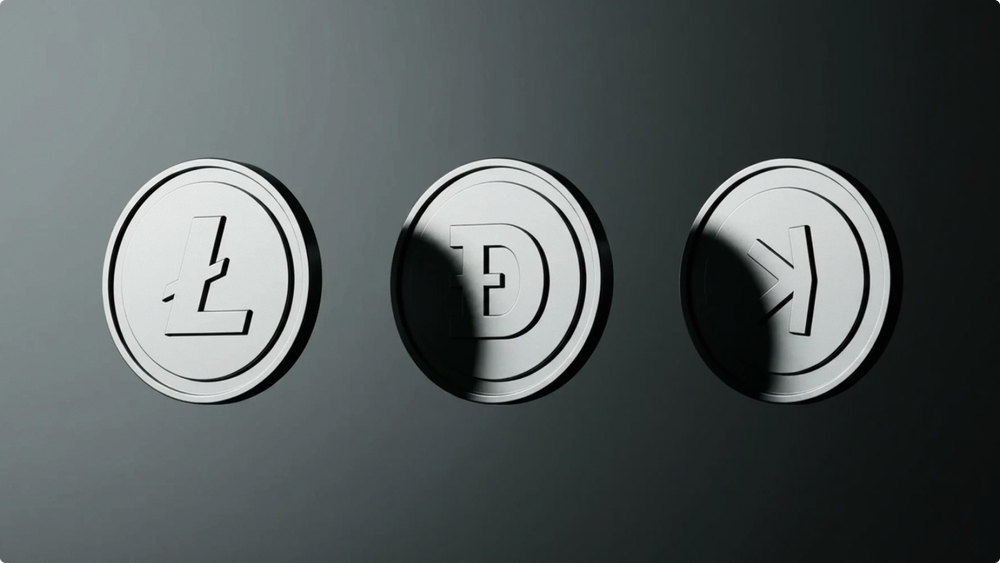
Litecoin mining rewards are currently 6.25 LTC per block. Dogecoin mining rewards are commonly quoted as 10,000 DOGE per block. Litecoin and Dogecoin are often discussed together because Scrypt-based setups can involve merged mining.
Merged mining allows miners to use the same proof-of-work effort across compatible networks. That might enable miners to participate in more than one reward stream, but exact results are still based on hardware, mining pool terms, market prices, fees, and liquidity.
The bottom line is this: block reward does not equal profit.
A coin with a higher block reward can still perform worse if hardware, electricity, fees, liquidity, and price movement are taken into account.
So rather than asking only ‘what is the most profitable crypto to mine,’ home miners should ask:
What can my hardware mine efficiently, at my electricity rate, under the current network conditions?
That’s a better question.
How do public miners manage risk?
Mining does not really end when BTC is mined.
What happens to those coins when they are mined?
Public miners are very interested in treasury management of BTC, and BTC holdings are very important for their financial position. Companies might keep mined BTC or sell some to cover operating costs, keep fiat liquidity, and use different strategies depending on market conditions, balance sheet needs, or risk tolerance.
The lesson for home miners isn’t ‘copy MARA’ or ‘copy Riot,’ but the lesson is not to make every decision emotionally.
Some miners create internal rules about:
- covering electricity and maintenance
- deciding when to hold or sell mined coins
- keeping a cash buffer
- planning hardware replacement
- reviewing the plan every few months
The right approach is based on specific circumstances, tax laws, risk tolerance, local laws, and market conditions.
It is not financial advice.
It is operational planning.
Coins that are mined also create tax questions. In some countries, mining income may be measured on the basis of the fair market value of the mined coins when they are received, and later sales or trades may trigger separate tax events. Mining income is tax-based, but location, user status, and local rules are different, so miners need to keep records and check tax obligations before they make use of mining income.
Liquidity and downside planning
Mining is a cyclical business that is difficult to predict, and strong periods can be followed by higher difficulty, low coin prices, high energy costs, hardware failures, or pool problems.
Liquidity has an impact on public miners because it determines if they can continue to operate, replace equipment, and deal with downturns.
Home miners live by the same logic at a smaller scale.
A basic reserve can cover:
- electricity bills
- replacement fans
- power supplies
- cables
- repairs
- cleaning tools
- temporary downtime
- unexpected home power or cooling issues
Without a buffer, a small technical problem can lead to a shutdown.
Uptime as a measure of performance
Industrial miners pay attention to uptime because a machine running 98% of the time can produce much more than the same machine running 92% of the time.
Home miners do not need enterprise-grade systems to learn from this.
Basic monitoring helps:
- temperature alerts
- pool worker notifications
- rejected share tracking
- hashrate monitoring
- power monitoring
- weekly cleaning
- checking fans and cables
- keeping spare parts
It is useful to keep track of uptime and know what causes downtime.
Do not just ask whether a miner is ‘working’; ask how often it is working properly.
What a home miner can realistically do
The gap between a home setup and a public mining company is large.
Home miners can rarely work with big utilities, raise public capital, buy tens of thousands of ASICs, or build their own mining campuses.
Many operational principles still transfer, but most home miners monitor daily revenue.
Track cost per BTC mined
Public miners pay attention to output cost.
Home miners should calculate cost per BTC mined or cost per unit mined every month and compare it to previous periods.
Track:
- electricity cost
- pool fees
- cooling costs
- hardware depreciation
- maintenance expenses
- downtime
- rejected shares
This is more important when difficulty adjustments are made.
When your production declines but your costs remain the same, you need to know why.
Evaluate hardware by J/TH, not TH/s
Many new miners compare machines according to hashrate only.
That is a mistake.
Efficiency is important for Bitcoin, as the electricity cost of the machine goes up every hour it runs.
Modern Bitcoin ASICs used by large operators are typically less than 20 J/TH, and many older units for home setups are around 30 to 40 J/TH or more.
CleanSpark’s 16.07 J/TH fleet efficiency is one current industrial benchmark.
When comparing hardware, it is important to ask:
- What is the J/TH?
- What is the real wall power draw?
- How hot is it running?
- What cooling does it need?
- How loud is it?
- How much does power cost locally?
- What happens if difficulty grows?
- How long will it take for the payback to emerge if you keep things conservative?
And the best machine is not always the one with the biggest hashrate.
It is the one that makes sense when power, heat, uptime, and cost are taken into account.
Keep mining uptime on track
Great Bitcoin mining companies are so obsessed with uptime because lost runtime can’t be recovered.
Home miners need to keep a simple uptime log:
- how long the miner was offline
- what caused the problem
- outside temperature
- room temperature
- internet issues
- power outages
- fan problems
- pool connection issues
- rejected share spikes
As time goes on, patterns emerge.
Perhaps one machine overheats every afternoon.
A router drops connection once a week.
A fan is not doing well, or maybe a fan is failing.
Rejected shares might increase after a change in firmware.
The home setup actually gets better when the miner stops guessing and starts noticing.
Get real about electricity
When crypto mining pays at home, it usually starts with electricity.
Every home miner should know:
- local rate per kWh
- average daily power use
- rig power consumption
- cooling cost
- monthly electricity cost
- peak and off-peak pricing
- break-even electricity level
- tax or reporting requirements
A common trap is to underestimate peak pricing.
In some cases, time-of-use rates can make electricity much more expensive during certain hours. That may also affect whether running a machine 24/7 is reasonable.
For Bitcoin mining, electricity costs below $0.08/kWh increase the chance that mining math works, especially when good hardware is used. The difficulty in mining, BTC price, pool fees, maintenance, cooling, and hardware cost all matter.
A setup that seems feasible on average electricity cost can get weak if peak pricing, cooling, and downtime are included.
If electricity costs are too high, miners can lose money even when the hardware works properly.
Get a grip on treasury
Public miners publish BTC holding information because treasury affects liquidity, flexibility, and survival.
Home miners can use a smaller version of that thinking.
In advance, ask:
- How will operating costs be paid for?
- Will any mined BTC be held?
- Will any mined BTC be sold?
- How much money will be saved for repairs?
- How often should the plan be reviewed?
- What tax records need to be kept?
The point is not to predict the market.
The point is not to make decisions in panic mode.
Look at the bigger picture
Public miners don’t only evaluate themselves based on one day of production.
They look at monthly and quarterly trends.
Home miners can do the same.
Daily mining results can change due to:
- BTC price movement
- network difficulty
- pool luck or payout method
- transaction fees
- rejected shares
- downtime
- weather and cooling
- electricity pricing
One day does not say much.
A month says more.
A quarter says even more.
Data, not guesswork
Home miners can be more professional if they are good at monitoring their setup.
Pool dashboards and mining software can help track:
- worker status
- hashrate
- accepted shares
- rejected shares
- temperature
- uptime
- payout history
- device performance
EMCD Pool’s help center says worker statistics can be found in the Mining section, with Dashboard and Workers tabs. EMCD also says rejected shares are not counted as accepted hashrate and can affect worker status.
That kind of data doesn’t guarantee rewards or profitability.
But it can help detect problems earlier.
If a worker becomes unstable, reject rate spikes, or hashrate drops, for instance, the miner can investigate before the problem becomes costly.
Mining software and pool dashboards matter
Mining software is much more than a technical issue.
It affects how miners connect hardware, monitor performance, track rejected shares, and know if a mining operation is running properly.
Before users start mining, they should know:
- which mining software supports their hardware
- whether the coin supports ASIC mining, GPU mining, or CPU mining
- how the mining pool connects to the miner
- how power consumption is tracked
- how rejected shares are reported
- how payouts are calculated
- how mining income is recorded
- how mined coins are valued for tax purposes
For small-scale miners, mining software and pool dashboards can make the difference between guessing and actually seeing what is happening.
Pool mining fees range from about 0.5% to 3% for different pools, depending on the pool, coin, payout method, and service model.
Although pool mining often comes with fees, it can also give hobby miners more consistent rewards. An average mining rig can take months or years to find blocks on large networks such as Bitcoin.
So it’s not surprising that many small-scale miners use pools instead of trying to find blocks alone.
Be a miner, not a speculator
The most important thing we have learned from public Bitcoin mining companies is mindset.
Professional miners don’t try to predict the next Bitcoin move. They are more concerned with the things they can control.
That includes:
- electricity costs
- hardware efficiency
- uptime
- cooling
- maintenance
- treasury policy
- data quality
- operational discipline
There is no one best crypto to mine for everyone.
There is no easiest crypto to mine that is automatically the best.
There is no block reward that guarantees a good result.
Mining results come from a lot of small decisions that professionals understand.
Home miners who think the same way can make better operational decisions, even without industrial scale.
What does not transfer from big mining to home mining?
Some of the advantages of public mining companies do not transfer to home setups.
And that’s okay.
Industrial power contracts
Large miners can negotiate power agreements, utilize demand-response programs, locate near cheaper power, or work with utilities in a way home miners can’t.
Most home miners pay local residential or small-business rates.
That means a home setup needs to be judged truthfully.
If electricity is too expensive, discipline might not be enough.
Access to capital
Public miners can raise capital, borrow, partner, and buy in bulk when market conditions are favorable.
Home miners pay directly for each ASIC, repair, power supply, cable, and electricity bill.
That makes hardware mistakes more painful.
Purpose-built infrastructure
Large miners can use special buildings, large engineering teams, high airflow, immersion cooling, spare parts inventories, and industrial monitoring systems.
Home miners are usually working in garages, spare rooms, sheds, basements, or small hosting sites.
That doesn’t mean home mining couldn’t work.
It means the operating plan has to match reality.
Cloud mining is not the same
Cloud mining is a simpler option, but it trades machine ownership for service fees, platform terms, and less operational control.
Users may appreciate the model.
Some prefer owning a machine and joining a mining pool.
Users should, however, look into fees, contracts, payout rules, custody risk, legal restrictions, and platform history before getting into any service.
Conclusion
The most profitable crypto to mine is not a fixed coin name.
It is a calculation.
For Bitcoin miners, public companies such as MARA, Riot, and CleanSpark have shown that mining is not only about plugging in machines and hoping price goes up. It is about power, efficiency, uptime, treasury discipline, and data.
Home miners can’t duplicate their scale.
But they can copy the mindset.
Track electricity.
Measure efficiency.
Watch uptime.
Understand pool data.
Plan treasury decisions before volatility arrives.
Check local rules.
Make conservative assumptions.
That’s the real lesson.
The strongest operators are not the ones who can predict the future well.
They take the parts of the operation that they can really control and enhance them.
This article is only for general informational and educational purposes. It does not suggest any digital asset, stock, mining company, mining hardware, mining pool, cloud mining provider, wallet, or any cryptocurrency-related product. Mining rewards, stock performance, and profitability are not guaranteed. Mining results can vary due to network difficulty, hashrate, electricity costs, hardware efficiency, pool fees, rejected shares, uptime, maintenance, market prices, liquidity, taxes, local rules, and product terms. Public company examples are only operational case studies. Users need to read existing information, product terms, legal requirements, tax obligations, and personal risk before making any decision.
Frequently asked questions
What is a Bitcoin mining stock?
A Bitcoin mining stock is a publicly traded company whose business is Bitcoin mining or related digital infrastructure. The list of Bitcoin mining stocks is usually MARA, Riot Platforms, CleanSpark, Core Scientific, Hut 8, Bitfarms, Cipher Mining, and IREN.
I am not suggesting any stock. I mention these companies only because they are public companies and their public reporting can help small miners understand operating discipline.
What are the top Bitcoin mining stocks?
The largest public miners are often compared by operating hashrate, energized hashrate, BTC production, infrastructure scale, power capacity, liquidity, and fleet efficiency.
Those rankings can fluctuate as companies grow, raise capital, sell assets, have downtime, or change their strategy. Share performance is another matter and is not necessarily related to mining performance.
Why do Bitcoin mining stocks go down?
Bitcoin mining stocks can fall for different reasons: lower BTC price, rising network difficulty, higher energy costs, debt issues, share dilution, weaker margins, operational delays, regulatory pressure, and broader stock-market conditions.
That’s why mining stocks are different from mining BTC at home. The risks are business, equity-market, and securities risks.
What is the biggest cost of Bitcoin mining?
Electricity is one of the most recurring costs in Bitcoin mining. Hardware, cooling, maintenance, pool fees, downtime, rent, financing, and taxes are also among the components.
For home miners, electricity is usually the first one to be calculated.
What is the difference between mining Bitcoin and owning mining stocks?
Mining Bitcoin means running hardware, paying power costs, joining a pool or mining with a mining company if it works, and then getting mining payouts.
Owning mining stocks means getting shares in a public company that might be mining Bitcoin or doing some other thing with it. It’s not ownership of mined BTC, but exposure to a company and stock-market risk.
Can home miners compete with public mining companies?
Not on scale, power contracts, capital access, or infrastructure.
But home miners can still make their own setup better by working on this discipline: tracking costs, keeping track of uptime, buying efficient hardware, understanding pool data, and predicting downside.
Should home miners pick a mining pool or solo mining?
Pool mining is more feasible for most small miners as it combines hashrate with other miners and can reduce the variance in payouts.
Solo mining gives full block reward exposure if a block is found, but the chance of finding a block is very low for small setups.
Pool fees, payout methods, minimum payouts, and rules will vary, so it is important to understand the current pool terms before joining.
Do pool mining fees matter?
Yes. Pool mining fees are typically around 0.5% to 3%, depending on the pool and payout model.
Lower fees are not always better if the pool is bad at maintaining good uptime, is not well supported, offers unreliable payouts, or has many rejected shares.
Can solo mining take months or years?
Yes. Solo mining can take months to years for average-sized rigs, especially on large networks.
Pool mining is more realistic for small-scale miners because it combines hashrate and can produce more consistent rewards.
What are the mining rewards for popular coins?
Current mining rewards can change by network, halving schedule, emission model, and transaction fees.
As of this writing, Bitcoin has a 3.125 BTC block subsidy, Ravencoin mining rewards are 1,250 RVN per block, Litecoin mining rewards are 6.25 LTC per block, Dogecoin mining rewards are 10,000 DOGE per block, Monero tail emission is 0.6 XMR per block, and Zcash materials describe 1.5625 ZEC per block.
These figures should be checked close to publication.
What is merged mining?
Merged mining lets miners use the same proof-of-work effort across compatible networks.
Litecoin and Dogecoin are often discussed together because Scrypt-based setups can involve merged mining.
It can create more reward streams, but profitability still depends on hardware, pool terms, difficulty, market prices, fees, and liquidity.
What is the role of mining software?
Mining software connects mining hardware to the network or mining pool.
It can help track hashrate, accepted shares, rejected shares, temperature, uptime, power consumption, and payout performance.
Good mining software does not guarantee rewards, but it can help miners manage the operation better.
Can crypto mining pay at home?
Crypto mining can pay at home only when the numbers work.
Electricity rate, hardware efficiency, mining difficulty, pool fees, cooling, uptime, and coin price all matter.
If power costs are high or hardware is inefficient, home miners can lose money.
What is the most important metric for a home miner?
Cost per BTC mined and hardware efficiency are two of the most useful metrics.
Cost per BTC mined shows how expensive production is after electricity, fees, cooling, and maintenance. Hardware efficiency, measured in J/TH for ASICs, shows how much electricity a machine uses for each unit of hashrate.
Should home miners hold or sell mined Bitcoin?
There is no universal answer. It depends on personal finances, tax rules, market exposure, risk tolerance, electricity bills, and maintenance needs.
Some miners create a plan for covering costs, keeping a cash buffer, and deciding what to do with mined coins. The important point is to plan before market pressure forces a rushed decision.
Is the easiest crypto to mine also the most profitable?
Not necessarily.
A coin may be easy to mine but have low liquidity, low price, high difficulty, weak demand, or limited exchange access. Mining results depend on the whole setup, not just the technical ease of mining.
What should home miners learn from MARA, Riot, and CleanSpark?
The key lesson is operational discipline.
Track numbers.
Control electricity costs.
Watch efficiency.
Reduce downtime.
Use data.
Plan liquidity.
Understand risk.
That does not guarantee mining rewards or profitability, but it can make a mining setup more manageable.
without growing costs
cryptocurrencies