

Solo Mining in 2026: Is It Still Possible to Find a Block with a Home Mining Farm?


Bitcoin has long since stopped being a story about a home computer sitting under a desk. Today, the network is secured by millions of specialized devices, and mining difficulty has reached record highs. Nevertheless, interest in solo mining has not disappeared. Many hardware owners wonder whether it is still possible in 2026 to find a block independently and keep the entire reward.
The reason for this interest is obvious. When a miner finds a block on their own, there is no need to share the reward with other miners. The entire block reward, along with transaction fees, goes to a single equipment owner. At first glance, this appears far more attractive than mining through a pool.
However, behind this appealing idea lies harsh mathematics.
This article explores how Bitcoin solo mining works, what chances home mining equipment actually has, and why most miners prefer to combine their hashing power.
Key Takeaways
- Bitcoin solo mining allows miners to keep the entire reward for a successfully mined block. As of June 2026, the base block reward is 3.125 BTC, with additional income coming from transaction fees.
- Even with a home mining farm consisting of ten modern Application-Specific Integrated Circuit (ASIC) miners, finding a block remains largely a matter of luck. The average waiting time may be measured in years, although a block could theoretically be found on any given day.
- Many enthusiasts view mining as a kind of lottery. Some even use compact devices such as the NerdMiner, which consume very little electricity and offer a chance to test their luck.
- Solo mining pools provide access to the network without requiring miners to run their own infrastructure, but they do not improve the odds of success. If a block is found, the reward still goes entirely to a single participant.
- For those who consider mining an investment, participating in a traditional mining pool remains the more rational option. Pooling hash power provides more consistent payouts instead of waiting for a rare jackpot.
What Is Solo Mining and Why Does One Miner Receive the Entire Reward?
In the traditional model, a solo miner connects their hardware directly to the Bitcoin network and attempts to solve a cryptographic puzzle faster than all other participants.
If the device finds the correct hash, the network validates a new block. The entire reward is then credited to the hardware owner. This is precisely why many miners are attracted to Bitcoin solo mining with ASICs: a single successful block can generate income that far exceeds daily payouts received from a conventional mining pool.
It is important to understand that miners receive more than just the base reward of 3.125 BTC. They also earn all transaction fees paid for including transactions in the block.
On average, a new block is created every ten minutes. Millions of devices around the world compete simultaneously for the right to produce it. The smaller the share of the total network hashrate, the lower the probability of receiving the reward.
Participation in solo mining is possible either through running a Bitcoin node or connecting to a solo mining pool. Such pools provide infrastructure for miners but do not distribute rewards among participants. If the equipment finds a block, the entire payout remains with that participant.
oday, several dedicated services operate under the solo mining pool model, simplifying hardware setup while leaving the mathematical probability of success unchanged.
How Many Years Does It Take to Find a Block? The Mathematics of Probability
The main drawback of solo mining is its extremely low probability of success.
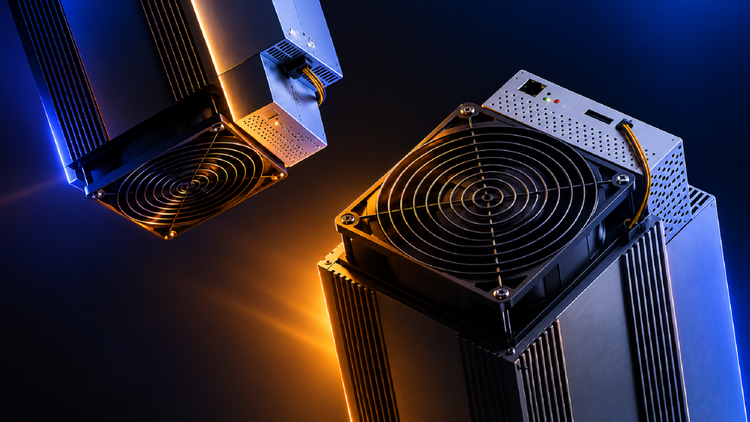
Imagine a home mining farm consisting of ten modern ASIC devices, each producing around 200 Terahashes per second (TH/s). Their combined hash rate would amount to approximately 2 Petahashes per second (PH/s).
Compared with the Bitcoin network, whose total hashrate approached 1 Zettahash per second (ZH/s) in 2026, this contribution is relatively small. The share of an individual miner becomes almost negligible.
This is why many miners are interested in the probability of finding a block with a home setup. Under current network conditions, the expected waiting time for such a setup to discover a single block may be approximately nine to ten years.
However, this is only a statistical estimate.
Probability does not work like a timer. A block could be found tomorrow — or not found even after twenty years. That is why solo mining is often compared to buying a lottery ticket.
When newcomers ask how to find a BTC block, the answer is always the same: increase the share of the global hashrate or accept a very high degree of uncertainty. The lower the mining power, the greater the role luck plays in determining the final outcome.
Mining as a Lottery: Why NerdMiner Exists
In recent years, miniature devices often described as mining lotteries have become increasingly popular.
The most well-known example is the NerdMiner. Despite its catchy name, it cannot compete with industrial-grade ASIC hardware. Its hashrate is so low compared to professional mining equipment that the probability of success remains extremely low.
Nevertheless, NerdMiner continues to attract enthusiasts. The reason is simple: it is relatively inexpensive, consumes minimal electricity, and allows participation in the Bitcoin network.
NerdMiner has much in common with a traditional lottery. It offers a chance at a substantial reward, but the probability of success remains very small. Many buyers choose NerdMiner not for profitability, but for experimentation and to better understand how the Bitcoin network works.
Solo Mining vs. Pool Mining: Which Is More Profitable in 2026?
Solo mining offers the maximum possible reward for success, but it comes with enormous uncertainty. Payouts may not occur for months or even years.
Mining in a pool works differently. Hash power is combined with that of thousands of other participants. When the pool's total hash rate discovers a block, the reward is distributed among all members in proportion to their contribution. This approach provides more consistent cash flow and makes estimating hardware return on investment easier.
Comparing the two options leads to an obvious conclusion: for most home miners, regular payouts are more valuable than the possibility of an occasional windfall.
Many professional market participants favor predictable returns over the possibility. Consistency is generally preferred over gambling against statistics.
In short, pool mining wins in terms of stability, while solo mining offers the potential for a much larger one-time reward. This trade-off defines the ongoing debate between solo and pooled mining.
Don't Turn Your Investments into a Casino
Solo mining remains an interesting experiment for enthusiasts. Even in 2026, individual solo miners occasionally find blocks and receive the full reward. Such cases are rare, but they do happen.
However, for those seeking stable cryptocurrency production and a business model with predictable economics, a rational approach remains essential. Avoid treating investments like a casino bet.
Instead of relying on solo mining and hoping for a random jackpot, equipment can be connected to a mining pool such as EMCD to receive regular payouts based on a share of the pool’s total hashrate.
For most ASIC owners, this strategy remains the most practical solution in 2026.
Conclusion
Bitcoin solo mining remains technically possible, but it is becoming increasingly difficult from an economic standpoint. Rising network difficulty and the enormous global hash rate leave small participants with extremely slim chances.
A home mining farm consisting of several—or even several dozen—devices may one day find a block and earn a substantial reward. However, building a business model around such an outcome is highly risky.
As a result, most miners choose to combine their hashing power in pools. This approach reduces the impact of randomness, provides regular payouts, and enables a more predictable Bitcoin mining strategy.
For those approaching mining as an investment, stability is usually the better choice. For those treating mining as an experiment, solo mining can still offer the possibility of a major reward. The only question is whether the waiting period is acceptable.
FAQ
Is it possible to find a block alone in 2026?
Yes. Solo miners continue to find blocks, but the probability of success for small-scale setups remains very low.
Which is more profitable: solo mining or pool mining?
For most home miners, pool mining is generally more profitable because it provides regular payouts and more predictable income.
Do I need my own node for solo mining?
Not necessarily. Participation is also possible through specialized services and solo mining pools.
Is it realistic to make money with a NerdMiner?
As a source of income, not realistically. Most people buy the device for experimentation and to learn more about the Bitcoin network.
Why do many miners choose pools?
Because pool participants receive regular payouts instead of relying on the chance of a single miner discovering a block.
without growing costs
cryptocurrencies