

How to Mine Bitcoin Cash


Cryptocurrency mining remains a popular way to earn income in the digital world. This is especially true for Bitcoin Cash — one of the most well-known Bitcoin alternatives. In 2026, mining BCH has become easier: hardware is more powerful, and mining pools are more stable and user-friendly. Here’s how it works.
Key Takeaways
- Bitcoin Cash uses the same SHA-256 algorithm as Bitcoin, so the same ASIC hardware mines both — and the same machine can be pointed at either chain at any time
- Lower network difficulty on BCH does not mean higher profit: difficulty is lower because the network’s total hashrate is lower, and because SHA-256 miners switch freely between BTC and BCH, revenue per terahash stays close to parity between the two chains
- There is no fixed income figure for BCH mining — results depend on the coin’s price, network conditions, and your electricity rate, so always run your exact ASIC model through a live profitability calculator with today’s data
- Watch your units: an ASIC’s power draw is measured in kilowatts (kW), and energy consumed over time in kilowatt-hours (kWh) — a roughly 7.3 kW machine burns about 175 kWh per day, which is what your electricity price applies to
What Is Bitcoin Cash and How Is It Different?
Bitcoin Cash (BCH) is a cryptocurrency that was created through a Bitcoin hard fork in 2017. Its main goal was to increase the block size — first to 8 MB, then to 32 MB — to speed up transaction processing and reduce fees. BCH uses the Proof-of-Work (PoW) algorithm and the SHA-256 hash function, just like Bitcoin, which makes it compatible with the same mining hardware.
Why Mine Bitcoin Cash in 2026?
In 2026, mining BCH remains an option worth considering for owners of SHA-256 hardware. Because BCH shares Bitcoin’s algorithm, the same ASIC can mine either chain — which gives miners flexibility rather than locking them into one coin. An important nuance: BCH’s network difficulty is lower than Bitcoin’s simply because far less total hashrate points at it, not because mining it is more rewarding. Since miners can switch between the two chains freely, expected revenue per terahash stays close to parity — if one chain became clearly more profitable per hash, hashrate would flow there until the gap closed. In practice, the choice between BTC and BCH is about which asset you want to accumulate and which pool conditions suit you, not about “easier” profits.
In addition, the mining hardware market has matured. New models are easier to buy, more reliable, quieter, and more energy-efficient. This lowers the entry barrier for beginners or those expanding operations without major investment. Importantly, BCH is still alive and active — it’s traded, used, and continuously developed. It’s not a dead fork but a viable asset with its own ecosystem and a steady transaction flow.
What You Need to Mine Bitcoin Cash
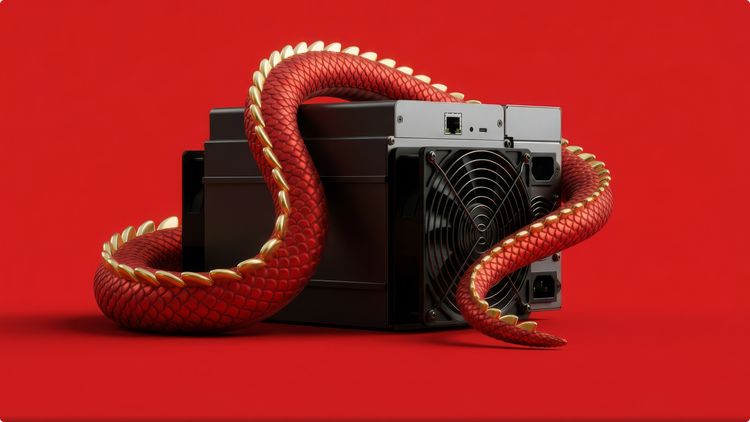
To mine BCH, you need an ASIC compatible with the SHA-256 algorithm. As of August 2026, current hydro-cooled models include the WhatsMiner M73 at about 512 TH/s and 7,424 W, and the Antminer S23 Hyd at 580 TH/s and 5,510 W. Key specifications to compare are hashrate, power consumption, and energy efficiency: the S23 Hyd, for example, is rated at 9.5 J/TH. More efficient hardware can improve potential mining margins, although actual profitability also depends on electricity prices, network difficulty, and BCH market conditions.
You’ll also need to factor in your electricity costs. Even the most powerful hardware won’t help if your energy bill wipes out your earnings.
How to Set Up BCH Mining
Start by connecting your ASIC miner to both power and the internet. Then, use a network scanner tool to find the device’s IP address. Once you have the IP, open it in your browser to access the ASIC’s web interface.
From there, select a mining pool such as EMCD, ViaBTC, or F2Pool. You’ll need to enter the pool address, a worker name (usually your account login and a unique device ID), and a password — this is often optional, and almost any value will work.
Some ASIC miners come with built-in firmware. If yours doesn’t, you’ll need to download the recommended SHA-256 mining software directly from the manufacturer’s website.
EMCD Mining Pool can be used as the pool layer in a BCH mining setup. Once the ASIC is configured, miners connect it using the pool address and worker credentials, after which the contributed hashrate and mining activity can be monitored through the pool interface.
The pool is designed for both individual miners and larger operations, with 24/7 monitoring, live technical support, and commission terms that can vary depending on hashrate. Larger operators may receive personalized rates based on their mining capacity.
How Much Can You Earn Mining Bitcoin Cash?
There is no fixed answer — earnings depend on your hardware’s hashrate and efficiency, your electricity rate, the BCH price, and network difficulty, all of which move constantly. To estimate: take your ASIC’s real specs, your local power price, and run them through a live profitability calculator on the day you decide — and treat the output as a dated snapshot, not a projection. The method matters more than any single number: revenue scales with hashrate, costs scale with power draw multiplied by your electricity price, and the difference between them can flip sign when the market moves.
Key factors to watch:
- BCH Price. If the coin’s price drops, your margin decreases as well. If BCH rises sharply in value, you earn more. Volatility is likely to continue
- Mining difficulty. Network difficulty adjusts automatically — as more hashrate joins, you earn less for the same amount of work. This becomes especially noticeable during market peaks
- Electricity rates. Rates vary greatly across regions. In large cities, mining is often unprofitable, but in areas with cheap energy, conditions are much more favorable
- Maintenance and Risks. Don’t forget costs for cooling, maintenance, repairs, internet outages, and potential legal issues (in some regions, mining is restricted or subject to extra taxes)
Common Mistakes and Pitfalls
Many miners — especially beginners — face common challenges:
- Incorrect setup. Misconfigured firmware, frequency settings, or pool details can cut performance in half or cause overheating. Follow manufacturer instructions or consult experienced miners.
- High electricity costs. Mining makes no sense if energy costs eat all your profits. Many users relocate to cheaper regions or rent space in data centers.
- Unreliable pools. Some pools are unstable, delay payouts, or charge high fees. Read reviews and avoid unknown pools with low hashrate participation.
- Rising difficulty. More hashrate = more competition = lower revenue per unit of power. This is especially noticeable during bull markets.
- Price volatility. Cryptocurrency prices can swing wildly. Sometimes it’s smarter to pause mining during price drops.
- Ignoring maintenance costs. Repairs, internet outages, and downtime add up. Neglecting these costs can turn profits into losses.
- Firmware issues. Using third-party firmware may boost performance — but if misapplied, it can brick your device. Stick with trusted updates and check compatibility.
How to Store and Withdraw BCH
Users have several options to store and withdraw BCH — depending on whether they want long-term storage, daily spending, or fiat conversion.
Hardware Wallets
Best for large amounts. These physical devices store private keys offline. Always buy from official sources to avoid counterfeit products.
Software Wallets
Convenient for smaller, more frequent transactions. Look for a BCH-specific or multi-asset wallet with a solid security track record and active development.
Exchanges and Platforms
Exchanges and P2P platforms can be used to convert BCH — keeping in mind that funds held on any exchange are exposed to platform risk, so they are not suited for long-term storage.
Security Tips
- Always enable two-factor authentication (2FA)
- Use only trusted websites and apps
- Store seed phrases offline — never on your phone or cloud
The Future of BCH Mining and the Crypto Landscape
Bitcoin Cash mining is still relevant in 2026. Hardware is getting faster and more efficient, reducing mining costs. Interest in decentralized systems is growing, supporting demand for BCH.
The BCH network continues to evolve, offering fast transactions and low fees — ideal for daily payments and developers building payment solutions.
The future of mining depends largely on regulation. Countries with crypto-friendly laws will foster growth. In stricter regions, mining may be pushed out.
Risks like price drops remain. If BCH loses value, mining can become temporarily unprofitable. But if demand increases, more miners and investors will return.
Technological advances also matter — from energy-efficient mining methods to innovations like CashTokens or second-layer protocols. These could strengthen BCH’s position and expand its real-world use.
Whether BCH mining pays for a specific miner in 2026 depends on their hardware efficiency, electricity price, and market conditions — verify with current numbers rather than assuming.
FAQ
What’s the best ASIC for BCH mining in 2026?
Hydro-cooled SHA-256 flagships like the Antminer S23 Hyd and WhatsMiner M73 are among the top options for industrial settings as of 2026. Compare current models by efficiency (J/TH) and price through a live calculator, and verify specs on the manufacturer's page.
How is BCH mining different from Bitcoin mining?
Technically, almost nothing — both use SHA-256 and the same ASICs. BCH’s network difficulty is lower only because its total hashrate is lower; since miners switch freely between the chains, revenue per terahash stays close to parity. Predictable payouts come from your pool’s payout model (such as FPPS), not from which chain you mine.
Can you mine BCH without an ASIC?
No. CPUs and GPUs no longer offer viable hashrates for BCH. Only ASICs are suitable.
How to choose a BCH mining pool?
Compare fees, payout stability, interface convenience, and reputation. Pools often change their terms, so double-check before joining.
How much electricity does BCH mining use?
A modern hydro-cooled SHA-256 ASIC draws several kilowatts of power. For example, a machine consuming about 7.3 kW burns roughly 175 kWh per day of continuous operation — multiply that by your local electricity rate to see your daily energy cost.
Is BCH mining profitable in 2026?
It can be — with efficient modern equipment and cheap power — but it is not guaranteed, and BCH is not systematically “easier money” than BTC: the same hardware earns near-parity per terahash on either chain. Monitor the market and run current numbers through a live calculator before committing.
without growing costs
cryptocurrencies