

FOMO in Crypto: How to Stop Losing Money to Emotions


FOMO is one of the fastest ways to lose money in crypto. Not because the market is always wrong, but because emotion usually arrives at the worst possible moment.
A token starts pumping. Social media gets loud. Screenshots of gains are everywhere. A meme coin nobody mentioned last week suddenly looks like the trade everyone should have seen coming.
That is where FOMO kicks in. The fear of missing out pushes people to buy after the move has already happened. Instead of asking whether the trade makes sense, they ask a much more dangerous question: "What if it keeps going without me?" That question has emptied a lot of wallets.
Crypto FOMO is not only a beginner's problem. It affects long-term holders, active traders, meme-coin hunters, and even people who know better. When prices rise quickly, the feeling that "everyone else is making money" easily outweighs risk control.
The solution is not to become emotionless: that is unrealistic. The solution is to set rules before emotions take over.
This article is for informational purposes only and does not constitute investment advice. Trading crypto involves a high level of risk, including the loss of funds.
Key takeaways
- What FOMO is. It is the fear of missing a profitable move, especially strong during rallies, pumps, and meme-coin hype.
- Why it costs money. FOMO pushes people to buy near the top, when early buyers have already captured most of the upside.
- The typical pattern. Price rises, social media amplifies the move, retail buyers enter late, liquidity peaks, early holders sell, and late buyers take the losses.
- The fix is a set of rules, not willpower: capital allocation, entry criteria, exit criteria, and a limit on risky assets.
- One example of allocation is 10/90: 10% for higher-risk trades and 90% for more structured holdings. This is not a universal recommendation.
- Missing a trade is normal. Missing a trade is better than chasing a bad one.
What is FOMO in crypto?
FOMO (fear of missing out) in crypto usually means buying an asset because it is rising and everyone is talking about it.
Buying a rising asset is not the problem in itself: momentum can be real, trends can continue, and breakouts do happen. The problem is buying without a plan. FOMO trading usually looks like this:
- A coin rises sharply.
- Social media starts calling it "early".
- Influencers post charts and screenshots.
- Comments turn into pressure.
- The buyer feels late but jumps in anyway.
There is no entry plan, no exit plan, no risk limit, and no real thesis. That is not trading, but an emotional reaction.
FOMO is especially strong in crypto because the market runs 24/7. There is no closing bell: there is always another candle, another pump, another trending token. You can go to sleep, wake up, and feel like the whole market moved without you. Constant movement creates pressure, pressure creates bad entries, and bad entries lead to emotional exits.
Why people buy at the top
People rarely buy the top because it is the top. They buy because it feels like confirmation. When a token has already risen 100% or 200%, it looks safer than before the move: the chart is green, the crowd is excited, and the story is clear. The brain treats price movement as proof. That is the trap.
By the time a trend becomes obvious to everyone, early buyers may already be thinking about selling. The late retail buyer sees momentum, while the early holder sees exit liquidity.
| Stage | What happens on the market | What the late buyer thinks |
|---|---|---|
| 1. Start of the move | The token rises quickly, few people notice | — |
| 2. Amplification | Social media and group chats spread the move | "Everyone is making money" |
| 3. Late entry | Retail buyers enter, afraid of missing more upside | "It's already up, but it can go higher" |
| 4. Confirmation | The price rises a little more, which reinforces the emotion | "I was right to buy" |
| 5. Distribution | Large and early holders start selling | "It's just a pullback" |
| 6. Reversal | The price turns down | "I'll sell when it gets back to my entry" |
| 7. Capitulation | Late buyers sell at a loss | "I can't take this loss anymore" |
That is how FOMO turns into regret.
A familiar loss pattern
The story does not need a named token: the pattern is familiar enough. A meme coin starts moving. At first, only a small group notices. Then the chart gets shared, and the move reaches larger audiences. Some people post big gains, and new buyers come in because the move looks mainstream.
The emotional logic at this point is simple: everyone is making money, this might be the next big one, and there is still time. But the market does not care about that feeling.
When there is enough liquidity, early buyers start taking profits. The price drops. Late buyers think it is just a pullback, and some add more. The price stops moving cleanly: some wait, some panic.
The pattern repeats in pumps, meme coins, low-liquidity tokens, and overhyped narratives. Common mistakes:
- buying after a large move without a plan;
- ignoring liquidity and market depth;
- entering because of social pressure;
- holding only because selling would mean admitting a mistake;
- increasing the position after the best part of the move is over;
- treating a short pump as a long-term thesis.
That is why FOMO losses are often not about a bad coin. Often the asset is not the main problem. The entry is.
FOMO is a discipline problem
"Control your emotions" is easy to say and not very useful. Emotions are not controlled by willpower alone, but by systems. A trader without rules has to make every decision in the moment, and the moment of a fast market is exactly when FOMO is strongest.
Before entering any trade, answer three questions:
- What is the entry?
- What would prove the trade wrong?
- How much can you lose if you are wrong?
If there are no answers, it is probably not a trade, but FOMO with a ticker.
A fuller checklist:
| Question | Why it matters |
|---|---|
| Why was this trade interesting before the pump? | Prevents chasing a move only because the price is rising |
| What is the entry level? | Stops random buying |
| What would prove the idea wrong? | Defines when the trade has failed |
| How much capital is at risk? | Limits the damage if the trade fails |
| What is the exit plan? | Prevents holding on hope alone |
Chart reading helps here too, but only as part of the process. Candles, support zones, volume, and momentum show when pressure is building or fading, but they do not remove risk. The EMCD Academy guide to reading candlestick charts explains how candle patterns help read market mood and recurring participant behavior, especially in combination with other tools.
The goal is not to predict every move, and not to treat every green candle as a signal to buy.
An allocation rule limits emotional damage
FOMO becomes more dangerous when every trade feels like it has to change everything. That is why allocation matters.
One example is a 10/90 split:
- 10% of capital for higher-risk trades, experiments, and short-term opportunities;
- 90% for long-term holdings and more structured strategies.
This is an example, not a recommendation. The right split depends on your risk tolerance, time horizon, income, liquidity needs, and experience.
The point is separation. If risky trades are limited to a defined part of the portfolio, a bad FOMO entry is less likely to damage the whole account. It also reduces the urge to "win everything back" on the next trade.
When part of your strategy is clear and its terms are set in advance, it becomes easier to resist chasing every market move: you are following rules set before the market got loud, not reacting to every green candle. But any structured product, whether a long-term holding plan or a yield product, does not remove market or platform risk. It is a planning tool, not a guarantee.
A good allocation rule answers:
- What percentage can go into high-risk trades?
- What percentage is off-limits for impulse buys?
- What is the maximum size of a single position?
- How many trades can be open at the same time?
- What happens after two or more losses in a row?
The rule should exist before the market starts moving, not during the pump.
Entry criteria: what to check before buying
A simple checklist stops many emotional trades:
- Has the asset moved too far, too fast?
- Is there enough liquidity to exit?
- Is the move driven by news, a narrative, leverage, or pure hype?
- Is there a clear support level or a planned entry point?
- What is the maximum acceptable loss?
If the honest answer is "I'm buying because I can't stand watching it go higher," that is FOMO, not strategy.
Candlestick charts help here only in context, not as magic. A strong candle after a long move is not necessarily a good entry: sometimes it means the late crowd has arrived.
So controlling emotions in trading is not about being tougher. It is about making sure each trade passes a checklist of requirements.
Why restraint beats impulsive trading
The hardest thing to accept in crypto is that missed trades are normal. There will always be:
- a coin that runs without you;
- a chart that makes sense after the move;
- someone posting a screenshot of the perfect entry.
Trying to catch every move leads to worse decisions. A disciplined trader can miss a pump and still be fine. An emotional trader can catch one pump and still lose money because the system is broken.
Restraint protects three things:
- capital, because losses take away future opportunities;
- attention, because chasing every move creates noise;
- decision quality, because one impulsive win can reinforce bad habits.
The last point is the most important. FOMO sometimes works: a person buys late, and the token keeps rising. That feels like proof that the impulse was right. But one lucky result does not make the process safe. The market can reward bad behavior before punishing it.
FOMO for miners
Miners are not immune to FOMO either, it just looks different:
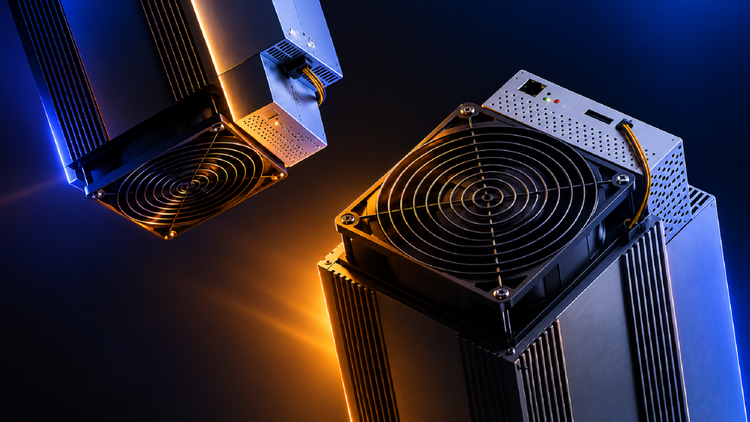
- buying hardware at the peak. During bull markets, ASIC prices rise along with the BTC price, and buying at the height of the excitement stretches the payback period. The same calculation that looked great at the top can look very different after a correction;
- panic selling payouts. When the price falls sharply, it is tempting to sell all mined coins at once at the worst moment;
- switching coins after the hype. Moving hashrate to a coin only because it is trending, without calculating profitability.
The same rules apply: calculate payback with conservative assumptions, plan sales in advance, and keep a reserve for electricity bills so you are never forced to sell in a panic. If you mine in a pool, such as EMCD Mining Pool, the dashboard shows your actual earnings and payout history, which is a more reliable basis for decisions than the mood on social media.
How to stop losing money to emotions
Stopping FOMO does not mean never trading volatile assets. It means not letting emotion decide your position size, entry, and exit. A simple system:
| Rule | Purpose |
|---|---|
| A fixed allocation for risky trades | Prevents one impulse from damaging the whole portfolio |
| Written entry criteria | Stops random buying during pumps |
| An exit plan set in advance | Reduces panic decisions |
| A cooling-off period | Adds distance between hype and action |
| Separating long-term holdings from trading | Keeps planned positions safe from impulse trades |
| A review after each trade | Helps spot repeated emotional mistakes |
A trader does not have to be perfect, just harder to manipulate with a green chart. That is the goal.
Bottom line
FOMO is not just a bad habit, it is a market pattern. Crypto will always produce moments when it seems everyone else is winning: meme coins will pump, narratives will rotate, and social feeds will make late entries look obvious and safe. That does not mean every move deserves your capital.
To stop losing money to emotions, set the rules before the emotion arrives:
- limit the capital you put into high-risk trades;
- define entry criteria;
- decide on exits in advance;
- do not buy just because the crowd is loud;
- separate planned holdings from impulse trades;
- accept that missing a trade is better than chasing a bad one.
FOMO in crypto will not go away, but it can stop being the one making decisions.
FAQ
What is FOMO in crypto?
The fear of missing out on a potential profit. It often pushes people to buy an asset after it has already risen sharply, without analysis or a clear plan.
Why do people buy crypto at the top?
Because a strong price rise feels like confirmation. Social media, hype, and other traders' gains create pressure and the feeling that it is now or never, while early holders are already starting to sell.
Why is FOMO trading dangerous?
It usually ignores risk, liquidity, entry price, and exit planning. The decision is driven by urgency and the fear of missing out, often with an oversized position and no exit plan.
How can I control emotions in trading?
Set written rules before entering a trade: allocation limits, entry and exit levels, liquidity checks, and a maximum loss. Follow them even when the market is loud.
What is the 10/90 rule?
One example of allocation: 10% of capital for higher-risk trades and 90% for long-term holdings and more structured strategies. The right split depends on your situation and risk tolerance.
Can structured products help curb FOMO?
They can help separate planned holdings from impulse trading, because their terms are set in advance. But they do not remove market or platform risk.
Disclaimer: This material is provided for informational purposes only and does not constitute investment advice. Crypto trading involves a high level of risk, including the loss of funds. Past performance does not guarantee future results.
without growing costs
cryptocurrencies