

The Future of Cryptocurrency Mining


A long time ago, in a faraway galaxy … specifically at the dawn of the cryptocurrency era in 2009, a Norwegian student, Kristoffer Koch, made an unusual investment in something little-understood at that time: a cryptocurrency called Bitcoin. The student was cautious and ended up spending only $24. And then... he simply forgot about it. Several years later, Kristoffer remembered his investment. He was thrilled to discover that the market value of his cryptocurrency investment had skyrocketed to a fantastic $885,000! According to legend, the investor bought a cozy apartment in Oslo with the invested money. Whether this is true or not remains unknown, but this story accurately captures the essence of cryptocurrency as an investment tool.
But when it comes to earning in this field, aside from trading, as in the lucky Norwegian student's case, there is another way – mining.
The word 'mining' literally means 'extraction of minerals.' The term sounds romantic, but crypto mining isn't like the traditional extraction of oil, gas, or gold ore. However, cryptocurrency is sometimes referred to as digital gold — one of the most valuable materials in the world — so certain parallels are useful.
Mining is quite a complex system. It involves computing a limited amount of cryptographic code by trying various numerical combinations. During this process, a new crypto block is generated. It contains information about coin transfers between users over a specific period, a reference to the previous block, and a hash value. This information is the key to successfully generating a block in the blockchain network. Once the new block is verified and validated, it becomes part of the blockchain, and miners are rewarded with cryptocurrencies.
The mining process is quite labor-intensive: it requires high-performance hardware, as well as a significant amount of electricity which may cost a lot. Additionally, the process is complicated by the volatility of the cryptocurrency market. You should use an online calculator to assess the profitability of your chosen coin, too.
So, this process isn't so straightforward to dive into and is somewhat unpredictable. That's why many miners are left wondering what the future of cryptocurrency mining looks like.
Key Takeaways
- Bitcoin price predictions tied to halving cycles have a poor track record — a widely repeated forecast of $220,000 by 2025 based on past halving patterns did not materialize; BTC trades around $64,000 as of July 2026
- Regulatory status of mining varies by country and changes over time
- Cloud mining carries real counterparty, contract, and fraud risk — it isn't inherently "safer" than running your own hardware, just differently risky
- As of mid-2026, over 95% of Bitcoin's 21 million supply has been mined — fewer than 1 million BTC remain to be issued, a process that will continue past the year 2100
Is Starting Mining Worth It?
There's no universal yes-or-no answer — it depends on your local electricity cost, hardware access, and the current mining law status in your specific country.
Many financial and economic authorities note that countries with competitive advantages — such as inexpensive electricity and a cool climate — are better positioned for mining as an industry, since these factors directly reduce operating costs.
Where Does Mining Regulation Stand?
Mining regulation differs sharply by country and changes frequently — there's no single global timeline for 'the mining law' to pass. Some jurisdictions (for example, parts of the U.S. and, as of 2024, Russia through a dedicated federal law) have already established legal frameworks for mining; others still have no clear regulatory status, and a few restrict or ban it outright. Before mining anywhere, check your own country's current rules rather than assuming a pending law will resolve the uncertainty — regulatory frameworks affect taxation, business registration requirements, and reporting obligations, all of which vary by jurisdiction.
Hardware: ASICs and GPUs
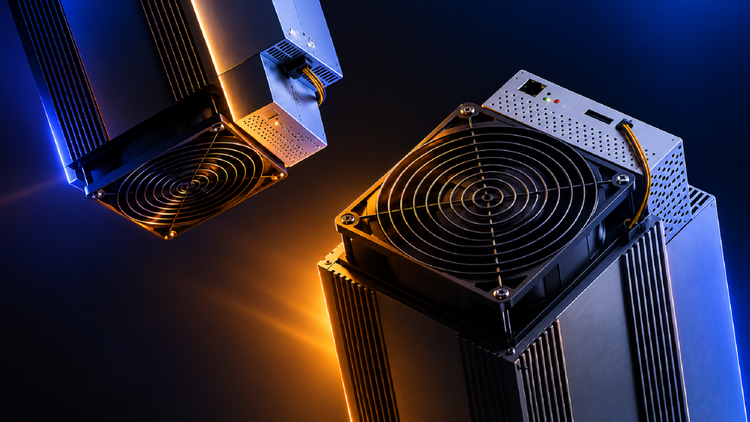
From a technical standpoint, no revolutionary changes are expected in the near term. Mining continues to run on the same two hardware categories: ASIC miners and GPUs.
The nuances are important: ASICs represent a higher level, suitable for mining BTC, while GPUs are commonly considered for more casual, 'at-home' crypto mining.
ASICs are powerful computers specifically built for crypto mining. However, they have one particular drawback: released models become outdated relatively quickly, which directly impacts their efficiency and, as a result, the profitability of mining. If you're trying to find a sustainable setup, it's essential to find the right balance in the triangle of 'Hashrate – Power Consumption – Price.'
On the one hand, new, more powerful devices are constantly being developed and released, capable of generating meaningful income under the right conditions. However, their costs and electricity expenses are also rising. As one example of current hardware: Bitmain's Antminer S21 Pro delivers around 235 TH/s and was priced near $4,030 as of June 2026, while newer hydro-cooled models like the Antminer S23 Hyd reach roughly 580 TH/s at around $13,500-17,400. Prices and specs like these change quickly and should always be checked against the manufacturer's current listing rather than treated as fixed. One approach for solo mining at scale is hosting hardware in a dedicated mining facility, where power and cooling infrastructure is already in place — though this comes with its own hosting-contract and counterparty considerations.
On the other hand, you can mine crypto at home using GPUs. They don't have the same raw power as ASICs, but the entry cost into mining with this hardware is significantly lower. This method is also a good option for mining GPU-friendly altcoins. Efficiency depends on the algorithm and each specific coin's mining difficulty. Since hashrate is lower, both expenses and profits are proportionally lower too. It's also worth noting that the cost of entering solo mining continues to rise, as does competition.
Looking at the broader shape of mining going forward, it's likely to remain split between solo and pool mining. Solo mining is more associated with GPUs — a more 'craft' approach. In contrast, mining pools, especially larger ones, represent where most production capacity concentrates. In pools, everything scales together: hashrate, costs, and — proportionally — payouts, smoothed out through shared reward distribution.
Bitcoin's Halving and Supply
Halving is a mechanism built into Bitcoin from the start to control its issuance schedule and prevent unlimited inflation. As you may know, the total supply of Bitcoin is capped at 21 million coins.
As of mid-2026, more than 95% of that supply — over 20 million BTC — has already been mined, following the network crossing the 20-million milestone in March 2026. Fewer than 1 million BTC remain to be issued, a process that will continue in diminishing amounts until around the year 2140.
In April 2024, the most recent halving occurred, reducing the reward for generating a block. This event happens roughly every four years and has historically preceded periods of price movement, though not with the same magnitude or timing each cycle.
During the 2024 halving, the reward for generating a block was reduced to 3.125 BTC. This cut Bitcoin's annual inflation rate significantly.
The next scheduled halving is expected around April 2028, when the block reward will drop further to 1.5625 BTC.
Cloud Mining Prospects
Cloud mining is essentially outsourced mining. Miners don't invest in their own equipment or deal with operational costs directly. Instead, they rent computing power from a data center and earn a share of the coins mined.
This comes with a different risk profile than owning hardware directly, not necessarily a lower one. Cloud mining depends entirely on the counterparty running the operation: contract terms, whether the advertised hashrate is actually delivered, withdrawal reliability, and the provider's own solvency all matter. The space has also historically attracted fraudulent operators promising fixed high returns with no real mining behind them. If considering cloud mining, look for a provider with verifiable, audited hashrate delivery and clear contract terms — proportionally lower profits compared to solo or pool mining are common, in exchange for not managing hardware yourself.
Cloud mining's future, like other forms of mining, will likely continue to depend heavily on regulatory clarity in the jurisdictions where providers operate — clearer rules around business registration and consumer protection would help distinguish legitimate operators from fraudulent ones.
FAQ
How do I mine BTC?
Bitcoin today is realistically mined only with ASIC hardware, either solo or — far more commonly — through a mining pool, which smooths out payout variance compared to solo mining.
How do I start mining?
The first and most crucial step is to choose which coin to mine and which mining method — solo, pool, or hosted — fits your hardware, budget, and local electricity cost.
How do I start mining altcoins?
Analyze the specific coin's mining algorithm, current difficulty, and realistic profitability using a live calculator, then match it to hardware that actually supports that algorithm efficiently.
What are the risks of mining?
Key risks include coin price drops, equipment obsolescence, rising electricity rates, unclear or shifting tax treatment depending on jurisdiction, and — particularly in cloud mining — provider fraud.
without growing costs
cryptocurrencies