Copy Trading Explained As a Form of Social Trading
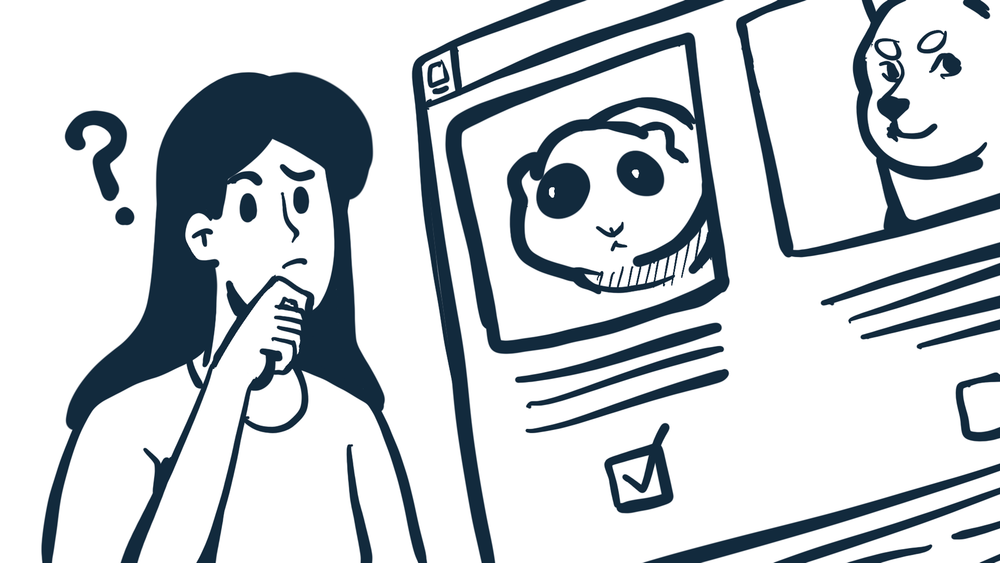
Trading on your own for the first time is often compared to learning to drive by reading a manual and immediately entering traffic alone. Copy trading offers a different path by letting beginners follow experienced drivers before taking full control themselves. Through this model of social trading, investors can automatically mirror real trades and observe professional decision making without needing deep market expertise from day one.

What Is Social Trading and Copy Trading?
At its core, social trading is built on the idea that market participants can benefit from observing and interacting with others rather than acting in isolation. Instead of treating trading as a purely individual activity, platforms make performance data, strategies, and risk behavior visible to a wider audience. This transparency allows users to learn from real decisions, not theory, and to understand how different approaches perform under changing market conditions.
So, social trading in practical terms refers to an environment where users can view, analyze, and sometimes follow the actions of experienced participants. This may include seeing open positions, historical returns, risk levels, and trading frequency. The concept is often explained as a bridge between independent investing and community driven decision making. Unlike traditional trading, where learning happens slowly through trial and error, social trading shortens the feedback loop by exposing users to live examples.
Copy trading developed as a direct extension of this idea. While social trading focuses on observation and interaction, copy trading adds automation. Instead of manually replicating trades, users connect their accounts to selected strategies and allow trades to be executed automatically. This reduces emotional decision making and removes the need to monitor markets constantly. The process is structured, rule based, and dependent on predefined allocation settings.
| Aspect | Social Trading | Copy Trading |
| Decision-Making | Manual, user-driven | Automated, trader-led |
| Learning Curve | Active education via community | Limited; relies on pro traders |
| Control Level | High (pick and choose) | Low (full mirroring) |
| Best For | Beginners wanting to learn | Passive investors |
Traditional trading usually requires time, technical skills, and constant attention. Traders must analyze charts, follow news, manage risk, and execute orders themselves. For many people, this creates a high barrier to entry. In contrast, social trading platforms lower that barrier by shifting the focus from prediction to selection. The key decision becomes choosing whom to follow rather than when to enter or exit the market.
It is important to note that social trading does not eliminate risk. Market movements still affect outcomes, and performance varies over time. However, by making trading behavior visible and comparable, these platforms introduce accountability and structure that are often missing in solo trading. For users who value learning through examples and prefer guided participation, this model offers a more approachable way to engage with financial markets.
How Does Copy Trading Work?
Understanding how copy trading functions is easiest when the process is broken into clear, practical steps. Most platforms follow a similar structure, even if the interface or tools differ slightly. The goal is to remove technical friction while keeping the user in control of risk and capital allocation.
The first step is selecting traders to follow. Platforms usually provide detailed profiles that show past performance, drawdowns, asset focus, and risk levels. This information helps users evaluate whether a strategy fits their goals and tolerance. Instead of guessing market direction, users compare real track records and make informed choices based on data rather than promises.
The second step involves allocating funds. Once a trader is selected, the user decides how much capital to assign to that strategy. This amount is not handed over to another person. It stays in the user’s own account and is only used to replicate trades proportionally. Allocation rules define position sizing, maximum exposure, and stop conditions. This structure ensures that one strategy cannot consume the entire balance unless the user allows it.
After allocation, automatic execution begins. When the chosen trader opens, modifies, or closes a position, the same action is mirrored in the follower’s account in real time. This answers the practical question of how the system operates day to day. The platform’s infrastructure handles synchronization, order placement, and scaling based on account size. Users do not need to place trades manually or monitor charts constantly.
Many platforms also include risk controls that allow users to intervene when needed. These may include maximum loss limits, manual pause options, or the ability to disconnect instantly. This layer exists to prevent blind reliance and to give users flexibility when market conditions change. Copy trading does not mean giving up control entirely. It means delegating execution while retaining oversight.
A common question is how this setup compares to manual trading. In traditional environments, every decision requires attention, analysis, and emotional discipline. With copy trading, the cognitive load shifts from execution to evaluation. Users spend more time reviewing performance and less time reacting to short term price movements. This often leads to more consistent behavior, especially for beginners.
It is also important to understand how fees work. Some platforms charge a performance based fee, others include spreads or fixed commissions. These costs are usually visible before activation and should be reviewed carefully. Transparency around fees is part of what makes this model accessible and structured.
Explained in simple terms, the system answers how copy trading does work by combining transparency, automation, and user defined limits. It does not guarantee profits, but it simplifies participation by replacing constant decision making with structured following. This makes it particularly attractive for those who want exposure to markets without full time involvement.
Its results vary widely based on trader selection, market conditions, and risk settings, with no universal "average" return due to individual performance differences.
Key Benefits of Social Trading Platforms
- Lower entry barrier
Social trading platforms make market participation easier for beginners. Users do not need advanced technical skills or constant screen time to get started - Access to real strategies
Instead of theory, users see real performance data, including wins, losses, and risk behavior. This makes decision making more grounded and transparent - Built-in diversification
By following more than one strategy, users can spread risk across assets or approaches. This reduces reliance on a single outcome and improves balance - Learning through observation
Watching how a trader reacts to market changes helps users understand timing, discipline, and risk control in practice, not abstraction - Automation and consistency
Trades are executed automatically based on predefined rules. This reduces emotional interference and helps maintain consistent behavior with the strategy - User control with structure
With the right settings, users stay in control of limits and exposure while benefiting from guided execution
Risks and Drawbacks in Copy Trading
Even though copy trading simplifies market participation, it is not risk free. A balanced view is important for credibility and for meeting the technical task requirements. The table below outlines the main risks and how they are commonly mitigated on platforms.
| Risk | What It Means | Common Mitigation |
| Market losses | If the copied strategy performs poorly, losses are reflected in the follower’s account | Diversifying across multiple strategies and setting loss limits |
| Over-reliance | Users may depend entirely on automation without understanding decisions | Reviewing performance regularly and learning from trade history |
| Strategy changes | A trader may change behavior or risk level over time | Monitoring drawdowns and disconnecting when metrics shift |
| Fee impact | Performance fees or spreads can reduce net returns | Checking fee structure before activation |
| No guarantees | Past performance does not ensure future results | Using conservative allocation and long term evaluation |
It reduces complexity, but it does not remove responsibility. Users still need to review data, adjust settings, and stay aware of market conditions. Treating it as a guided tool rather than a guaranteed solution leads to more realistic expectations.
Final thoughts
The main difference between copy and traditional trading comes down to focus and effort. Traditional trading demands constant attention, technical analysis, and emotional discipline. Every decision rests on the individual, which can be effective but also time consuming and mentally demanding. Copy trading shifts that burden by replacing manual execution with structured following and predefined rules.
This approach works best for people who value efficiency and clarity. Instead of reacting to every market move, users concentrate on evaluating performance, risk behavior, and consistency over time. Automation reduces emotional pressure, while settings and limits preserve a level of control that keeps the process disciplined rather than passive.
At the same time, it is not a replacement for responsibility. Results still depend on market conditions and on the quality of the strategies chosen. Treating it as a guided method rather than a guarantee leads to better outcomes. Success comes from realistic expectations, careful selection, and regular review, not from chasing short term gains.
For many participants, copying someone else’s trading offers a balanced middle ground. It provides exposure to markets without the intensity of full manual trading, while still allowing learning through observation and experience. Before committing, users should take time to research available options and align their choices with personal goals and risk tolerance.
FAQ
1. Is copy trading suitable for beginners with no experience?
Yes, it is often used by beginners because it removes the need for constant analysis and manual execution. However, users still need to understand basic risks, review performance data, and set limits to avoid blind reliance on automation
2. Can social trading guarantee profits?
No, it does not guarantee profits. Results depend on market conditions, the strategies followed, and risk settings. Losses are possible, just as in any form of trading, and past performance does not predict future outcomes
3. How much control do users have in copying the trading?
Users keep control over their capital and risk settings. While trade execution is automated, users can set allocation limits, stop copying, or disconnect at any time. It delegates execution, not responsibility
4. What is the main difference between social trading and copy trading?
Social trading focuses on observing, analyzing, and learning from other traders’ actions. Copy trading builds on this by automating the process, allowing trades to be mirrored directly without manual intervention
5. Do users need to monitor the process of copying the trading regularly?
Yes, periodic monitoring is important. Even though trades execute automatically, strategies can change over time, and market conditions can shift. Regular reviews help ensure that performance and risk remain aligned with personal goals