

Mining with Antminer S9 ASIC in 2026: Is It Still Profitable?
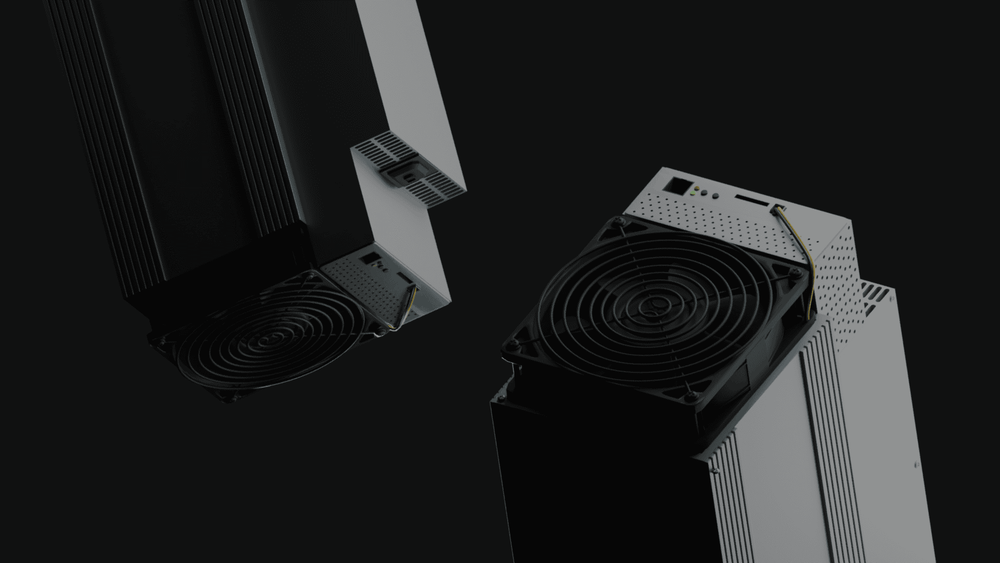

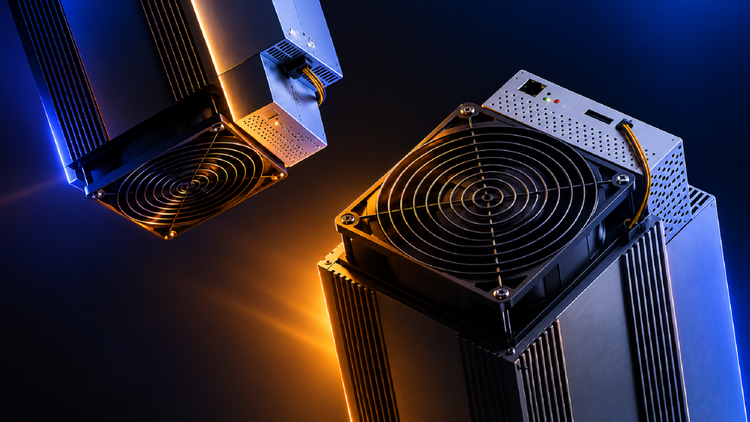
Bitcoin (BTC) debuted in 2009, when mining was done using processors and GPUs. As mining difficulty grew, these methods stopped being viable, and Bitcoin mining shifted to ASIC hardware — far more efficient and cost-effective for its SHA-256 algorithm. One of the most well-known ASICs remains the Antminer S9 by Bitmain. Is it still relevant today? Is it worth investing in this now-legacy equipment?
Key Takeaways
- The S9 is now a legacy device — one industry source notes it's only profitable today at electricity costs well below $0.02/kWh, a threshold most residential users won't hit without solar, off-peak, or otherwise unusually cheap power
- Running multiple ASICs safely requires planning for your electrical circuit's actual capacity, not just picking a PSU per unit — overloading a household circuit with several 1,300W+ devices is a real fire risk
- Overclocking legacy ASIC firmware toward a specific hashrate target can void any remaining warranty and meaningfully increase failure risk — treat any specific number you see quoted as illustrative, not a goal to chase
- Confirmed current SHA-256 alternatives for this hardware include Bitcoin Cash, Bitcoin SV, Peercoin, and Litecoin Cash — verify any less-common coin's current status independently before mining it
Bitmain Antminer S9: Hardware Overview
The original S9 configuration released in 2016, with variants following through 2017 and after, each offering modest performance or efficiency gains over the base model.
| Specification | Value |
|---|---|
| ASIC Chips | 189 (3 boards, 63 chips each) |
| Power Consumption | ~1,300 W (varies by variant — see below) |
| Chip Frequency | Dynamic, roughly 550-650 MHz |
| Cooling | Air cooling (standard); liquid cooling (Hydro variant) |
Many S9 units run modified firmware offering finer control over chip clock speeds. This can improve performance, but improper tuning can cause instability or hardware damage — treat firmware modification as something that requires care, not a routine step.
Profitability Basics
The Antminer S9 is now mostly legacy SHA-256 hardware rather than a mainstream Bitcoin mining machine. A typical 13.5 TH/s unit draws about 1.3 kW, so electricity is the deciding variable. Live calculators in late July 2026 show estimated gross daily revenue below $1 before power costs and a negative result of roughly $2.6–$2.8 per day at $0.10/kWh. That puts breakeven well below normal home electricity rates and often near or under $0.02/kWh, depending on BTC price, network difficulty, pool terms, firmware, uptime, and actual wall power. In practical terms, an S9 may still make sense only where electricity is extremely cheap, surplus, or reused as heat, or as a learning device. Before publishing any dollar figure, recalculate the setup with live BTC price, current difficulty, local electricity cost, pool fee, and the specific S9 model.
Alternative Coins for the S9
The S9 can mine any SHA-256 coin, not just Bitcoin. Confirmed current options with meaningful market presence include:
- Bitcoin Cash (BCH)
- Peercoin (PPC)
Mining these can make sense specifically when Bitcoin's price is low relative to these alternatives' own economics, though liquidity and exchange support for smaller SHA-256 coins is generally much thinner than for Bitcoin itself — factor in how easily you could actually convert rewards to something more liquid.
ASIC miners can technically be pointed at other algorithms with enough firmware hacking, but this is rarely practical: yield tends to be poor, and power draw stays roughly the same regardless of what you're mining.
Key Features
- 16nm chip process — better efficiency than the S9's predecessors, though well behind current-generation ASICs
- Hashrate — standard models around 13.5 TH/s; Hydro variants in the 16-18 TH/s range
- Liquid cooling (Hydro variant) — better heat dissipation, and the waste heat can be repurposed (e.g. for space heating)
Modified firmware exists that can push some units beyond factory hashrate — but any specific target figure depends heavily on the individual chip, cooling, and firmware version, and comes with real risk to hardware longevity and any remaining warranty.
At this stage in the S9's lifecycle, solo mining makes essentially no practical sense — the probability of any single unit finding a block independently is vanishingly small (see this project's dedicated solo-mining-probability guide for the underlying math). Nearly all realistic S9 profitability today comes through pool mining, where rewards are shared proportionally across all participants based on contributed hashrate.
Not every pool supports modified/overclocked S9 firmware — some cap accepted hashrate at the factory default (13.5 TH/s). Confirm your specific pool's policy before investing time in re-flashing a unit.
Power Consumption
Most non-Hydro S9 variants draw roughly 1,150-1,350 W; the Hydro variant draws more, around 1,728 W. Efficiency across the lineup runs roughly 0.01-0.0125 TH per watt — higher is more efficient.
The SE and Hydro variants are generally the most efficient in the S9 lineup, combining factory overclocking with liquid cooling.
Noise
Air-cooled S9 variants run around 75-85 dB — comparable to a vacuum cleaner, which matters a lot for home use. Hydro variants run much quieter, around 45 dB, but need specialized liquid-cooling maintenance. PSU fans add their own noise too. Placing units in a separate, well-ventilated room helps significantly if noise is a concern for shared living space.
Cooling Systems
Standard S9 units use two adjustable-speed fans (intake and exhaust), rated for roughly 0-45°C ambient and 5-95% humidity. Hydro variants replace fans with a liquid loop and external radiator fan, trading some complexity for lower noise and better heat control.
Immersion cooling — submerging boards in a dielectric fluid within a sealed system — can further extend hardware life and allow more aggressive tuning, and the resulting heat can be repurposed. It also involves meaningfully more upfront cost, engineering complexity, and fluid-handling considerations than air or standard liquid cooling — it's a legitimate option for a serious, well-planned setup, not a simple upgrade to add casually.
Building an S9 Mining Farm
Space
Choose a space large enough for your planned number of units, with ventilation adequate for the combined heat output — a basement, garage, or dedicated room can all work if properly ventilated; the space type matters less than actual airflow and temperature control.
Estimating Profitability
Use a live online profitability calculator with current hashrate, electricity cost, and network difficulty — include maintenance, cooling, and hardware costs in your estimate, not just electricity, to get a realistic picture of expected earnings after expenses.
Hardware and Power Supply
Buy the number of units your budget and space support. Beyond individual unit PSUs, plan for your electrical circuit's actual rated capacity — several 1,300W+ devices can easily exceed a standard household circuit's safe continuous load. Have a qualified electrician confirm your circuit and breaker capacity before connecting multiple ASICs, and never daisy-chain more devices onto one outlet than the circuit is rated for. Use properly rated power cables, and Ethernet for network connections rather than relying on Wi-Fi for a farm of any size.
Cooling Setup
For air-cooled units, arrange fans for good airflow around each miner. For Hydro variants, ensure space for the external radiator fan and coolant pump. Immersion cooling, discussed above, is a further option for serious setups with the budget and planning to support it.
Networking
Use Ethernet for stability over Wi-Fi, and assign static IPs to each unit so you can reliably monitor and manage them on your local network.
Configuration and Overclocking (Optional)
Configure each unit's firmware — factory firmware is the safer default; third-party firmware can unlock tuning options but shifts more responsibility onto you for stability and safety. Overclocking increases power draw and heat and can shorten hardware lifespan or void any remaining warranty — approach it cautiously, monitor temperatures closely, and treat any specific hashrate target you read online as illustrative for that exact setup, not a guarantee for yours.
Joining a Pool
Solo mining an S9 today is impractical given the vanishingly small odds of finding a block alone. When choosing a pool, weigh:
- Fees
- Payout structure
Pool size — larger pools generally pay out more frequently but with smaller individual shares; smaller pools can offer larger individual shares but less consistent payout timing
- Server location — closer servers generally mean lower latency
- Reputation and reliability
- Payout threshold
- Supported coins — confirm the pool actually supports what you plan to mine
When choosing a pool, compare fees, payout structure, pool size, server location, reputation, payout threshold, and supported coins. Larger pools usually pay more frequently but with smaller individual shares, while smaller pools may have less consistent timing. EMCD Mining Pool is one option to review: it supports merged mining, offers 24/7 monitoring and live expert support, and provides personalized terms for larger miners based on hashrate and volume.
Monitoring and Maintenance
Track hashrate, temperature, and efficiency using your pool's built-in tools or third-party monitoring software. Clean units regularly to prevent dust buildup, inspect cooling components periodically, and replace worn fans or pump parts as needed.
Scaling
After running for a while, review actual performance and profitability data before deciding whether to scale up — real operating data beats any estimate made before you started.
Profitability and Payback Period
For the Antminer S9, payback is no longer a realistic baseline assumption. The machine can still produce SHA-256 hashrate, but its efficiency is far behind newer ASIC generations. At typical residential electricity prices, current live calculators show a negative daily financial result, meaning there is no payback period to calculate. The economics change only in edge cases: extremely low-cost electricity, reused heat, already-owned hardware, custom firmware, or a site where power would otherwise go unused. Even then, the result should be checked with current BTC price, network difficulty, pool fee, uptime, and actual wall power before publication. For most new buyers, the larger risk is not a long payback period, but buying obsolete hardware that never reaches breakeven.
Conclusion
The Antminer S9 can still be used in very specific conditions, mainly where electricity is extremely cheap, surplus, or reused as heat. But in 2026, it is clearly a legacy device competing with far more efficient current-generation ASICs. For most buyers, it is better viewed as a low-cost way to learn mining operations than as hardware with a realistic payback case. Any financial result depends heavily on electricity price, network difficulty, pool terms, uptime, and the actual power draw of the unit.
FAQ
Is the Antminer S9 still profitable for Bitcoin mining?
It can be, mainly if you have access to very cheap or free electricity (like solar). At typical commercial electricity rates, profitability is thin to negative given the S9's age and efficiency relative to current hardware.
What are good alternative coins to mine with the Antminer S9?
Confirmed SHA-256 alternatives include Bitcoin Cash (BCH), Peercoin (PPC) — though liquidity for these is generally much lower than Bitcoin's, worth checking before committing.
How can I improve my S9 setup's profitability?
Cheap electricity (solar, off-peak rates) is the single biggest lever given the S9's age. Joining a pool instead of solo mining, keeping cooling well maintained, and being cautious rather than aggressive with any overclocking all help protect what margin exists.
How long does it take to break even with an Antminer S9?
This depends heavily on electricity cost, Bitcoin's price, and mining efficiency — figures range widely and should be modeled with a live calculator for your specific situation rather than assumed from a general estimate.
without growing costs
cryptocurrencies