

Is Mining Still Worth It on a Palit GeForce RTX 3080 After Ethereum's Shift to PoS?

GPU mining was quite profitable for miners during 2020-2021. Enthusiasts flooded the market, snatching up graphics cards at an astonishing rate. This surge in demand not only drove up prices but also caused a significant shortage of these devices, making them more valuable than ever.
The drop in cryptocurrency prices turned the tide for many miners, making GPU mining no longer profitable at the same scale. As a result, many miners began offloading their once-coveted equipment, which contributed to a decline in graphics card prices on the secondary market.
GPU Mining: Current State
The main and most popular cryptocurrency mined with graphics cards was historically Ethereum (ETH). In mid-September 2022, ETH underwent a major blockchain upgrade known as 'The Merge,' marking its transition from the mining-based Proof-of-Work (PoW) algorithm to the more energy-efficient Proof-of-Stake (PoS) system. Ethereum has not been mineable since.
After Ethereum's Merge, miners who previously focused on ETH shifted to mining other altcoins that still operate on Proof-of-Work algorithms. This caused a substantial increase in hashrate on those networks, while altcoin prices — which had risen in anticipation of the Merge — dropped substantially afterward. A rising network hashrate means your equipment mines fewer coins over time, since your share of the total network hashrate decreases as more miners join.
Ravencoin (RVN) and Ethereum Classic (ETC) both saw their network hashrate increase sharply following the Merge, coupled with price declines, which made mining increasingly unprofitable for many users during that period. Both coins' current price and hashrate data can be checked on live market trackers rather than relying on any fixed historical snapshot.
Some experienced miners choose to keep mining through downturns, treating it as a long-term activity and maintaining a separate cash reserve to cover ongoing expenses in the meantime. This is a strategy choice with real risk, not a guaranteed path to eventual profit — coin prices may or may not recover to levels that offset the period of unprofitable operation.
Nvidia GeForce RTX 3080
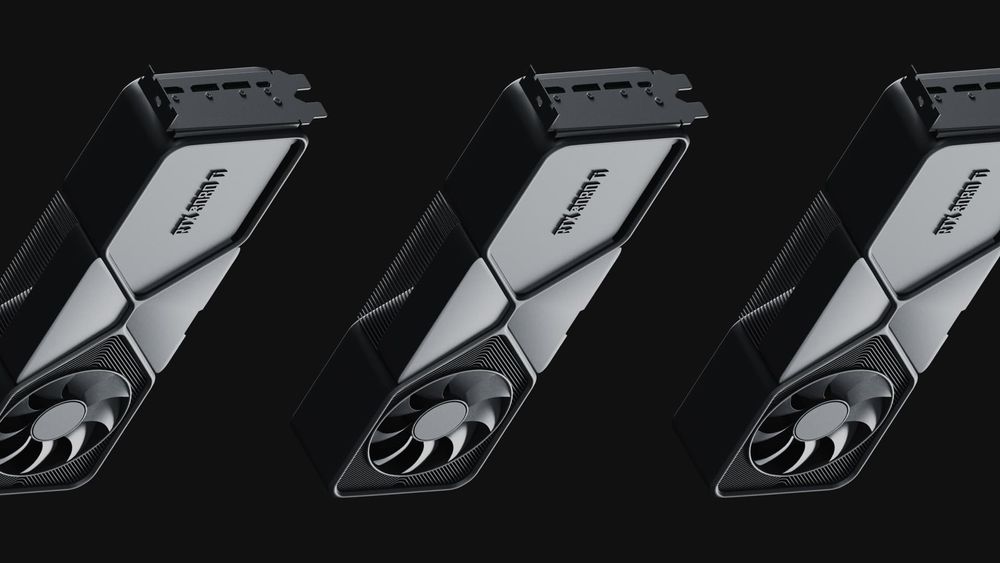
The RTX 3080 series includes two models: the RTX 3080 and the RTX 3080 Ti, both built on Nvidia's Ampere architecture.
The RTX 3080 is available in two versions — 10 GB and 12 GB of GDDR6X memory — with base clock speeds of 1.44 GHz and 1.26 GHz respectively, and can typically be overclocked up to around 1.71 GHz. The two versions feature 8,704 and 8,960 CUDA cores.
The RTX 3080 Ti comes with 12 GB of GDDR6X memory and 10,240 CUDA cores, with a base clock speed of 1.37 GHz that can be increased to around 1.67 GHz.
By 2026, the RTX 3080 series is a discontinued, previous-generation card. It's no longer widely sold new and is now primarily found on the secondary market, where pricing varies significantly by region, condition, and seller — check current listings directly rather than relying on any fixed price figure, since GPU market prices shift constantly.
Different cryptocurrencies use different hashing algorithms, and hashrate figures for the RTX 3080 vary substantially depending on which algorithm is being run. Use a live mining calculator to check current hashrate and profitability estimates for your specific algorithm of interest, since these figures change with software updates, driver versions, and network conditions.
The LHR Hashrate Limiter
Starting in 2021, Nvidia began shipping a hashrate limiter technology on new production runs of its RTX 30-series cards, aimed at reducing profitability for Ethereum mining specifically. This feature, known as Lite Hash Rate (LHR), reduced the achievable hashrate for the Ethash algorithm.
It's worth being precise here: LHR wasn't retroactively added to existing RTX 3080 and RTX 3080 Ti cards. Instead, starting around May 2021, new production batches of these cards shipped with LHR enabled, while earlier-manufactured units without LHR continued to be sold and used in parallel. Whether a specific used card has LHR depends on its exact manufacturing batch, not just its model name.
According to information from Nvidia, LHR-equipped RTX 3080 and RTX 3080 Ti cards were designed to cap Ethash hashrate at roughly 43 MH/s.
Since Ethereum can no longer be mined at all following the 2022 Merge, LHR's original purpose is now moot for Ethereum specifically — but the limiter can still affect performance on some other Ethash-family algorithms, depending on the specific mining software used. Following leaks of driver source code, later versions of several mining programs were able to bypass or reduce the effect of the LHR limiter on affected cards.
Palit GeForce RTX 3080
Nvidia designs the GeForce RTX 3080 graphics chip, but the cards themselves are manufactured by a range of hardware partners, including ASUS, Palit, MSI, Gigabyte, and others. Each manufacturer differentiates its cards through cooling design, build quality, and connectors, while the underlying chip performance for mining purposes remains largely the same across brands.
Palit offers a range of RTX 3080-series cards under its GamingPro and GameRock product lines, along with a GameRock OC variant for the RTX 3080 Ti.
Pricing for these cards on the secondary market fluctuates significantly and should be checked against current marketplace listings — including general electronics resale platforms — rather than a fixed figure, given how much GPU pricing has shifted since the card's original release.
Dual Mining on the Palit GeForce RTX 3080 GamingPro
The Palit RTX 3080 GamingPro supports various hashing algorithms, and — like most modern GPUs — it can be configured for dual mining, where two different cryptocurrencies on separate algorithms are mined simultaneously. This is possible because different algorithms draw on different parts of the GPU's resources: some rely primarily on the processing cores, while others are more memory-bandwidth intensive. Running compatible pairs together can make more complete use of the card's available resources, which is part of why dual mining appeals particularly to larger mining operations trying to maximize hardware utilization.
Approximate benchmark figures for this card (checked against a specific mining calculator at an unspecified point in time, and now dated) included:
- Ergo (ERG), Autolykos algorithm: around 220 MH/s at approximately 220 W
- Kaspa (KAS), kHeavyHash algorithm: around 850 MH/s at approximately 260 W
- Ethereum Classic (ETC), Etchash algorithm: around 98 MH/s at approximately 240 W
- Alephium (ALPH), Blake3 algorithm: around 2.1 GH/s at approximately 270 W
Daily earnings estimates for specific coin pairs (such as ERG+KAS or ETC+ALPH) depend entirely on current coin prices, network difficulty, and pool fees at the moment you check — any specific cents-per-day figure quoted in an article is a historical snapshot, not a current estimate. Run your specific hardware and target coins through a live mining calculator for an up-to-date figure before making any decisions.
Overclocking the Palit GeForce RTX 3080 for Mining
Before overclocking, it's worth noting that individual GPUs — even the same model — can respond differently to the same settings, due to natural variation in silicon quality. This unpredictability is commonly called the "silicon lottery." Overclocking can improve mining performance, but pushing settings too aggressively risks instability or, in rare cases, hardware damage.
MSI Afterburner is a widely used tool for overclocking GPUs, allowing fine control over clock speeds, power limits, and fan curves.
When overclocking, make changes gradually and monitor temperature and stability after each adjustment. If you see artifacts, crashes, or overheating, back off to the previous stable settings.
For memory-intensive algorithms like Ethash and Etchash, memory frequency tends to have the most impact on hashrate. Approximate overclocking results for this card on various algorithms (dated benchmark data — actual results vary by unit and should be verified independently):
Etchash (for ETC) — commonly used mining software includes lolMiner, T-Rex, and GMiner:
| Overclocking Level | Core Frequency | Memory Frequency | Power Limit | Fan Speed | Hashrate | Power Consumption |
|---|---|---|---|---|---|---|
| Minimal | 1200 MHz | 1800 MHz | 250 W | 70% | 96.43 MH/s | 250 W |
| Medium | 1200 MHz | 2200 MHz | 240 W | 70% | 98.92 MH/s | 223 W |
| Maximum | 1200 MHz | 2600 MHz | 240 W | 70% | 101.58 MH/s | 224 W |
Autolykos (for Ergo) — commonly used with T-Rex:
| Overclocking Level | Core Frequency | Memory Frequency | Power Limit | Fan Speed | Hashrate | Power Consumption |
|---|---|---|---|---|---|---|
| Minimal | 1700 MHz | 2000 MHz | 250 W | 70% | 220.71 MH/s | 200 W |
| Medium | 1700 MHz | 2200 MHz | 250 W | 70% | 225.18 MH/s | 214 W |
| Maximum | 1700 MHz | 2600 MHz | 250 W | 70% | 228.22 MH/s | 213 W |
Octopus (for CFX):
| Overclocking Level | Maximum |
| Core Frequency | 200 MHz |
| Memory Frequency | 2100 MHz |
| Power Limit | 260 W |
| Fan Speed | 70% |
| Hashrate | 90.73 MH/s |
| Power Consumption | 260 W |
KawPow (for RVN) — commonly used with T-Rex:
| Overclocking Level | Medium |
| Core Frequency | 0 MHz |
| Memory Frequency | 2000 MHz |
| Power Limit | 250 W |
| Fan Speed | 70% |
| Hashrate | 42.17 MH/s |
| Power Consumption | 250 W |
Profitability and ROI
Given the card's current secondary-market price, current electricity costs, and current mining economics, payback periods can vary enormously depending on all three factors — reported estimates for cards like this have ranged widely, sometimes into many years. This isn't a fixed number: it depends heavily on which coins you mine, current network difficulty, electricity rate, and the price you actually paid for the card. Calculate your own estimate using a live profitability calculator with your specific inputs rather than relying on any published figure, which will already be outdated by the time you read it.
Some miners continue operating even at a long or uncertain payback period, expecting that future price appreciation in the coins they mine could improve the outcome. This is a speculative bet on future prices, not a guaranteed return — cryptocurrency prices can also decline further, which would extend or eliminate any path to a positive return.
FAQ
Is it profitable to mine on a Palit GeForce RTX 3080?
Profitability depends entirely on current coin prices, network difficulty, and your electricity cost at the time you're evaluating it. The card can mine a range of Proof-of-Work cryptocurrencies and supports dual mining, but you should check current numbers through a live calculator rather than assume profitability based on past conditions.
What is the ROI of the Palit GeForce RTX 3080?
There's no fixed figure — it depends on what you paid for the card, current mining economics, and electricity costs. Estimates can range widely depending on these inputs; calculate your own using current data rather than relying on a general estimate.
Is the Palit GeForce RTX 3080 still available for purchase?
As a discontinued, previous-generation card, it's now found primarily on the secondary market through general electronics resale platforms and specialized hardware sellers, rather than as new retail stock.
How much does the Palit GeForce RTX 3080 cost in 2026?
Secondary-market pricing varies significantly by condition, region, and seller. Check current listings directly rather than relying on a fixed price, since GPU resale values have shifted considerably since the card's original release.
Does the LHR limiter apply to Palit GeForce RTX 3080 cards?
It depends on the specific unit's manufacturing batch — cards produced from around May 2021 onward generally shipped with the LHR limiter for the Ethash algorithm, while earlier-manufactured units did not. Since Ethereum is no longer mineable, this specific limitation is largely moot today, though it may still affect performance on some related algorithms depending on the mining software used.
without growing costs
cryptocurrencies