

Is bitcoin mining profitable in 2026? Real math beyond WhatToMine

Bitcoin mining can still be profitable in 2026, but primarily for bitcoin miners with cheap electricity, efficient hardware, and disciplined operations. A practical profitability threshold is usually around $0.06-$0.07/kWh with modern ASIC miners operating near 15-16 J/TH. Industry estimates vary widely, often placing the cost to produce 1 BTC somewhere between $40,000 and $80,000 for efficient operators, with higher-cost setups landing above that range. Electricity often represents 75-85% of monthly operating costs, while calculators may exclude pool fees, downtime, reject rate, network difficulty changes, and withdrawal costs.
That is why WhatToMine may display an attractive daily revenue figure while the real net result is significantly smaller. A calculator may show an Antminer S21 Pro generating around $7-$11 per day in gross mining revenue, depending on BTC price and network conditions. The real question is what remains after power, pool fees, uptime loss, difficulty growth, transaction fees, and hardware cost.
Bitcoin mining can be profitable, but only when the full equation works. Mining hardware is specialized equipment designed for mining bitcoin. In 2026, efficiency and power cost matter more than headline hashrate. A higher hashrate increases the share of potential mining rewards, but only if electricity costs do not consume the revenue first.
Key takeaways
- Bitcoin mining profitability depends on cheap electricity, efficient hardware, Bitcoin price, network difficulty, uptime, reject rate, pool fee, payout model, and hardware cost.
- WhatToMine calculates mining revenue and estimated profitability based on inputs, but it does not fully reflect every miner’s real cost structure.
- ASIC Miner Value provides hardware-specific profitability data, but real-world calculations still require pool fees, withdrawal costs, downtime, repair costs, hosting terms, and local electricity pricing.
- Electricity is usually the make-or-break factor. Many Bitcoin mining operations require all-in power costs near $0.06-$0.07/kWh for modern ASIC mining to remain viable.
- The current Bitcoin block reward is 3.125 BTC plus transaction fees, and the reward halves roughly every four years. Bitcoin mining difficulty adjusts every 2,016 blocks, or roughly every two weeks, to keep block times close to 10 minutes.
- Modern ASIC miners such as the Antminer S21 Pro, S21 XP, Whatsminer M60, and Avalon A1566 can be profitable in the right power environment. Older machines such as Antminer S19, S19 Pro, S19j Pro, Whatsminer M30, and M50 are far more sensitive to electricity cost.
The quick answer: when mining bitcoin makes sense in 2026
Bitcoin mining makes economic sense when this equation works:
BTC mined × BTC price > electricity + pool costs + downtime + maintenance + hardware payback
The equation appears simple. In practice, many new miners calculate only the first two variables: Bitcoin mined and electricity costs. This often leads to unrealistic assumptions based on a clean daily profitability figure. Usually, the real math is less generous.
Bitcoin mining profitability generally favors professional mining operations with low power costs, efficient machines, and reliable infrastructure. Individual miners can still operate profitably, but cheap electricity, strong uptime, and realistic payback assumptions are essential.
| Factor | Practical benchmark |
| Electricity | All-in cost close to $0.06-$0.07/kWh or lower |
| Hardware | Modern ASICs near 15-16 J/TH or better |
| Uptime | Around 95%+ in real operating conditions |
| Pool setup | Clear payout method, known fee, low reject rate |
| Cooling | Stable temperature and airflow |
| Capital cost | Purchase price low enough to repay before efficiency becomes outdated |
Bitcoin miners: home mining, cloud mining, CPU mining, and GPU mining reality check
Home mining is possible, but real-world results rarely match calculator projections. Residential setups often face higher electricity costs, weaker cooling control, and potential noise or ventilation limitations.
Cloud mining is different. Physical mining equipment is managed by a third party, but the same economics still apply. Contract pricing, service fees, maintenance terms, BTC price, payout structure, and counterparty risk determine whether a cloud mining contract is viable.
CPU mining is largely part of Bitcoin’s early history. Bitcoin mining moved from CPUs to GPUs and then to ASICs because network competition increased. Today, CPU mining is not a practical route for profitable Bitcoin mining. GPU mining may still appear in broader crypto mining discussions, but Bitcoin mining now depends on specialized hardware built for SHA-256. This is the hardware path Bitcoin mining followed as network competition increased.
What WhatToMine actually shows you
WhatToMine and ASIC Miner Value are useful tools. The issue is not the calculator itself. The issue is assuming the calculator represents a complete business model.
WhatToMine shows a snapshot based on inputs such as hashrate, power consumption, electricity price, coin price, and network conditions. ASIC Miner Value compares ASICs using live profitability estimates across many devices. These tools are useful for comparison and screening, but they cannot account for real operational conditions.
WhatToMine calculates gross mining revenue, not your real-world net profit.
| Hidden variable | Why it matters |
| Actual pool fee | FPPS, PPS, PPLNS, and other models affect payout logic |
| Withdrawal fee | Small withdrawals can reduce net proceeds |
| Network fee | Moving BTC can create extra cost |
| Uptime | A miner that runs 95% of the time does not earn 100% revenue |
| Reject rate | Rejected shares reduce effective contribution |
| Current difficulty | More network hashrate can reduce your share over time |
| Hardware degradation | Fans, PSUs, and hashboards do not stay perfect forever |
| Cooling | Fans, ventilation, and heat extraction consume money |
| Electricity fluctuation | Real tariffs can change by time, region, or contract |
| Hosting terms | Hosted miners often pay management, repair, or minimum power fees |
Calculator reality check: S21 Pro example
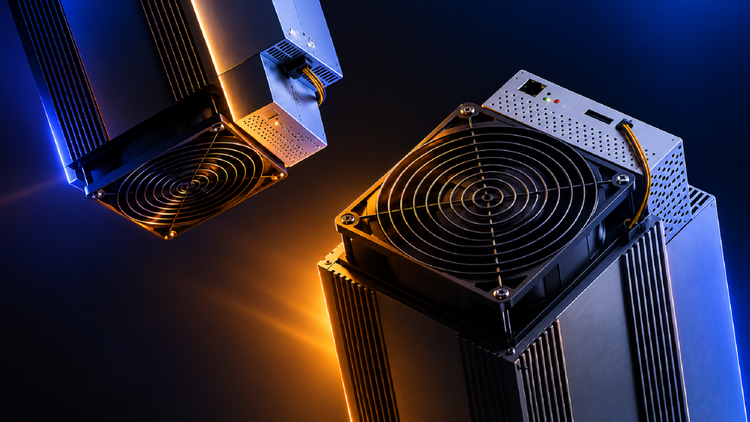
Consider the Antminer S21 Pro as an example. Bitmain lists the S21 Pro at 234 TH/s, 3,510W, and 15 J/TH. Public mining calculators may show different revenue depending on BTC price, network difficulty, and selected coin. For this example, assume a gross daily mining revenue of $7.00 for BTC-equivalent output.
| Calculator view | Real-world adjustment |
| WhatToMine-style gross revenue | $7.00/day |
| 95% uptime | $6.65/day |
| Pool fee, 1.5% | -$0.10/day |
| Electricity at $0.07/kWh | -$5.90/day |
| Withdrawal/network allowance | -$0.10/day |
| Real net before hardware payback | $0.55/day |
Now add difficulty drift. If network difficulty effectively reduces revenue by 5% per month, the $6.65 adjusted revenue before costs becomes about $6.32 next month, then $6.00, then $5.70, assuming BTC price does not rise. Power cost stays the same.
At $0.10/kWh, the same S21 Pro spends about $8.42/day on electricity alone. In that setup, the calculator dream becomes a daily loss unless Bitcoin price, transaction fees, or mining conditions improve.
The real profitability formula
Use this formula before buying any ASIC:
Net mining profit = gross mining revenue − total operating costs
In practice, total operating costs include electricity, pool fees, withdrawal or network fees, downtime loss, reject-rate loss, cooling, maintenance, hosting or facility costs, and hardware depreciation.
Then calculate payback:
Hardware payback period = ASIC purchase price / realistic daily net profit
A hardware investment can range from $2,000 to $20,000, depending on model, condition, delivery, taxes, setup costs, power work, and whether the machine is new or used.
If an ASIC costs $4,000 and real net profit is $4/day, payback is around 1,000 days, before repairs and difficulty growth. If profit is $0.50/day, the payback period becomes unrealistic. If the result is negative, the hardware is operating at a loss.
There are no guaranteed returns in mining. BTC price, current difficulty, electricity prices, and equipment condition can change quickly.
Hidden costs that calculators skip
| Cost type | Calculator shows | Real impact | How to estimate |
| Pool fee | Sometimes included | Reduces payout by 1-2% or more | Check pool fee and payout model |
| Electricity | Included if entered | Largest monthly cost | Use all-in kWh, not headline tariff |
| Downtime | Usually not included | 5% downtime cuts revenue directly | Use 95% uptime unless proven better |
| Reject rate | Often ignored | Reduces accepted shares | Check pool dashboard |
| Upfront cost | Sometimes ignored | Delays payback | Include purchase price, delivery, taxes |
| Setup costs | Rarely included | Can change ROI | Add wiring, cooling, racks, installation |
| Withdrawal fee | Often ignored | Matters for frequent withdrawals | Check payout policy |
| Network fee | Often ignored | Affects BTC movement cost | Estimate by transfer frequency |
| Cooling | Usually ignored | Adds power and hardware cost | Include fans, ducting, ventilation |
| Repairs | Usually ignored | Fans, PSUs, and boards fail | Add monthly reserve |
| Difficulty growth | Snapshot only | Reduces coin output over time | Model 3-5% monthly stress case |
| Hardware resale value | Usually optimistic | Used ASIC prices can fall fast | Use conservative resale assumptions |
Cheap electricity: the make-or-break factor
Electricity cost is often the dominant factor in Bitcoin mining. It can represent 75-85% of monthly operational expenses. Mining output must cover both electricity costs and the original hardware investment.
Electricity prices vary sharply by region. Industrial electricity rates are often lower because governments may support industrial demand or energy monetization strategies. Regions with lower electricity costs, such as parts of Russia and Kazakhstan, can be more favorable for crypto mining than regions with expensive residential electricity, including many parts of the United States. Regional rules, grid access, import costs, tax treatment, and reliability still matter.
Here is a simplified S21 Pro electricity cost example:
| Electricity cost | Daily power cost | Profitability pressure |
| $0.04/kWh | $3.37/day | Stronger margin |
| $0.06/kWh | $5.05/day | Viable if other costs are controlled |
| $0.07/kWh | $5.90/day | Near threshold |
| $0.10/kWh | $8.42/day | Often unprofitable for retail |
| $0.12/kWh | $10.11/day | Very difficult unless BTC price rises |
All-in electricity matters more than the advertised tariff. Include delivery charges, taxes, demand charges, power conversion losses, hosting markups, and cooling.
Efficient hardware: why J/TH matters more than hashrate
Hashrate measures computational power. Higher hashrate increases the likelihood of earning a share of mining payouts. However, hashrate without efficiency can become financially unsustainable. A miner that produces more hashes while burning too much power can still lose money.
Efficiency is measured in joules per terahash, or J/TH. Lower J/TH means better cost efficiency.
| ASIC model | Approx. hashrate | Approx. efficiency |
| Antminer S19 | 95 TH/s | 34.5 J/TH |
| Antminer S19 Pro | 110 TH/s | 29.5 J/TH |
| Antminer S19j Pro | 104 TH/s | 29.5 J/TH |
| Antminer S21 | 200 TH/s | 17.5 J/TH |
| Antminer S21 Pro | 234 TH/s | 15 J/TH |
| Antminer S21 XP | 270 TH/s | 13.5 J/TH |
| Whatsminer M30 | 88 TH/s | 38 J/TH |
| Whatsminer M50 | 118 TH/s | 29 J/TH |
| Whatsminer M60 | 172 TH/s | 18.5 J/TH |
| Avalon A1566 | 185 TH/s | 18.5 J/TH |
Modern ASIC miners are specialized machines built for SHA-256 mining. ASIC stands for application-specific integrated circuits, which means the chip is designed for a specific task rather than general computing. That is why modern ASIC miners provide far higher hashrate than older models, GPUs, or CPUs.
When older ASIC miners can stay profitable longer
A used ASIC can look attractive because the upfront cost is lower. That does not mean it is cheaper to operate.
An Antminer S19j Pro can seem like a smart buy when the purchase price is low. But at roughly 29-35 J/TH, it consumes much more energy per unit of hashrate than S21-class equipment. At $0.10/kWh, that difference can erase the benefit of the discount.
Older ASIC miners are not automatically bad. They just need extremely low electricity prices, strong uptime, and proper due diligence before purchase. For new miners, that usually means checking machine condition, repair history, PSU health, fan condition, firmware, and pool-side performance before purchase.
ASIC miners, pool fees, and payout models
Joining a mining pool significantly increases a miner’s chance of receiving regular payouts compared with solo mining. Solo mining can work in theory, but the probability of a small miner finding one block alone is extremely low.
Mining pools combine computational power and distribute mining rewards based on each miner’s contribution. Larger pools can account for a significant share of total Bitcoin network hashrate, which increases their ability to find blocks regularly and distribute payouts to participants.
| Model | How it works | What to watch |
| PPS | Fixed payout per valid share | Predictable, but usually higher fee |
| FPPS | PPS plus estimated transaction fees | More stable, fee structure matters |
| PPLNS | Pays based on recent shares when pool finds blocks | Can vary with pool luck |
| Proportional | Rewards distributed by share of contributed work | Less predictable than PPS-style models |
A lower fee does not always mean a better result. FPPS, PPS, PPLNS, and proportional payout models distribute mining payouts differently, especially when transaction fees and pool luck matter.
EMCD Pool provides transparent payout tracking, worker monitoring, and a documented fee structure. Pool evaluation should include payout model, fee structure, reject rate, withdrawal rules, and actual pool-side performance rather than headline fees alone.
Block reward and network difficulty: why profit decays over time
Mining profitability is affected by Bitcoin’s network difficulty. Difficulty adjusts approximately every 2,016 blocks, or about every two weeks, to keep block production close to 10 minutes, according to Investopedia.
When more hashrate joins the Bitcoin network, difficulty rises and each unchanged miner earns a smaller share of rewards. This is why revenue can fall even when a machine runs perfectly.
Bitcoin miners are rewarded with 3.125 BTC for successfully mining one block, plus transaction fees. The block reward halves roughly every four years, which puts more pressure on miners unless Bitcoin price, transaction fees, or hardware efficiency improve enough to offset it.
Recent miner economics show the pressure clearly. CoinShares reported that hash price hit around $36-$38/PH/s/day, near or at breakeven for many miners, and fell further to around $29/PH/s/day in Q1 2026. This does not mean all mining is unprofitable. It means the margin for weak setups is thin.
Real scenarios: home miner, hosted, industrial, used ASIC trap
These are simplified planning examples, not forecasts. BTC price, transaction fees, difficulty, pool performance, and machine condition can change the result.
The examples use a simplified $7/day gross S21 Pro revenue assumption before real-world deductions.
| Scenario | Setup | Realistic result |
| Home miner | S21 Pro, $0.10/kWh, 95% uptime | Around -$1.97/day after electricity and basic deductions |
| Hosted miner | S21 Pro, $0.07/kWh all-in, 95% uptime | Around $0.55/day before hardware payback |
| Industrial miner | S21 Pro, $0.04/kWh, 97% uptime | Around $3.20/day before hardware payback |
| Used ASIC trap | S19j Pro, $0.10/kWh | Often -$4/day or worse because efficiency is too weak |
Now look at payback. If the S21 Pro costs $4,000 and produces $3.20/day in a strong industrial setup, payback is about 1,250 days before difficulty drift and repairs. If it produces $0.55/day, payback is not realistic. If it loses money daily, the hardware price is almost irrelevant.
That is why retail miners should not buy only because a calculator shows green numbers. The real question is: what is the all-in kWh, what is the J/TH, and what does the pool dashboard show after the machine runs for a week?
Common mistakes that wipe out profit
The first mistake is using the calculator default electricity cost instead of the real all-in kWh.
The second is ignoring downtime. A miner that runs 95% of the time earns 5% less before any other costs.
The third is buying older hardware because it looks cheap. A low purchase price can be wiped out by weak J/TH efficiency.
The fourth is forgetting withdrawal fees, network fees, and payout thresholds.
The fifth is assuming difficulty stays flat. In competitive periods, revenue can decay quickly.
The sixth is comparing pools only by fee. Payout model, uptime, reject rate, dashboard clarity, and support all matter.
The seventh is ignoring heat and noise. A home setup that cannot cool properly will not run like the calculator assumes.
The eighth is expecting mining income to stay flat. Mining revenue changes with Bitcoin price, network difficulty, transaction fees, uptime, and equipment performance. Eventually, every machine faces tougher economics as newer technology enters the market.
The ninth is thinking in dollars earned per day, while ignoring dollars spent per day. Mining revenue only matters after costs.
Pre-buy profitability checklist
- Calculate all-in electricity cost, including delivery charges, taxes, cooling, and hosting markup.
- Check ASIC efficiency in J/TH, not just hashrate.
- Compare the ASIC price with realistic daily net profit, not gross revenue.
- Model at least 95% uptime, not 100%.
- Add a reject-rate assumption based on pool-side data.
- Include pool fee, payout model, withdrawal fee, and network fee.
- Stress test revenue with 3-5% monthly difficulty drift.
- Check whether the machine needs special wiring, ventilation, or noise control.
- Estimate repair reserve for fans, PSU, and hashboards.
- Calculate payback under conservative, normal, and optimistic BTC price scenarios.
FAQ
Is bitcoin mining still profitable in 2026?
Yes, but mainly for miners with cheap electricity, efficient ASICs, and strong uptime. A practical threshold is often around $0.06-$0.07/kWh with modern machines near 15-16 J/TH. Home miners paying $0.10/kWh or more often struggle.
How long does it take to ROI with an Antminer S19?
It depends on electricity cost and purchase price, but many S19, S19 Pro, and S19j Pro machines are difficult to justify at residential power rates in 2026. Their efficiency near 29-35 J/TH is much weaker than modern S21-class machines.
How much can an Antminer make per month?
A calculator might show monthly gross revenue, but real net profit depends on electricity, uptime, pool fees, reject rate, and difficulty. An S21 Pro that looks like $210/month gross at $7/day can become much lower after power and deductions.
Is Antminer S21 still profitable?
The Antminer S21 and S21 Pro can be profitable if the all-in electricity cost is low enough. At $0.06-$0.07/kWh, the setup may be close to threshold. At $0.10/kWh or higher, profitability can disappear quickly.
Conclusion
Bitcoin mining profitability in 2026 is not a yes-or-no question. It is a math question.
Mining hardware is powerful, but power cost decides whether that hardware works economically. Hashrate helps, but J/TH decides how expensive that hashrate is. Bitcoin price can lift revenue, but network difficulty can pull it back down. Calculators are useful, but they are not a substitute for real net math.
For retail miners, the safest rule is simple: do not buy an ASIC because WhatToMine looks green today. Calculate all-in power, realistic uptime, pool fee, payout model, reject rate, withdrawal costs, difficulty drift, and hardware payback.
EMCD Pool serves as a pool-side reality check within the profitability equation. It helps miners compare calculator assumptions with pool-side reality: worker uptime, accepted shares, payout visibility, and performance across mining accounts. In a market where margins are thin, that visibility can be the difference between guessing and managing the operation properly.
without growing costs
cryptocurrencies