

How to Mine Bellscoin (BEL): Merge-Mining with Litecoin and Dogecoin

This material is published for informational purposes only and does not constitute investment advice.
Bellscoin (ticker BEL, also seen written as BELLS) is a rare case in crypto: a coin older than its far more famous "descendant," Dogecoin — one that spent years in obscurity before an unexpected revival driven by the meme coin community.
This guide covers what Bellscoin is, how mining it works through merge-mining with Litecoin and Dogecoin, what hardware you need, and what to watch out for before getting started.
What Is Bellscoin, and Where Did It Come From
Bellscoin was created on November 28, 2013, by developer Billy Markus (BillyM2K) — the same person who released Dogecoin just eight days later. According to Markus himself, Dogecoin is essentially a fork of Bellscoin's code: both genesis blocks contain the word "Nintondo," a nod to Nintendo and the game Animal Crossing, which inspired the coin's concept (in the game, characters earn an in-game currency called Bells through fishing, fruit-picking, and other activities).
Unlike Dogecoin, which quickly gained popularity, Bellscoin stayed in obscurity for years and was barely mined. The project was revived at the end of 2023, around Dogecoin's tenth anniversary — the meme coin community reassembled the original code with help from a Litecoin developer and relaunched the network.
Since 2024, an entire ecosystem has grown up around Bellscoin:
- Support for Bellinals — inscriptions on the Bellscoin blockchain, similar to Bitcoin Ordinals (by October 2024, more than 150 million inscriptions had been created)
- BEL-20 token standard
- The Nintondo platform — an explorer, marketplace, and wallet for Bellinals and BEL-20 tokens
- Protocol upgrades (SegWit, Taproot), with stated plans for future OP-CAT support for smart contracts
Technical Basics: Algorithm and Merge-Mining
Bellscoin runs on the Scrypt algorithm — the same one used by Litecoin and Dogecoin. This fundamentally separates it from a completely different, unrelated project with a similarly-sounding name — Bellcoin (BELL), which runs on the YesPoWer algorithm and is mined exclusively via CPU. Bellscoin, by contrast, is mined with ASIC and GPU hardware built for Scrypt, just like Litecoin.
The key feature of Bellscoin is merge-mining: the coin can be mined simultaneously with Litecoin and Dogecoin on the same hardware and the same electricity, at no extra cost and with no loss of hashrate on the primary coin. When your hardware finds a block on the primary network (say, Litecoin), a block on the auxiliary network (Bellscoin) is validated at the same time, and you receive a reward in multiple assets at once.
Hardware for Mining Bellscoin
Since Bellscoin uses Scrypt, you'll need hardware built specifically for that algorithm:
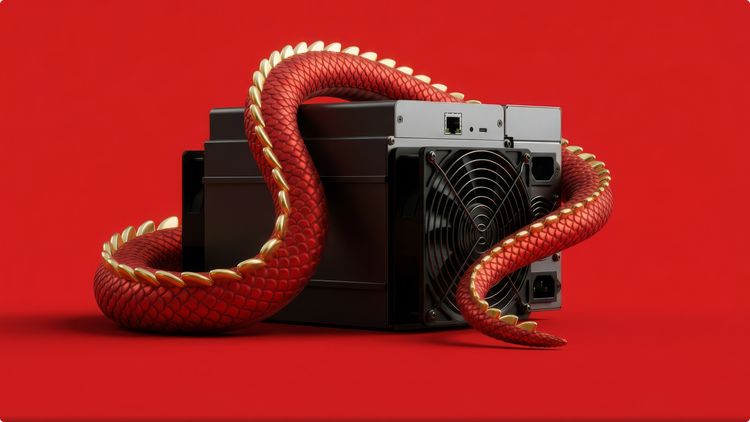
- Scrypt ASIC miners — the main practical option for meaningful hashrate (the same class of hardware used for Litecoin)
- Regular CPUs and mobile devices aren't suitable for Scrypt mining — the algorithm is designed for specialized hardware, unlike YesPoWer coins such as the Bellcoin mentioned above
If you already have an ASIC for mining Litecoin or Dogecoin, no additional hardware is needed to add Bellscoin — merge-mining is enabled at the pool configuration level.
Setting Up Bellscoin Mining
General steps:
- Set up ASIC hardware that supports Scrypt mining
- Create wallets for Litecoin, Dogecoin, and Bellscoin (or use a wallet like Nintondo, which supports BEL and related tokens)
- Choose a pool that supports LTC + DOGE + BEL merge-mining (and other Scrypt coins)
- In your device's connection settings, enter the pool's stratum address, log in using the login.worker format, and enable the merge-mining option if it isn't active by default
- Make sure all your wallet addresses are correctly entered in your pool dashboard so rewards are credited properly
Where to Mine Bellscoin: Pools
Several major pools support merge-mining Bellscoin alongside Litecoin and Dogecoin, including EMCD Mining Pool — in its Scrypt mining section, you can mine LTC and DOGE while simultaneously earning several additional coins on the same algorithm, including BEL (Bellscoin), along with LKY, PEP, JKC, and DINGO. Connection follows the standard format for Scrypt pools: enter the nearest stratum address and a worker name in the login.device-name format, with additional-coin payouts typically configurable separately in your account dashboard.
Other major Scrypt pools (such as ViaBTC) also support Bellscoin through similar LTC+DOGE+BEL merge-mining setups.
Profitability and What to Watch For
Returns from merge-mining Bellscoin depend on the same factors as standard Scrypt mining:
- ASIC hashrate and energy efficiency
- Electricity rate
- Current network difficulty and the price of LTC, DOGE, and BEL
- Pool fees
An important practical point: since Bellscoin is mined alongside Litecoin and Dogecoin at no extra energy cost, the actual economics of the operation are driven by LTC and DOGE — the BEL reward is a bonus on top, not a separate cost center. That said, Bellscoin's liquidity and price are considerably lower than LTC/DOGE and can swing meaningfully — don't treat it as a primary income source.
Before storing or withdrawing large amounts of BEL, check which exchanges and DEXs currently support the coin — listing support for niche meme coins can change faster than for major assets.
Risks and Things to Watch For
- Volatility and low liquidity. BEL is a considerably less liquid asset than LTC or DOGE, and its price can swing sharply.
- Naming confusion. Don't confuse Bellscoin (BEL, Scrypt, ASIC/GPU, merge-mined with LTC/DOGE) with Bellcoin (BELL, YesPoWer, CPU-only) — these are two different projects with similar names, different pools, and different hardware requirements.
- A young revived project. The ecosystem around Bellinals, BEL-20, and Nintondo has only been developing since 2024, so it has less history and predictability than more established projects.
- Storage risk. As with any niche coin, use well-vetted wallets rather than keeping large amounts on exchanges.
FAQ
What is Bellscoin, in simple terms?
It's one of the earliest meme coins in crypto history, created in 2013 by Dogecoin's creator eight days before Dogecoin itself launched. The project was nearly forgotten but was revived at the end of 2023 and now has its own growing ecosystem (Bellinals, BEL-20, the Nintondo platform).
What hardware do I need to mine Bellscoin?
Scrypt ASIC miners — the same type used for Litecoin. Regular CPUs won't work, unlike the separate, similarly-named project Bellcoin (YesPoWer).
Do I need separate hardware to mine Bellscoin?
No, if you already have an ASIC for Litecoin or Dogecoin — Bellscoin is mined through merge-mining on the same hardware and hashrate, at no extra energy cost.
Which pools support Bellscoin mining?
Pools that support LTC + DOGE + additional Scrypt coin merge-mining, including EMCD Mining Pool and several other major Scrypt pools. Check with a specific pool for its current list of supported coins, since this can change.
How is Bellscoin different from Bellcoin?
These are two completely separate, unrelated projects with similar names: Bellscoin (BEL, Scrypt, merge-mined with LTC/DOGE on ASICs) and Bellcoin (BELL, YesPoWer, CPU-only). Make sure not to mix them up when choosing a pool or wallet.
Should I count on Bellscoin mining as a primary income source?
No. The economics of merge-mining are driven primarily by LTC and DOGE, with BEL as a bonus on top. The coin itself is less liquid and more volatile than LTC and DOGE.
without growing costs
cryptocurrencies