

Hash Board LDO Regulator: Why Antminer Chips Fail and How Much Repairs Cost
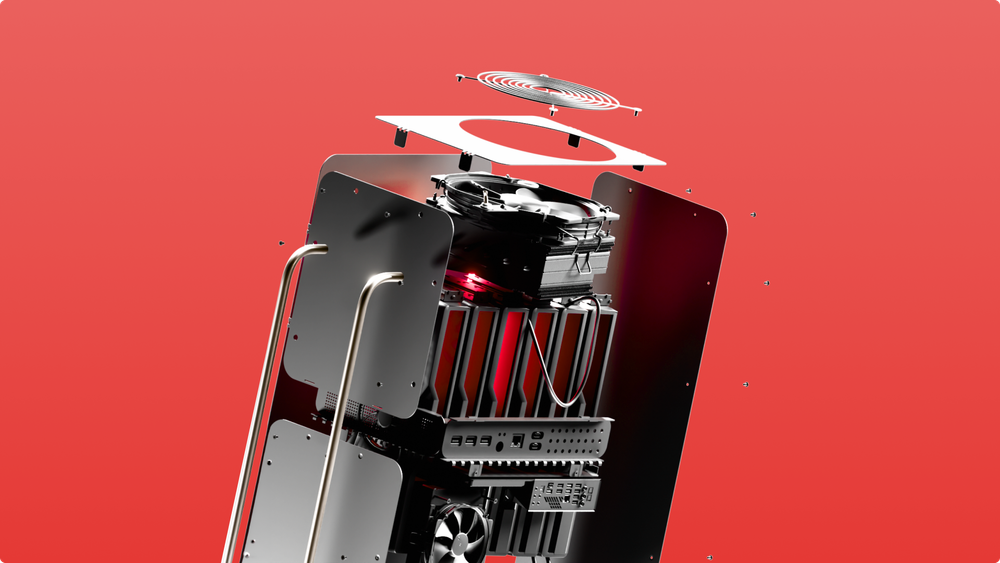

Diagnosing hash boards helps detect faults early and prevent declines in mining equipment performance. For mining farm owners, understanding why individual chips fail, how board repairs are performed, and which preventive measures reduce maintenance costs is essential.
Key Takeaways
- A hash board is the main computing unit of an ASIC miner, and its condition directly determines the device's hashrate.
- LDO regulators provide stable voltage to individual power domains; when one fails, part of the board or a whole chain can stop working.
- The most common causes of chip failure are overheating, sudden temperature changes, voltage spikes, and contaminated heatsinks.
- Log errors such as ASIC NG, Chain Missing, and CRC Error help quickly locate the fault.
- Many boards can be restored by replacing chips or regulators or by BGA reballing, without replacing the whole board.
- Prevention, including cleaning, temperature control, and continuous monitoring, is much cheaper than repairs.
Hash Board Design and the Role of LDO Regulators
A modern ASIC miner consists of several functional units, with the hash board being one of the most important. It contains power management integrated circuits (ICs), computing chips, and supporting components. Particular attention should be given to power domains, which group computing chips into separate power supply chains.
Each low-dropout (LDO) regulator on the hash board provides stable voltage to specific sections of the circuit. These regulators ensure proper chip operation even when the input power supply experiences minor fluctuations.
In Antminer equipment, an LDO failure can cause reduced performance or a complete shutdown of a computing chain. If an ASIC miner fails to deliver its expected hash rate, technicians first rule out issues related to the power supply unit, interconnect cables, and communication between boards. They then test power domains, LDO regulators, and individual ASIC chips to accurately locate the fault.
In many cases, the problem is caused not only by the main power source but also by local voltage regulation circuits.
Why Antminer Chips Fail
The primary cause of chip failure is overheating. When the cooling system operates inefficiently, temperatures rise and chip lifespan is reduced. Continuous operation under extreme thermal conditions leads to the degradation of solder joints and electrical connections.
Another significant risk factor is rapid temperature fluctuations. If cooling fans suddenly stop or the equipment repeatedly undergoes rapid heating and cooling cycles, mechanical stress on solder joints increases. Such conditions accelerate BGA contact degradation and increase the likelihood of defects developing beneath the ASIC package.
These failures may occur in both new equipment and devices that have been in operation for a long time.
Protection against electrostatic discharge (ESD) during maintenance is also essential. Although ESD events are not among the most common causes of Antminer failures, they can damage sensitive electronic components during repair or diagnostics. For this reason, service centers use anti-static equipment and follow strict handling procedures.
Some owners attempt to replace components themselves; however, without proper tools and expertise, such repairs often result in additional damage.
Common Causes of Failures
- Component overheating
- Contaminated heatsinks
- Voltage spikes
- Electrostatic discharge (ESD)
- Mechanical damage
- Sudden temperature fluctuations
When a BGA connection fails, the hash rate decreases or an entire computing chain stops functioning. Error messages frequently appear in system logs. In such situations, the equipment can no longer deliver its rated performance and requires professional diagnostics.
How Service Centers Repair Hash Boards
Professional hash board repair begins with comprehensive diagnostics. Engineers use ASIC board testers, oscilloscopes, and multimeters to identify failed chips or malfunctioning power circuitry.
After identifying the defect, technicians replace faulty Antminer chips or restore damaged contact pads. If the solder ball array beneath a chip package has failed, BGA reballing is performed using specialized stencils, soldering stations, and infrared rework equipment.
Modern Antminer diagnostics also include system log analysis. Technicians pay close attention to errors such as:
- ASIC NG: chips are detected incorrectly or not responding
- ASIC: 0: no chips are detected on the chain
- Chain Missing: the board is not detected by the control board
- CRC Error / Reg CRC Error: data transmission errors between chips or between the board and the controller
These messages help quickly identify a faulty power domain, malfunctioning ASIC chip, or communication issue within the data transmission chain.
Using log analysis significantly reduces troubleshooting time and improves repair accuracy.
Typical Repair Workflow
| Stage | Description |
| Inspection | Log analysis and board testing |
| Fault Detection | Verification of LDO voltages and power domains |
| Restoration | BGA reballing or component replacement |
| Verification | Final startup and load testing |
During maintenance, technicians repair equipment in accordance with manufacturer specifications. If a defective component must be replaced, the new part is installed and tested under load conditions.
In many complex cases, it is possible to fully restore the device without replacing the entire hash board.
Experienced repair specialists often rely on official repair documentation and hash board repair guides specific to each Antminer model. After successful repair and load testing, the miner may regain its original or near-original hash rate. The final result depends on the condition of other components, board wear, and the nature of the original fault.
How Much Hash Board Repairs Cost
The cost of repairing a hash board depends on several factors:
- the type of fault: replacing a single LDO regulator or a few chips is usually much cheaper than restoring several power domains or damaged contact pads;
- the number of failed chips: each chip that needs replacement or reballing adds to the cost of parts and labor;
- the model: boards of newer generations use more expensive chips and are harder to repair;
- the availability of parts: for some models, original chips are scarce, which increases the price and waiting time;
- diagnostics: many service centers charge for diagnostics separately or include it in the cost of the repair;
- shipping and downtime: if the board has to be sent to a service center, add the cost of shipping and the mining revenue lost while the miner is out of operation.
Before agreeing to a repair, compare its cost with the price of a replacement hash board and with the remaining value of the miner. For older models, repairing a board can be uneconomical, especially if other components are also worn. Ask the service center for a written estimate and a warranty on the work.
How to Reduce Failure Risks and Avoid Expensive Repairs
Preventive maintenance is significantly less expensive than repairing damage caused by overheating.
Owners are advised to:
- Protect the equipment from voltage spikes with stable power and surge protection
- Control humidity and dust in the room
- Avoid aggressive overclocking that increases load on chips and regulators
- Respond promptly to errors in miner logs
- Proper temperature management helps keep chips, power domains, and voltage regulators in good operating condition for extended periods.
EMCD Monitoring: Early Detection of Hardware Problems
Most failures develop gradually: temperatures rise, fans slow down, hashrate drops on one of the chains. If these signs are noticed early, the board can often be saved by cleaning, replacing a fan, or reducing the load.
EMCD Monitoring helps catch these signs in time:
- chip temperature and fan speed for the entire fleet on one screen;
- instant alerts when a device goes offline, slows down, or overheats;
- a heat map of containers and racks shows which cell needs attention first;
- device health and repair history: you can see which machines fail repeatedly and may be due for replacement;
- diagnostics: when hashrate drops, you can see whether the device, the pool, or the connection is to blame.
EMCD Monitoring works with any pool, firmware, and device. If you mine in EMCD Mining Pool, it is also worth comparing the hashrate shown by the device with the hashrate the pool sees: a growing gap often points to failing chips or connection problems.
Conclusion
A properly functioning LDO subsystem, stable power delivery, and efficient cooling directly affect the lifespan of mining equipment. Most failures are associated with overheating, power instability, and temperature fluctuations.
Timely diagnostics, professional BGA reballing, and qualified board repairs help restore equipment functionality and maintain high hash rates over the long term.
FAQ
What is an LDO regulator on a hash board?
An LDO (Low Dropout) regulator is a linear voltage regulator that provides stable power to specific sections of a hash board. A malfunctioning LDO can lead to missing ASIC chips, log errors, and reduced hash rate.
Why does an Antminer hash rate drop?
Possible causes include overheating, power circuit failures, defective ASIC chips, damaged BGA connections, faulty power domains, or cooling system issues.
What do ASICNG and Chain Missing errors mean?
These log messages typically indicate ASIC chip detection problems, power domain failures, or communication issues between hash board components.
Can a hash board be repaired after a chip failure?
In many cases, yes. Service centers can replace faulty components, perform BGA reballing, and restore damaged power circuits. Repair feasibility depends on the extent and nature of the damage.
What is BGA reballing?
BGA reballing is the process of restoring the solder ball connections beneath a chip package. It eliminates solder joint defects and can restore ASIC chip functionality without replacing the entire board.
Why is overheating dangerous for an ASIC miner?
High temperatures accelerate the degradation of electronic components, weaken solder joints, and increase the likelihood of errors affecting chips and power domains.
How can I tell if a hash board needs diagnostics?
Common symptoms include reduced hash rate, missing chips in logs, ASICNG errors, CRC Error messages, Chain Missing errors, unstable miner operation, or inactive computing chains.
How can I reduce the likelihood of hash board repairs?
Regularly clean the cooling system, monitor operating temperatures, ensure proper fan operation, and respond promptly to errors displayed in miner logs.
How much does hash board repair cost?
It depends on the type of fault, the number of failed chips, the model, and the availability of parts. Replacing a single regulator or a few chips is usually much cheaper than restoring several power domains. Compare the cost of repair with the price of a replacement board and the remaining value of the miner.
How can I notice a hash board problem before it fails?
Watch chip temperatures, fan speed, and the hashrate of each chain, and set alerts for sudden changes. Monitoring tools such as EMCD Monitoring show these metrics for the whole fleet and alert you when a device slows down or overheats.
Disclaimer: This material is provided for informational purposes only and is intended to familiarize readers with common ASIC miner and hash board failures. EMCD does not provide equipment repair services and assumes no responsibility for the consequences of self-diagnosis, disassembly, or repair attempts.
Any work involving electronic components, power systems, or hash boards is carried out at the user’s own risk. Equipment owners should independently monitor the technical condition of their devices, operating temperatures, cooling efficiency, power quality, and maintenance schedules.
If a malfunction is detected, it is recommended to contact qualified specialists and refer to the manufacturer’s official technical documentation.
without growing costs
cryptocurrencies