

Best Custom ASIC Firmware in 2026: Vnish vs Braiins OS vs LuxOS

This material is published for informational purposes only. Reported performance figures come from vendor marketing materials and third-party reviews and may not reflect results on your specific hardware.
Application-Specific Integrated Circuit (ASIC) miners use firmware to manage settings such as power consumption, hashrate, cooling, and overall system performance. Although ASIC miners ship with manufacturer firmware from companies such as Bitmain, MicroBT, and Canaan, many operators replace stock firmware with custom alternatives.
In 2026, Vnish firmware, Braiins OS, and LuxOS remain among the most established custom ASIC firmware options, with reported hashrate improvements of 10–20% on supported hardware, depending on the model and operating conditions.
Key takeaways
- Custom ASIC firmware such as Vnish, Braiins OS, and LuxOS is designed to optimize performance by adjusting power and frequency settings, helping improve efficiency while managing heat output and maintaining control boards.
- Performance gains from custom firmware depend heavily on hardware condition, cooling quality, and configuration choices, making setup accuracy critical for consistent results.
- Choosing between Vnish, Braiins OS, and LuxOS depends on operational scale and performance goals, as each offers different tuning styles and requires proper cooling and hardware configuration.
- Stock firmware prioritizes simplicity and stable operation, while custom ASIC firmware provides deeper control over power, frequency, and performance — giving mining operations more flexibility.
- Advanced monitoring and chip-level adjustments allow miners to optimize efficiency per device, improving stability without unnecessary stress on hardware components.
What is custom ASIC miner firmware?
Custom firmware replaces the original software installed by the manufacturer and gives more control over how an ASIC miner operates.
Unlike standard factory firmware, which applies the same settings across all machines, custom versions can adjust performance based on the condition of individual components, including chip-level differences. Custom firmware also provides more detailed performance monitoring, giving operators better visibility into long-term hardware behavior.
By changing operating settings, custom firmware allows miners to prioritize different goals, such as lowering energy use or increasing hashrate, depending on available power and cooling conditions.
Why do miners use custom firmware?
Miners use custom firmware to adjust how ASIC mining hardware operates and to better match performance with different conditions.
- Energy use adjustments – settings can be modified to align with electricity costs and operating limits
- Performance tuning – hashrate can be adjusted depending on hardware capability and mining conditions
- Mining pool and protocol flexibility – some custom firmware options support advanced pool communication features, which improve connection efficiency and provide greater control over transaction selection
- Thermal management – fan and temperature behavior can be managed more precisely
- Component-level differences – variations between chips can be accounted for during operation
- Performance monitoring – more detailed data helps track how mining hardware is performing over time
- Operating flexibility – different configurations can be used depending on whether efficiency or output is prioritized
- Operational stability – settings can be refined to support more consistent long-term performance
Stock vs custom ASIC firmware: what you gain and what you lose
Stock firmware is the default software installed by manufacturers on ASIC miners. It is designed to ensure stable operation across a wide range of units and operating conditions, with limited configuration options. Custom firmware introduces additional control over performance settings, allowing more flexibility in how mining hardware is operated.
Stock firmware
- Focuses on stability and predictable operation
- Offers limited tuning options for power, frequency, or performance
- Applies uniform settings across all chips and devices
- Typically easier to manage and requires less technical adjustment
- May leave some performance or efficiency potential unused
Custom firmware
- Provides access to advanced performance settings, including dynamic performance scaling
- Allows adjustments based on individual hardware or chip behavior
- Enables more detailed monitoring of miner performance
- Requires more configuration and operational understanding
- Can introduce variability depending on settings and environment
In practice, stock firmware prioritizes simplicity and consistency, while custom firmware prioritizes flexibility and control over how ASIC miners operate under different conditions.
3 popular ASIC firmware options in 2026
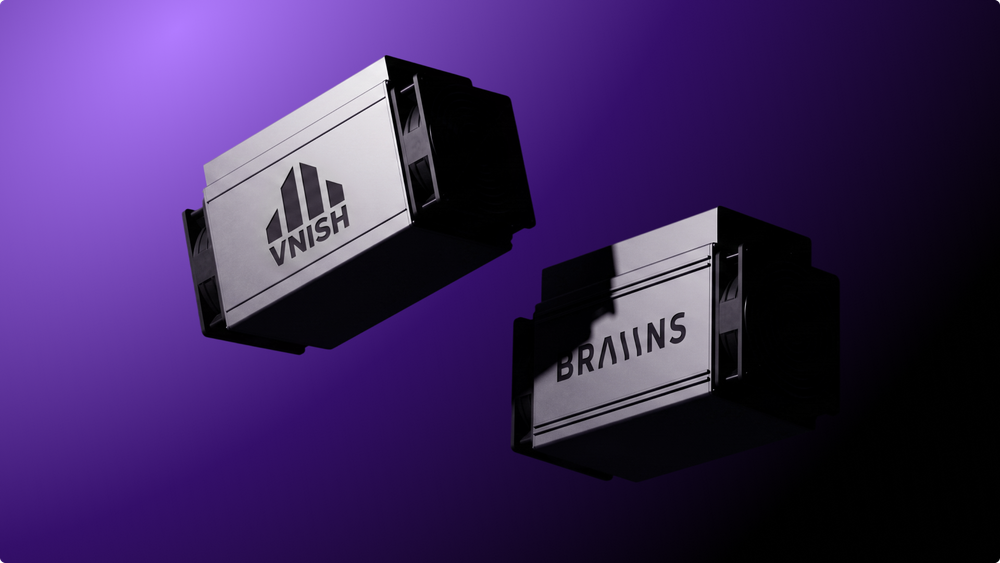
ASIC firmware platforms in 2026 vary in their approach to performance tuning, efficiency, monitoring tools, and hardware compatibility. Among the most widely used options are Vnish, Braiins OS, and LuxOS, each offering different features and operating models for ASIC miners.
Vnish firmware: strengths, weaknesses, supported models
Vnish is a custom firmware that supports a wide range of ASIC mining equipment, including the Antminer S9, Antminer S21, Avalon 12th series, and WhatsMiner 30th series. The firmware allows miners to adjust voltage, frequency, and fan settings to optimize efficiency or increase hashrate depending on operating conditions.
Features include:
- Intelligent overclocking — automated performance profiles are marketed as capable of increasing hashrate by up to 40% above factory settings, though independent testing suggests more typical real-world gains in the 15–20% range on well-cooled hardware, with results varying significantly by model and cooling setup
- Low Power Mode (LPM) — reduces power consumption by up to 30%, lowering cost per terahash in high-electricity environments
- Per-chip auto tuning — calibrates each chip independently for optimal frequency and voltage
- Built-in antivirus and firewall — scans for and blocks mining malware and unauthorized access attempts
- Hydro support — specialized support for hydro-cooling hardware, enabling integration into thermal systems for residential or industrial heat use
Vnish improves hashrate and efficiency through flexible tuning and per-chip optimization, especially in stable, well-cooled setups. However, results depend on proper configuration, and aggressive settings can increase power use, heat, and hardware stress over time.
Braiins OS: strengths, weaknesses, supported models
Braiins OS is an open-source ASIC firmware designed for miner tuning, monitoring, and remote management. It supports several Antminer models, including the Antminer S19, Antminer S19 Pro, Antminer S19j, and selected newer-generation hardware.
Features include:
- Per-chip optimization — adjusts settings for each chip individually to improve efficiency and performance at different power limits
- Fan speed control — helps manage temperatures, noise, and power consumption
- Public API support — allows integration with external monitoring and management tools
- Remote management tools — supports batch installation and configuration across multiple miners
- Error diagnostics — provides detailed error information to simplify troubleshooting
- Real-time monitoring — tracks temperatures, chip status, and overall miner performance
Among the benefits of Braiins OS are stable performance, efficiency-focused tuning, and detailed monitoring tools. However, its more conservative approach compared with some alternative firmware options may limit hashrate gains in aggressive performance-focused setups.
LuxOS: strengths, weaknesses, supported models
LuxOS is a custom firmware developed by Luxor, a Bitcoin mining pool and infrastructure company. It supports Bitmain Antminer models including the Antminer S19, S19j Pro, S19 XP, and S21 series and is primarily designed for larger operations managing multiple machines.
Features include:
- Atmospheric and immersion presets — dedicated profiles for air-cooled and liquid-cooled setups
- Dynamic power scaling — adjusts power use in real time based on efficiency targets or operating conditions
- Automated tuning — finds the best voltage and frequency settings at the individual board level
- Hardware Health API — real-time performance data built for integration with farm management software
- Secure boot and encryption — blocks unauthorized firmware changes and protects against malicious software
LuxOS fits naturally into setups already running on Luxor's mining pool, where the native integration simplifies pool management and monitoring. The installation process is more involved than Vnish or Braiins OS, and the interface is better suited to experienced operators running larger setups than to individual miners with a few machines.
Vnish vs Braiins OS vs LuxOS: Side-by-Side comparison
| Category | Vnish | Braiins OS | LuxOS |
| Primary focus | Performance tuning | Efficiency & stability | Performance & scalability |
| Tuning approach | Aggressive options | Conservative auto-tuning | Balanced presets |
| Pool flexibility | High | High | Medium-high |
| Performance gains | Higher potential | Moderate | Moderate |
| Hashrate Increase | Highest (up to 25–40%) | Moderate (up to 10–20%) | Moderate (10–25%) |
| API / management | limited–moderate | Strong API support | Enterprise fleet tools |
| Best suited for | Maximum performance tuning | Efficiency-focused mining | Large-scale operations |
Mining firmware risks and considerations
Mining firmware can improve performance, stability, and efficiency, but it also introduces operational and security risks that should be considered before deployment. Some of the main risks include:
- Security issues — poorly vetted custom firmware may contain malware, backdoors, or vulnerabilities that expose miners to unauthorized access or control
- Hardware stress — overclocking or voltage adjustments can increase heat output, reduce stability, and shorten hardware lifespan
- Permanent damage (“bricking”) — flashing incorrect or corrupted firmware can render an ASIC miner unusable
- Warranty voiding — modifying factory firmware typically removes manufacturer support and warranty coverage
- Untrusted modifications — firmware from unverified sources may include hidden developer fees, unauthorized pool redirects, backdoors, malware, or remote access functions
To reduce these risks, firmware should only be installed from official or verified sources, and devices should be kept on the latest version, as updates often include security patches and stability improvements.
How to install mining firmware
The installation process for ASIC mining firmware typically involves flashing the firmware onto the device and configuring the required settings. The method used depends on the setup size and level of control needed. Most ASIC miners support installation through SD cards, network-based updates, or mass deployment tools for larger fleets.
- SD card installation is used for setup or recovery. The firmware is written to a card, which is inserted into the miner, and the device boots using the new firmware.
- Over-the-Air (OTA) installation is done through the miner’s web interface. The firmware file is uploaded over the network and installed directly on the device without physical access.
- Mass deployment is used for multiple devices. It allows firmware to be installed across a fleet of devices at once using management tools, making large-scale updates faster and more consistent.
FAQ
How does ASIC mining firmware affect miner performance and operational profitability?
ASIC firmware directly influences power efficiency, hashrate stability, and thermal behavior. These factors determine operating costs and output, which ultimately impact mining profitability.
What is custom ASIC firmware and how is it different from stock firmware?
Custom ASIC firmware replaces manufacturer software with more flexible control over voltage, frequency, and chip behavior. Unlike stock firmware, it prioritizes optimization and configurability over uniform stability.
Which firmware is better for efficiency-focused mining?
Efficiency-focused mining typically benefits most from firmware with conservative tuning and strong monitoring tools. Solutions like Braiins OS are often preferred for balancing power consumption and stable performance.
Can installing custom firmware improve hashrate on ASIC miners?
Yes, custom firmware can improve hashrate by optimizing chip-level performance and enabling overclocking. However, gains depend heavily on hardware condition, cooling, and configuration quality.
What risks should be considered before switching to custom ASIC firmware?
Key risks include hardware stress from aggressive settings, potential instability, warranty loss, and security concerns from unverified firmware sources. Proper configuration and trusted software are essential to reduce these risks.
without growing costs
cryptocurrencies