



'%3e%3crect%20x='67.937'%20y='0.078125'%20width='15.0077'%20height='14.9965'%20rx='4.17731'%20fill='%23208F4E'/%3e%3crect%20x='67.8081'%20y='-0.21875'%20width='3'%20height='15'%20fill='%2363D793'/%3e%3cpath%20d='M78.5644%206.8781H76.1787L75.4418%204.60156L74.7026%206.8781L72.3169%206.87579L74.2489%208.28419L73.5097%2010.5584L75.4418%209.15232L77.3716%2010.5584L76.6347%208.28419L78.5644%206.8781Z'%20fill='%23111111'/%3e%3cpath%20d='M76.804%208.79613L76.6382%208.28125L75.4453%209.14938L76.804%208.79613Z'%20fill='%23111111'/%3e%3c/g%3e%3cdefs%3e%3cclipPath%20id='clip0_34823_22293'%3e%3crect%20x='67.937'%20y='0.078125'%20width='15.0077'%20height='14.9965'%20rx='4.17731'%20fill='white'/%3e%3c/clipPath%3e%3c/defs%3e%3c/svg%3e)







What Tokenized Equities Are and Why This Market Is Growing

Tokenized equities are tokenized instruments designed to give users economic exposure to the price of publicly traded companies, usually through a crypto platform. The market is growing because more people want small-ticket access, fractional exposure, and 24/7 trading that fits how crypto markets already work.
One point upfront: in most cases, tokenization here means tokenizing the exposure, not making the buyer a shareholder.
Tokenization explained in plain English
Asset tokenization is the act of representing an asset or an exposure using digital tokens on a blockchain or another form of distributed ledger. In finance, it often means converting a reference exposure into a tradable instrument with written terms, eligibility rules, and risk disclosures.
Tokenization does not automatically mean a buyer owns real shares in a company. The legal structure and documentation define the rights, limits, and obligations that come with the instrument, including whether it behaves like equity or only tracks the stock price.
A practical way to think about it is this: platforms typically tokenize the exposure under specific terms, not the company itself. So the safest approach is to start with the documentation and confirm what the instrument actually provides.
How the process works
The tokenization process is usually built around a workflow that links a market reference price to a tradable instrument on a platform.
- Instrument design: define what it tracks, how pricing works, and what fees apply
- Issuance: create digital tokens and configure how positions are recorded and updated
- Access controls: apply eligibility, KYC, and internal risk checks
- Trading and settlement: allow users to buy, sell, and hold positions on the platform
- Ongoing servicing: publish notices, update documentation, and handle corporate actions where relevant
This is often described as digital asset tokenization because it converts exposure into a standardized format. In practice, it can reduce manual reconciliation when rules are consistent and disclosures are easy to verify. It does not remove market risk, and it does not remove structure risk.
Tokenized instruments vs traditional stock ownership
Many products in this category are designed to track price, not to grant shareholder status. That distinction matters for voting rights, dividends, and other benefits normally linked to equity ownership.
| Feature | Traditional stock via a broker | Tokenized instrument on a crypto platform |
| What the user holds | A share issued by the company | A contractual exposure instrument |
| Shareholder rights | Voting and certain information rights | Typically none |
| Dividends | Possible if declared | Often not provided |
| Trading hours | Exchange schedule | 24/7 platform access |
| Key risks | Market risk plus broker risk | Market risk plus structure and tracking risk |
A practical rule: assume rights are limited unless the terms explicitly state otherwise.
Why tokenization in crypto is accelerating
Three drivers explain the momentum.
First, users want diversification without opening multiple accounts. Second, fractional exposure makes it easier to build a portfolio gradually. Third, infrastructure and product design are improving, so the experience feels closer to what mainstream investors expect.
For many users, crypto is already their default trading environment. Adding stock-linked exposure in the same interface feels practical.
At the same time, this remains a high-risk area. Strong documentation, clear pricing sources, and transparent fees matter more than slogans. Records may be traceable on-chain, but the instrument still depends on issuer terms and the reference price source.
What can be tokenized and what to check before buying
Tokenization can be applied to many exposures, such as equities, indexes, funds, commodities, and real estate participation. In most cases, providers tokenize the exposure, not the underlying company or asset itself.
A quick checklist to evaluate a tokenized instrument:
- Rights: what the instrument provides, and what it does not
- Pricing: where the reference price comes from, and whether tracking deviations may occur
- Liquidity: whether secondary trading is available, and under what conditions it can be paused
- Jurisdictions: where the product is available, and who is excluded
- Fees: trading fees, spreads, and any custody or service charges
This is where blockchain tokenization becomes practical: it is a process and a contract, not just a technical feature.
xStocks on EMCD
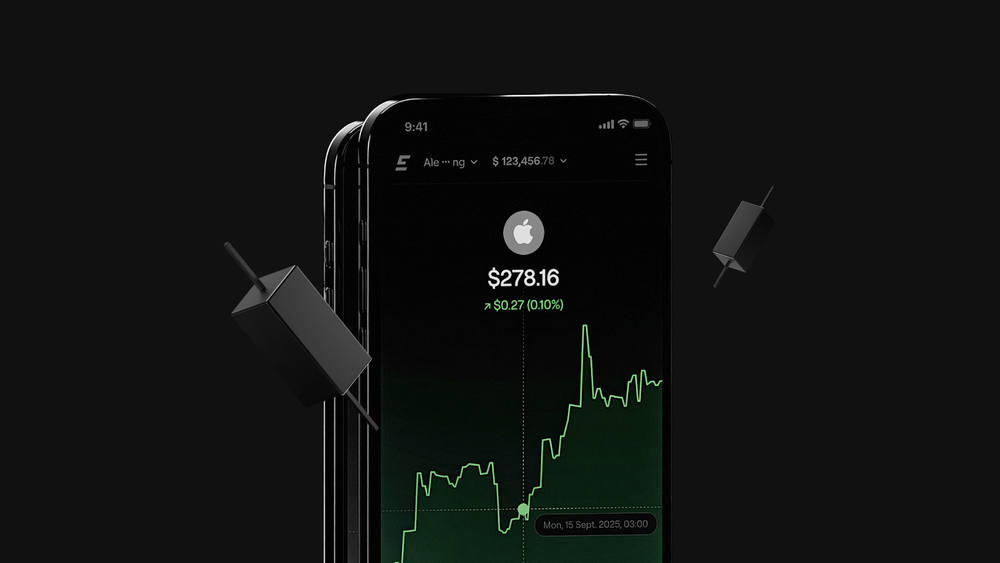
xStocks is an EMCD Exchange category with tokenized stock and index exposure, available from an EMCD account. Each position is a tokenized instrument that tracks a reference price and does not grant shareholder rights. Users can start from $10, trade 24/7, and manage crypto and stock-linked exposure in one interface.
These instruments are structured as contractual products intended to provide economic exposure to the price of certain exchange-traded assets. They are not shares and do not grant shareholder rights, voting rights, dividends, or other benefits related to any underlying company.
Capital preservation, minimum returns, and liquidity are not guaranteed, and users can lose the full amount invested. Before deciding to invest, the safest approach is to treat these as high-risk investments and confirm the meaning of the instrument in the terms.
xStocks Terms of Service: http://emcd.io/static/xstocks_tos.pdf
MCD Risk Disclosure: https://emcd.io/static/emcd_risk_disclosures.pdf
xStocks catalog and overview: https://xstocks.emcd.io/
Short Comparison With Alternatives
- Traditional brokers: real shares, shareholder rights, and market-hour trading
- Derivatives such as CFDs: exposure products that may include leverage and different fee models
- Tokenized instruments on crypto platforms: low entry thresholds and 24/7 access, with rights defined by documentation
Conclusion
Tokenization is reshaping how stock-linked exposure can be packaged for users who already operate in crypto markets. Growth is driven by small-ticket access, fractional exposure, and 24/7 availability, but the trade-off is structural: rights depend on documentation, and outcomes depend on product terms as much as market movement.
For most users, the best approach is simple: read the terms, understand the risks, and use tokenized instruments only where they fit a portfolio plan, including position sizing and risk tolerance.
without growing costs
cryptocurrencies