

Best Crypto Interest Rates 2026: USDT, USDC, BTC Compared
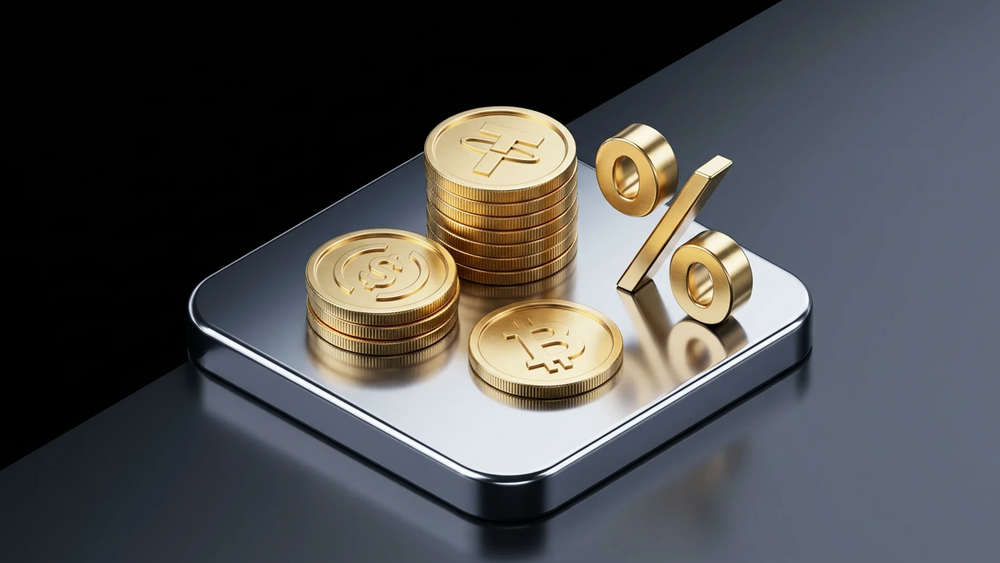

In 2026, crypto interest rates largely depend on how each asset is used across the market:
- stablecoins such as Tether (USDT) and USDC usually earn yield through lending demand and trading activity;
- returns on Bitcoin (BTC) are more closely tied to liquidity and market conditions;
- staking assets earn rewards from network validation.
This article explains how crypto interest rates work, where rewards come from, and how different sources of yield compare.
This article is for informational purposes only and does not constitute investment advice. Rates change constantly and are not guaranteed; the ranges below are approximate. We do not recommend specific platforms.
Key takeaways
- Rates vary by asset and platform. Stablecoins usually offer higher and more consistent rates, while BTC rates are lower because of weaker lending demand and higher volatility.
- Rates depend on how assets are used: in lending, staking, or DeFi liquidity. Demand, risk, and platform design determine returns.
- Custodial platforms vs DeFi. Custodial platforms offer managed access and a simpler experience. DeFi can offer higher returns in advanced strategies, but requires more knowledge and carries more risk.
- A higher advertised rate usually means greater risk. Smart contracts, liquidity, and platform stability matter as much as the headline number.
- Regulation and market conditions affect which products are available and how rates are structured.
Crypto interest rates at a glance
Crypto "interest" is the reward earned through yield products: on custodial platforms or in decentralized finance (DeFi) protocols. Instead of leaving crypto idle in a wallet, the holder places it in a product that pays returns periodically. The rate is usually shown as:
- APY (annual percentage yield), which includes compounding;
- APR (annual percentage rate), which does not.
Rates differ mainly by asset class:
- stablecoins usually offer higher rates thanks to low volatility and strong demand in lending and trading;
- Bitcoin and other major coins usually have lower and more variable rates, since demand depends on market activity;
- staking assets such as Ether (ETH) and Solana (SOL) earn rewards from network validation, so rates depend on protocol rules rather than lending demand;
- smaller and newer tokens may offer higher rates, but with greater risk and less predictable returns.
Crypto interest rates compared
Crypto rates are often higher than those of traditional banking products, but the difference reflects higher risk, market structure, and how crypto platforms operate. So it is important to look beyond the headline figure.
| Asset category | Custodial platforms (base rate) | DeFi (lending) | DeFi (advanced strategies) |
|---|---|---|---|
| Stablecoins (USDT, USDC) | About 4–10% | About 4–7% | About 12–20% |
| Major coins (BTC, ETH) | About 1–4% | About 0.5–1% | About 3–6% |
| Staking assets (SOL, TON) | About 4–8% | About 7–15% | Highly variable, up to about 25% |
These are approximate ranges for 2026. Actual rates depend on the platform, amount, plan, promotions, and market conditions, and they change constantly.
The pattern: base rates on custodial platforms and in DeFi lending are often comparable, while advanced DeFi strategies offer more, at the cost of complexity and higher risk.
Why rates differ across platforms
Platforms offer different rates because they use assets differently:
- custodial platforms manage assets on behalf of clients and generate rewards through lending, staking, or internal trading and liquidity strategies;
- DeFi protocols distribute fees from liquidity pools and lending interest to users, and some rely on staking rewards from networks.
That is why rates can differ greatly even for the same asset.
Risk and counterparties
Risk is one of the main drivers of rate differences. Platforms that rely on external counterparties or less controlled strategies usually offer higher rates to compensate for the added uncertainty. In DeFi, the risks include smart contract vulnerabilities and impermanent loss. Platforms with stricter risk controls usually offer lower but more stable returns.
Lock-up terms
Many platforms offer higher rates in exchange for locking assets for a fixed period, for example 30, 60, or 90 days. During this time, the funds cannot be withdrawn. Flexible products with instant withdrawals usually pay less, because the platform cannot rely on long-term access to the funds.
Loyalty programs
Some platforms use tiered rates: a higher rate may require holding the platform's own token or keeping a minimum balance. These rates are not available to everyone.
Supply and demand
When demand for an asset exceeds supply, platforms raise rates to attract more of it, and when supply exceeds demand, rates fall. Price movements also affect borrowing and lending activity.
Traditional rates play a role too: when bank deposit rates are low, capital flows toward crypto yield products, which increases competition and can push rates down.
Types of crypto interest rates
| Rate type | How it works | Trade-off |
|---|---|---|
| Fixed | The rate is set for a specific period | Predictable, but usually requires locking funds |
| Variable | The rate changes with demand, liquidity, and market conditions | Can be higher, but can also fall quickly |
| Tiered | The rate depends on the amount or the lock-up period | Higher rates require larger amounts or longer commitments |
Also keep in mind the difference between APY and APR: at the same nominal rate, APY with compounding gives a higher result than APR. Compare products by the same measure.
Choosing a rate for your strategy
| Holder profile | Priority | What usually fits |
|---|---|---|
| Stablecoin holders | Consistent returns with low volatility | Fixed or flexible rates on reliable custodial platforms, conservative DeFi lending pools |
| Long-term BTC holders | Keeping exposure to price growth | Low but stable rates with reliable access to funds, or simply holding in your own wallet |
| ETH holders | Combining staking with other opportunities | Staking as a base layer; DeFi strategies only with an understanding of the risks |
| Risk-averse savers | Capital preservation and liquidity | Platforms with strong risk controls, transparent structure, and flexible access, even at lower rates |
For miners: BTC rates vs. mining
Miners receive BTC not through lending, but as a reward for the computing power they contribute to the network. If you mine in a pool, such as EMCD Mining Pool, payouts arrive at the wallet address set in your account settings. BTC lending rates are usually low, so for many miners, the key decision is not where to place mined BTC for a few percent, but how to balance holding BTC, selling it to cover costs, and keeping a reserve in stablecoins for electricity bills. Any yield product on top of that adds platform risk to an already volatile income.
The main risks of crypto rewards
- Volatility. A fall in the price of the underlying asset can offset or exceed the rewards received.
- Changing rates. Returns depend on supply and demand, and a sudden shift in platform activity changes the rate.
- Platform risk. Rewards are only as safe as the platform that pays them. Exchanges and fintech companies can freeze withdrawals or go bankrupt, as happened with several crypto lenders in 2022.
- Smart contracts. DeFi protocols run on code that may contain bugs or vulnerabilities, which in extreme cases can lead to a total loss of funds.
- Lock-ups. Some rewards, especially in staking, require an unbonding period during which assets cannot be sold, even in a market downturn.
- Regulation. Rules for crypto yield products are changing quickly and may affect their availability in different countries. In the US, for example, the GENIUS Act adopted in 2025 prohibits stablecoin issuers from paying interest to holders directly, so yield comes only from separate products on platforms.
Taxes and record-keeping
Crypto rewards are usually taxable: interest payouts, staking rewards, and capital gains may be treated differently depending on the country. Keep records of every payout: the date, amount, and value at the time you received it. Using a platform with strong compliance practices does not replace your own tax obligations, so check local rules or consult a tax professional.
Conclusion
The best crypto interest rate is not the highest number on the page, but the one whose source and risks you understand. Stablecoins usually offer higher and more consistent rates, BTC lower ones, and staking assets depend on network rules. Before choosing a product, compare not only the rate, but also lock-up terms, the platform's reliability, the yield source, and the risk-adjusted return.
FAQ
How do crypto interest rates work?
They come from how platforms use crypto: lending, staking, or providing liquidity. Rates depend on demand, risk, and available supply.
Why are BTC rates lower than stablecoin rates?
BTC has weaker lending demand and higher volatility, while stablecoins are in constant demand for trading and liquidity.
What are the risks behind high rates?
A higher rate usually means higher risk: platform credit risk, smart contract vulnerabilities, liquidity problems, or unstable market conditions.
How do long-term investors choose a rate?
Not by the headline number, but by sustainability, risk level, flexibility of access, and the platform's long-term reliability.
Why do rates differ between centralized platforms and DeFi?
Centralized platforms set rates based on internal policies and risk controls. DeFi rates are set by the market and change instantly with on-chain demand and liquidity.
Are crypto rates higher than bank rates?
They are often higher, but the difference reflects higher risk and variability. Bank deposits are usually protected by deposit insurance, while crypto balances are not.
What is risk-adjusted yield?
Return measured relative to the risk taken. It helps compare products by taking into account volatility, platform risk, and liquidity, not just the headline rate.
Are crypto rewards taxable?
In many countries, yes: interest and staking rewards are often treated as income. Rules depend on the country.
Disclaimer: This material is provided for informational purposes only and does not constitute investment, tax, or legal advice. Rates are approximate, change constantly, and are not guaranteed. Crypto products involve risks, including the loss of funds. Product availability depends on the jurisdiction.
without growing costs
cryptocurrencies