



'%3e%3crect%20x='67.937'%20y='0.078125'%20width='15.0077'%20height='14.9965'%20rx='4.17731'%20fill='%23208F4E'/%3e%3crect%20x='67.8081'%20y='-0.21875'%20width='3'%20height='15'%20fill='%2363D793'/%3e%3cpath%20d='M78.5644%206.8781H76.1787L75.4418%204.60156L74.7026%206.8781L72.3169%206.87579L74.2489%208.28419L73.5097%2010.5584L75.4418%209.15232L77.3716%2010.5584L76.6347%208.28419L78.5644%206.8781Z'%20fill='%23111111'/%3e%3cpath%20d='M76.804%208.79613L76.6382%208.28125L75.4453%209.14938L76.804%208.79613Z'%20fill='%23111111'/%3e%3c/g%3e%3cdefs%3e%3cclipPath%20id='clip0_34823_22293'%3e%3crect%20x='67.937'%20y='0.078125'%20width='15.0077'%20height='14.9965'%20rx='4.17731'%20fill='white'/%3e%3c/clipPath%3e%3c/defs%3e%3c/svg%3e)






Cardano (ADA): Architecture, Use Cases, and Network Development
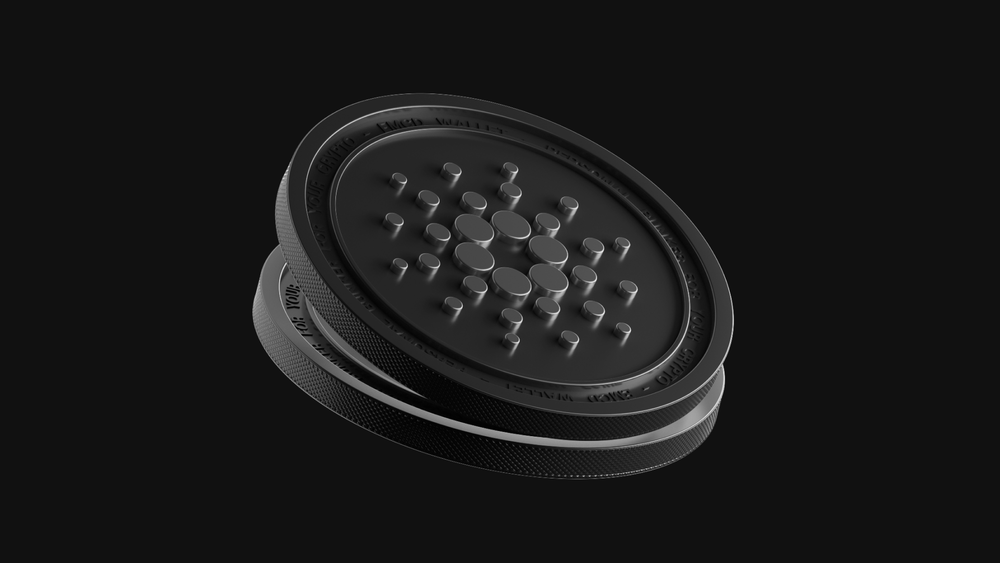

As blockchain networks mature, attention is shifting from experimental models to infrastructure designed for long-term use. Cardano (ADA) reflects this shift toward research-based, sustainable blockchain architecture. The project was built with a research-driven framework, focusing on scalability, protocol sustainability, and gradual ecosystem development.
Recent protocol updates, expanded smart contract functionality, and continued ecosystem activity have renewed interest in the network. Cardano is being evaluated not only by developers building decentralized applications but also by users comparing transaction costs and network congestion across major blockchain networks.
This overview examines the project’s launch, architectural design, current use cases, and how Cardano (ADA) continues to maintain its position among established blockchain networks despite intensifying competition.
ADA and the Design Principles Behind Cardano
Since its launch in 2017, Cardano has been positioned as infrastructure intended for real-world deployment rather than short-term market trends. The project was structured around academic research, layered architecture, and phased protocol development.
Cardano is often described as the first blockchain built on peer-reviewed research. Its Proof-of-Stake consensus mechanism, Ouroboros, was introduced as a formal alternative to Proof-of-Work models, with an emphasis on decentralization, energy efficiency, and protocol resilience.
The native token, ADA, plays a structural role within the network. ADA is used for transaction validation through staking and for participation in on-chain governance. Token holders can delegate ADA to stake pools and take part in voting processes that influence protocol updates and ecosystem priorities.
Cardano’s Architecture: A Layered Network Design
Cardano uses a layered architecture that separates core blockchain functions rather than processing them within a single structure. Settlement and computation are handled independently, which allows the network to isolate accounting operations from smart contract execution. This separation is intended to reduce systemic strain and make protocol upgrades easier to implement.
Rather than relying on mining, Cardano operates on a Proof-of-Stake model through the Ouroboros consensus mechanism. Transaction validation is performed by stake pools, reducing energy consumption compared to Proof-of-Work systems and helping manage network throughput without excessive congestion.
This architectural approach positions Cardano as a blockchain designed for gradual scaling and long-term protocol development, rather than one optimized for a single market cycle.
How the Cardano Network Operates
Cardano is structured around modular design principles. Core network functions are separated into defined layers, allowing protocol components to operate independently. The architecture aims to make upgrades more efficient while reducing network strain during peak usage.
ADA functions as the primary unit of interaction within the Cardano ecosystem. It is used for transaction validation, delegation to stake pools, and participation in governance processes. Network scaling is approached incrementally rather than through abrupt structural changes.
Key operational principles include:
- The Ouroboros Proof-of-Stake consensus model with formally verified security assumptions
- Separation of settlement and smart contract execution layers
- Protocol upgrades implemented without halting network activity
- Gradual scaling designed to manage throughput without sudden congestion
Together, these elements define an ecosystem built around predictability, layered development, and phased technical expansion.
ADA Token Structure: Supply Model and Distribution
The token model of Cardano is based on a fixed maximum supply and a predefined distribution framework. The total supply of ADA is capped at 45 billion tokens, meaning no additional units can be created beyond that limit.
A significant portion of ADA was distributed to early participants and the broader community during the initial phases of the project. A smaller allocation was reserved to support ecosystem development, including protocol research and infrastructure growth.
This structure provides clarity around supply mechanics and establishes predictable issuance parameters over time. The capped model is designed to prevent future dilution while maintaining resources for continued network development.
The Role of ADA Within the Cardano Ecosystem
Within Cardano, ADA functions not only as a transaction unit but also as a mechanism for interacting with protocol-level features and decentralized applications.
Key use cases include:
- Paying network transaction fees and interacting with smart contracts
- Participating in on-chain governance and voting processes
- Accessing decentralized services and applications built on Cardano
- Supporting identity and data-record solutions developed within the ecosystem
These functions define ADA’s utility within the network and support its role in protocol activity over time.
Practical usage becomes clearer when ADA is supported by integrated crypto services. For example, the EMCD Wallet allows users to store and manage ADA within a single interface. The wallet supports sending and receiving ADA and provides access to additional EMCD services without switching between multiple platforms.
Factors Influencing ADA’s Network Development
Cardano follows a phased development model that prioritizes formal validation and structured upgrades over rapid feature releases. This approach reduces certain technical uncertainties but can affect the pace at which new functionality becomes available. As a result, ADA reflects both structural strengths and measurable constraints.
Potential advantages:
- Research-driven design and formal verification methods
- Layered scalability designed to manage network load gradually
- On-chain governance mechanisms with transparent proposal processes
Considerations:
- Slower rollout of new features compared to some competing networks
- Strong competition from other smart contract platforms
- Ecosystem growth tied to the timing and adoption of protocol upgrades
The interaction of these elements shapes how ADA is evaluated within the broader digital asset landscape.
ADA Outlook: Ecosystem-Led Expansion
The outlook for ADA is closely tied to the structured evolution of the Cardano network. Rather than introducing abrupt protocol shifts, the network continues to expand its infrastructure in defined phases.
Current development initiatives include scaling research such as Leios, privacy-focused infrastructure under Midnight, and continued growth of decentralized finance applications within the ecosystem. These efforts indicate a transition from foundational architecture toward broader real-world deployment.
As the roadmap progresses, ADA’s trajectory depends on three primary factors: technical upgrades, governance participation, and measurable network usage. The project’s model emphasizes gradual implementation rather than accelerated expansion.
Key Takeaways on Cardano (ADA)
Cardano operates as an integrated blockchain ecosystem built around layered architecture and formal research methods. The ADA token connects transaction processing, governance participation, and application-level interaction within the network.
The platform’s development strategy centers on long-term protocol refinement and applied use cases. Within the broader digital asset landscape, Cardano is generally viewed as a system-oriented network focused on structured growth and technical predictability.
FAQ
What role does ADA play within Cardano?
ADA is both the network’s native token and a key operational tool. ADA is used for transaction fees, interacting with smart contracts, participating in staking, and engaging in on-chain governance where token holders can vote on protocol upgrades and ecosystem priorities.
How does Cardano differ from other blockchains?
Cardano emphasizes a research-driven approach and formal code verification. Core network decisions are peer-reviewed, and development proceeds in structured phases. This approach is intended to reduce the likelihood of critical errors and support long-term network stability.
What factors influence ADA’s outlook?
ADA’s prospects are linked to Cardano’s ecosystem growth, the adoption of technical updates, developer and community activity, and overall market conditions. Real-world use cases and institutional engagement also play a significant role.
What risks should be considered when using ADA?
Key considerations include slower rollout of new features, strong competition from other smart contract platforms, and the network’s reliance on the successful adoption of upgrades for continued growth.
Why is Cardano viewed as a long-term project?
The project combines a transparent token model with layered network architecture. Development prioritizes systematic, research-backed expansion rather than rapid feature launches, creating a structured and predictable long-term trajectory for both the network and ADA.
without growing costs
cryptocurrencies