


'%3e%3crect%20x='67.9373'%20y='0.078125'%20width='15.0077'%20height='14.9965'%20rx='4.17731'%20fill='%23208F4E'/%3e%3crect%20x='65.9333'%20y='-0.21875'%20width='15'%20height='15'%20fill='%2363D793'/%3e%3cpath%20d='M78.5648%206.87419H76.1791L75.4422%204.59766L74.703%206.87419L72.3173%206.87188L74.2494%208.28028L73.5102%2010.5545L75.4422%209.14841L77.372%2010.5545L76.6351%208.28028L78.5648%206.87419Z'%20fill='%23111111'/%3e%3cpath%20d='M76.8042%208.79613L76.6384%208.28125L75.4456%209.14938L76.8042%208.79613Z'%20fill='%23111111'/%3e%3c/g%3e%3cdefs%3e%3cclipPath%20id='clip0_27398_52714'%3e%3crect%20x='67.9373'%20y='0.078125'%20width='15.0077'%20height='14.9965'%20rx='4.17731'%20fill='white'/%3e%3c/clipPath%3e%3c/defs%3e%3c/svg%3e)






Best Wallets with NFT Support
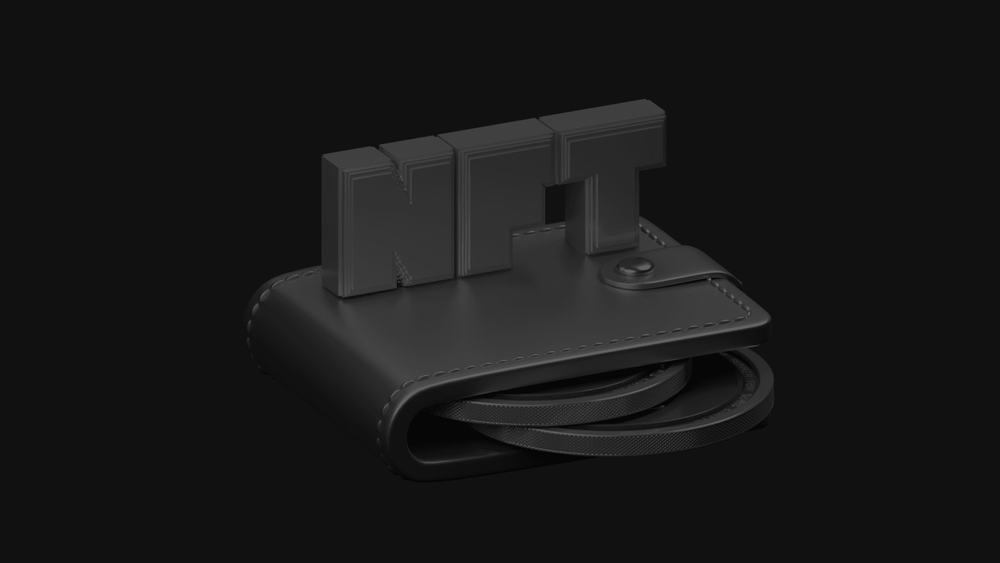

If you’ve bought your first NFT and aren’t sure where to store it, you’ll need a wallet that supports non-fungible tokens. An NFT-compatible crypto wallet allows you to securely store, view, and manage your digital collectibles while keeping control of your private keys.
This guide explains what an NFT wallet is,, why you need one, and how to choose the right option based on security, compatibility, and usability.
Why You Need an NFT Wallet
An NFT wallet gives you direct ownership of your digital collectibles. Without one, NFTs remain on third-party platforms (exchanges or marketplaces), where you do not control the private keys
Using a non-custodial wallet means:
- You control your private keys
- Your NFTs are not dependent on a single platform
- You can connect directly to NFT marketplaces and Web3 applications
For long-term ownership and flexibility, self-custody via a personal wallet is generally the preferred option.
What NFTs Are and How They Are Stored
An NFT is a unique token recorded on a blockchain, and it is stored in a wallet much like cryptocurrency. However, it’s important that the NFT wallet can display the token’s metadata (for example, an image) and connect to NFT marketplaces and decentralized applications.
Most importantly, you must use a wallet that is compatible with the blockchain on which the NFT was created (Ethereum, Solana, etc.). Sending an NFT to an incompatible address or network can result in permanent loss.
Key Criteria for Choosing an NFT Wallet
NFT-enabled wallets vary significantly. When selecting one, consider the following factors:
- Security: a non-custodial wallet (you control the keys), PIN/password protection, 2FA, backup options
- Compatibility: support for the blockchain your NFTs are on (Ethereum, Solana, etc.); multi-chain support is a plus
- Usability: a simple interface, availability of a mobile app or browser extension
- Features: crypto swaps, marketplace integrations, and built-in dApp browser, and more
Mobile Wallets for NFTs
Mobile wallets allow you to manage NFTs directly from your smartphone and are often the easiest option for beginners.:
- Trust Wallet: a simple mobile crypto wallet with NFT support. It works across more than 100 blockchains, including Ethereum, Solana, Bitcoin, BNB Chain, and Cosmos. It is available both as a mobile app and as a browser extension
- MetaMask: available as a wallet app and browser extension. It is widely used for Ethereum and all EVM-compatible networks, as well as Solana thanks to multi-chain support introduced in 2025. It integrates seamlessly with NFT marketplaces and Web3 applications. Access to non-EVM chains may require additional tools or integrations, depending on the network
- Math Wallet: a multi-chain Web3 wallet that supports more than 100 blockchains, including Ethereum, Solana, BNB Chain, Cosmos, and others. It is available on iOS, Android, and desktop. Users can manage NFTs, connect to dApps, and perform multi-chain swaps
Browser and Desktop Wallets for NFTs
Desktop wallets are commonly used for interacting with NFT marketplaces on desktop devices.
MetaMask and Trust Wallet both offer browser extensions that allow users to manage NFTs and connect to Web3 platforms directly from a computer. Some wallets also provide standalone desktop applications with NFT support, depending on the blockchain.
Hardware Wallets for NFTs
Hardware wallets are physical devices (Ledger, Trezor, etc.) that store private keys offline. These wallets keep private keys in an isolated environment, protecting NFTs from hacks and malware.
NFTs can be managed by pairing a hardware wallet with a software interface—for example, Ledger combined with MetaMask. This setup is widely used for long-term storage and enhanced security against malware and phishing attacks.
Supported Blockchains and Compatibility
Each NFT wallet supports a specific set of networks. Some wallets focus primarily on Ethereum and EVM-compatible blockchains, while others offer broad multi-chain support.
Before transferring an NFT, always confirm that:
- The wallet supports the NFT’s blockchain
- The receiving address is compatible with that network
If you hold NFTs across multiple ecosystems, a multi-chain wallet can simplify management.
Security and Protection of Digital Assets
To keep your NFTs safe, follow these best practices
- Never share your seed phrase with anyone
- Write your seed phrase down on paper or a metal plate and store it offline
- Avoid saving recovery phrases in cloud storage or screenshots
- Enable two-factor authentication if available
- Connect your wallet only to trusted websites and avoid clicking suspicious links
- Carefully review transaction approvals to avoid malicious smart contracts
Additional Features to Consider
Many wallets include extra functionality:
- Built-in dApp browsers for NFT marketplaces
- Token swap tools and crypto purchase options
- Portfolio tracking and NFT galleries
Final Recommendations
Choose an NFT wallet based on your needs. Beginners in crypto will benefit from a simple mobile option (such as Trust Wallet or MetaMask).
For large collections, it’s better to use a hardware wallet. Most importantly, follow security best practices, and your NFTs will remain safe.
FAQ
What is an NFT wallet and how is it different from a regular wallet?
An NFT wallet is a standard crypto wallet with NFT support (it can display NFTs and connect to marketplaces).
Which wallet is best for beginners working with NFTs?
If you’re new to crypto, start with Trust Wallet — it’s easy to use and supports major networks.
Which type of wallet is safest for storing NFTs?
Hardware wallets are the most secure (keys are stored offline). Hot wallets are also safe, but cold storage offers stronger protection.
Can NFTs and cryptocurrency be stored in the same wallet?
Yes, most wallets allow you to store both NFTs and regular cryptocurrencies together.
Do NFT wallets support all blockchains?
No, each wallet works only with certain networks (MetaMask supports Ethereum and Solana; other networks require additional setup). There is no universal solution.
How can NFTs be protected from hacks and scams?
Follow the same rules as for protecting cryptocurrency: never share your seed phrase, store it offline, and enable 2FA.
without growing costs
cryptocurrencies