



'%3e%3crect%20x='67.937'%20y='0.078125'%20width='15.0077'%20height='14.9965'%20rx='4.17731'%20fill='%23208F4E'/%3e%3crect%20x='67.8081'%20y='-0.21875'%20width='3'%20height='15'%20fill='%2363D793'/%3e%3cpath%20d='M78.5644%206.8781H76.1787L75.4418%204.60156L74.7026%206.8781L72.3169%206.87579L74.2489%208.28419L73.5097%2010.5584L75.4418%209.15232L77.3716%2010.5584L76.6347%208.28419L78.5644%206.8781Z'%20fill='%23111111'/%3e%3cpath%20d='M76.804%208.79613L76.6382%208.28125L75.4453%209.14938L76.804%208.79613Z'%20fill='%23111111'/%3e%3c/g%3e%3cdefs%3e%3cclipPath%20id='clip0_34823_22293'%3e%3crect%20x='67.937'%20y='0.078125'%20width='15.0077'%20height='14.9965'%20rx='4.17731'%20fill='white'/%3e%3c/clipPath%3e%3c/defs%3e%3c/svg%3e)







Hardware Crypto Wallet: What It Is and How It Is Used in Practice
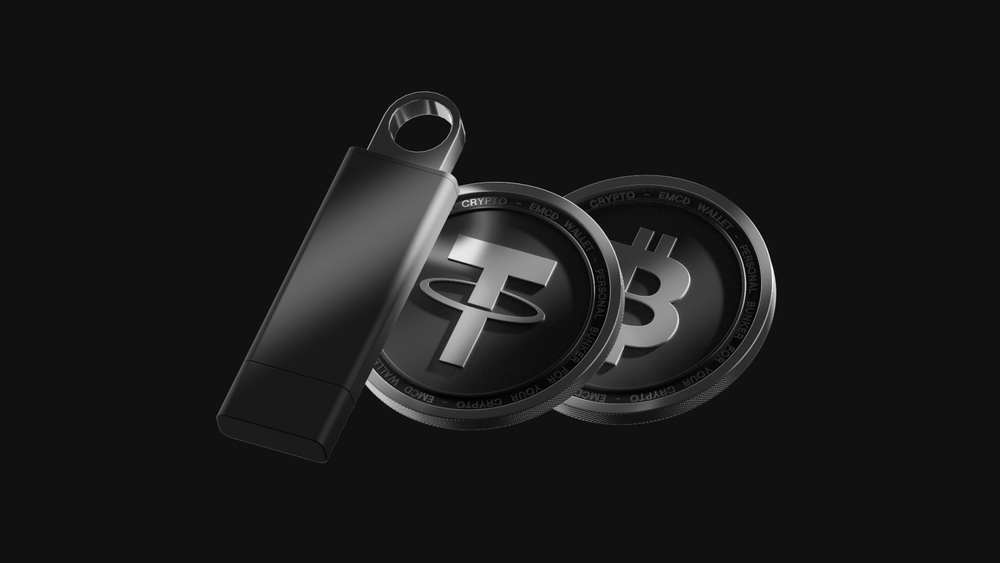

A hardware crypto wallet is typically chosen by users who want to separate long-term key storage from everyday crypto activity. Instead of keeping sensitive data on connected devices, this approach relies on offline storage to reduce exposure to online risks. In 2026, this model remains relevant as users continue to look for clarity, control, and predictable access to digital assets.
What this type of wallet is and how it works
This category of wallet is a physical device designed to store your private keys in an isolated environment. Unlike software solutions, it does not rely on permanent connectivity to the internet.
Keys are generated and stored inside the device itself. When a transaction is created, it is signed internally and only the signed data is transmitted outward. The keys never leave the device, even when you connect it to a computer or phone.
In practical terms, a hardware wallet focuses on access control. It does not manage balances, pricing, or services. Its role is limited to securing keys.
How physical wallets differ from software wallets
Users often compare physical devices with software wallets as if they were alternatives, but they serve different purposes.
| Aspect | Physical device | Software wallet |
| Key storage | Offline, on the device | On a connected device |
| Daily use | Limited | Frequent |
| Exposure to malware | Reduced | Higher |
| Execution speed | Slower | Faster |
Wallets are commonly combined rather than replaced. One tool secures keys, while another provides access to platforms and services in the crypto ecosystem.
Best hardware wallet 2025-2026: how users still evaluate devices
When selecting a device, evaluations in 2026 still rely on performance data, reviews, and user feedback collected throughout 2025. Hardware wallets are long-lifecycle products, and their security characteristics are assessed over years rather than calendar cycles. For this reason, comparisons often reference established manufacturers such as Ledger and Trezor, using historical testing to inform current decisions.
Key evaluation factors remain consistent across the 2025–2026 transition and usually include:
- supported assets and networks
- recovery phrase generation and backup process
- firmware transparency and update frequency
- physical confirmation and on-screen verification
There is no single best option for everyone. In 2026, the right choice is defined less by release timing and more by how reliably a device performs over time, how often assets are moved, how many networks are used, and how the wallet fits into the broader workflow of crypto usage.
How these wallets are used in real workflows
Offline key storage does not replace platforms where activity happens. A device of this type does not swap assets, settle P2P transactions, or manage balances on its own.
A common real-world flow looks like this:
- Assets are stored on a physical device for long-term protection
- The device is connected temporarily to sign a transaction
- A platform handles execution, pricing, and settlement
This separation allows users to keep keys offline while still interacting with markets on the terms they choose.
Using a physical wallet together with EMCD
Many users combine offline key storage with platforms designed for transaction execution. EMCD operates as an account-based platform where users manage crypto actions such as swaps or P2P transactions while relying on external tools for key isolation.
EMCD does not replace offline storage. Instead, it functions as the operational layer. A physical wallet is used to store private keys and sign transactions, while EMCD provides the interface and infrastructure to initiate and manage those transactions without requiring direct exposure of keys during everyday activity.
This setup allows users to separate long-term key security from transaction management. Offline devices handle key protection, while EMCD supports execution, visibility, and control within a centralized environment.
Common mistakes when using offline storage devices
Even well-designed tools can be misused. Typical issues include:
- saving recovery phrases digitally
- approving transactions without verifying details on your device
- assuming the device alone protects your funds regardless of behavior
If you can clearly distinguish between key storage and transaction execution, risks become easier to manage. The device controls access, but responsibility remains with the user in a real operational context.
How to choose and use such a wallet effectively
Before selecting and using a device, users should:
- confirm supported assets and networks
- understand how recovery works if you lose the device
- plan how it connects to a platform for execution
- decide when assets remain offline and when they move
This preparation helps ensure the device fits into a broader strategy rather than becoming unused hardware.
Conclusion
Offline key storage is a foundational element of responsible crypto management. It helps reduce exposure by keeping keys isolated on your device, separate from connected environments. At the same time, it does not eliminate the need for platforms that enable real activity.
In practice, users combine offline storage with services that support execution and management. This approach allows users to reduce exposure while remaining flexible in how assets are managed.
Understanding how storage and execution work together helps users choose the best setup for long-term control and everyday use.
without growing costs
cryptocurrencies