




'%3e%3crect%20x='67.937'%20y='0.078125'%20width='15.0077'%20height='14.9965'%20rx='4.17731'%20fill='%23208F4E'/%3e%3crect%20x='67.8081'%20y='-0.21875'%20width='3'%20height='15'%20fill='%2363D793'/%3e%3cpath%20d='M78.5644%206.8781H76.1787L75.4418%204.60156L74.7026%206.8781L72.3169%206.87579L74.2489%208.28419L73.5097%2010.5584L75.4418%209.15232L77.3716%2010.5584L76.6347%208.28419L78.5644%206.8781Z'%20fill='%23111111'/%3e%3cpath%20d='M76.804%208.79613L76.6382%208.28125L75.4453%209.14938L76.804%208.79613Z'%20fill='%23111111'/%3e%3c/g%3e%3cdefs%3e%3cclipPath%20id='clip0_34823_22293'%3e%3crect%20x='67.937'%20y='0.078125'%20width='15.0077'%20height='14.9965'%20rx='4.17731'%20fill='white'/%3e%3c/clipPath%3e%3c/defs%3e%3c/svg%3e)







Are Stablecoins Good for Business
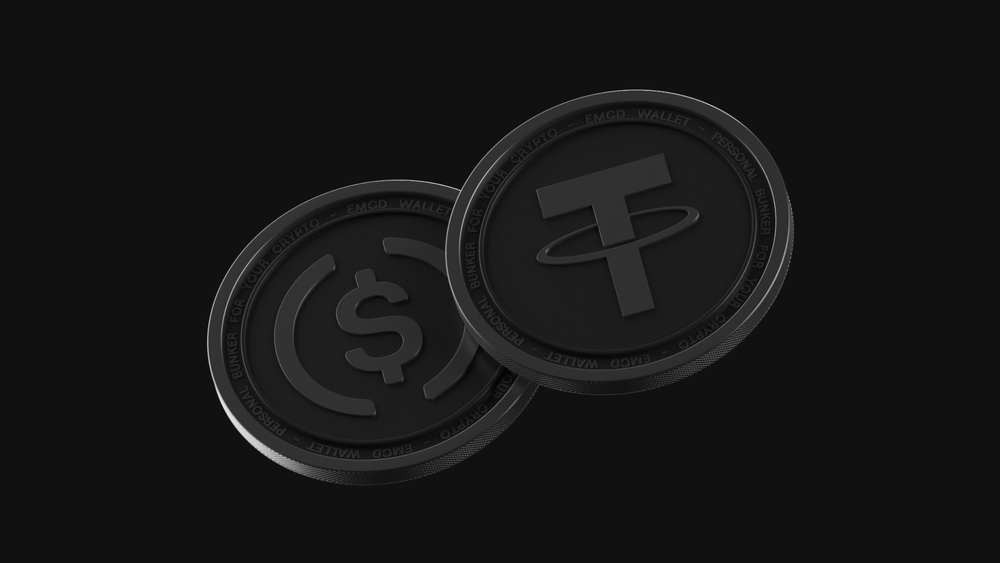

Stablecoins are becoming one of the most practical tools for modern finance. They promise faster payments, lower fees, and better access to global markets. Understanding how they work and why they matter helps companies decide if this innovation fits their long-term strategy.
What is a stablecoin and why it matters
A stablecoin is a digital asset designed to maintain a steady value, usually pegged to fiat currencies such as the US dollar or euro. Unlike volatile cryptocurrencies, it is a payment instrument built for predictable value exchange. Stablecoins are issued by regulated entities or private companies that hold reserves in cash or short-term government securities to maintain the peg.
Stablecoins are already used for cross-border trade, treasury management, and B2B settlements. Stablecoin payments can be completed in minutes without intermediaries, improving liquidity and saving costs. This makes them a useful and good tool for small exporters, tech firms, and logistics providers that depend on fast, low-cost settlements.
Benefits of using stablecoins for businesses
Stablecoins are designed to solve common inefficiencies in global transactions. Their benefits include:
1. Faster global payments. Transfers settle in minutes, which helps companies improve cash flow and meet supplier deadlines
2. Lower transaction costs. Stablecoin transactions often cost less than 1% of the payment value, compared to card or wire fees of 3–5%
3. 24/7 operations. They work every day of the week, across time zones, without relying on bank hours
4. Transparency and automation. Every payment is recorded on blockchain, which can automate invoicing or escrow functions through smart contracts
5. Stability. Since most stablecoins are pegged to fiat currencies, they avoid the volatility of other crypto assets
These qualities make stablecoins one of the best financial instruments for B2B companies managing complex cash flows or frequent cross-border transactions.
Table: Stablecoins vs traditional payment rails
| Parameter | Traditional Payments | Stablecoin Transactions |
| Settlement time | 1–5 business days | Minutes |
| Cost | 1–5% per transaction | Network fee (pennies–$1) |
| Availability | Business hours only | 24/7/365 |
| Transparency | Limited | Full on-chain record |
| Chargebacks | Possible | None (final settlement) |
USDT vs USDC for business
When comparing USDT vs USDC for business, both are dollar-pegged and widely used, but they differ in governance and transparency. USDC, issued by Circle, publishes monthly reserve audits and is backed mainly by cash and short-term U.S. Treasuries. USDT, issued by Tether, has the largest liquidity pool but less transparent disclosures.
For enterprise operations, USDC is often the best option when compliance and regulatory oversight matter most. USDT remains popular where liquidity and exchange coverage are the priority. Each business should choose which coin to use based on its risk tolerance, regulatory exposure, and the volatility of its operating markets.
Key risks and why regulation matters
While stablecoins can be effective, companies must understand the main risks before adopting them:
- Reserve and peg risk. If the issuer’s reserves are insufficient, the token may lose value
- Regulatory uncertainty. Each region defines its own AML and KYC requirements for stablecoin payments
- Custody and fraud risk. Private keys must be protected, and wallets should include strong internal controls
- Liquidity pressure. Large redemptions can affect the issuer’s ability to maintain its peg, especially during periods of volatility
These risks explain why due diligence, auditing, and reliable partners are critical for safe adoption.
Real-world use and examples
Many well-known companies already use stablecoins to simplify global operations:
- Mercado Libre pays suppliers with USDC to reduce bank fees
- Remote and Stripe support USDC payouts for contractors in 60+ countries
- DP World uses stablecoins for automated supply-chain settlements
This trend shows stablecoins are not just for crypto firms but for global enterprises improving efficiency and transparency.
EMCD solutions for stablecoin-based finance
For businesses seeking secure, compliant integration, EMCD Cryptoprocessing and EMCD API Coinhold offer enterprise-grade solutions. Cryptoprocessing enables companies to accept and manage stablecoin payments safely, with automated AML and KYC screening. API Coinhold allows enterprises to earn transparent, regulated interest on idle crypto reserves. Together they help your business modernize treasury and settlement operations with blockchain-level speed and reliability.
FAQ
Can a business accept USDT as payment?
Yes, through licensed crypto processors. However, compliance requirements like AML, KYC, and transaction reporting must be met before you accept it as part of your main payment flow.
Why are stablecoins useful for B2B companies?
They improve payment speed, reduce fees, and enhance transparency, which is especially valuable for small and medium-sized enterprises operating internationally.
What is the best way to start?
Choose a trusted processor, integrate wallet infrastructure, and test small payment flows before scaling to full operations.
Final thoughts
Stablecoins are changing how global finance operates. By combining blockchain transparency with fiat-level stability, they help businesses reduce friction and improve control over payments. For companies that adopt them responsibly and comply with regulation, stablecoins can be a good and strategic tool for efficiency and growth in the digital economy.
without growing costs
cryptocurrencies