What You Need to Know When Creating a Crypto Investment Portfolio

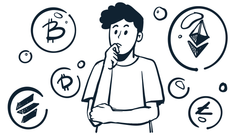
Most crypto mistakes happen in the first few weeks. Money is often distributed randomly, risks aren't assessed, and volatility is underestimated. That is why creating a crypto portfolio for beginners should start with understanding structure rather than picking individual coins. A well-built crypto portfolio helps manage risk and keeps your decision-making calm, even when the market is unstable.
How to Create a Crypto Portfolio and Choose a Strategy
First, define your financial goals. Do you want to preserve capital for the long term, or are you chasing fast growth? It is vital for beginners to choose coins consciously: understand what the coin is and check its market capitalization.
Invest only money you can afford to lose if something goes wrong. Start with a small amount–this lets you gain experience without risking your finances on a large scale.
Step 1. Define Your Investment Goal
Every crypto portfolio starts with a goal. Without one, money just "runs" back and forth between coins without logic. A goal sets the course and cuts out chaotic decisions. The same asset can be either perfect or dangerous–it all depends on why it is in your portfolio.
‘Risk arises not from the market, but from the lack of a plan.’
Step 2. Define Your Investment Term
The timeframe is just as important as the goal. If you plan to invest for the short term, you will have to track volatility almost daily. For the long term, the key is for digital assets to be resilient and the structure to be reliable. In this case, the market is a marathon, not a sprint.
Step 3. Choose Your Risk Strategy
Your strategy depends on one question: how calm can you stay during a market drop? A conservative plan focuses on coins with a massive market cap. A riskier model lets you join fast-growing projects, but it requires discipline and constant control.
Step 4. Set Your Rules Early
Without rules, a portfolio falls apart. Decide in advance how much money goes into crypto, which price swings are okay, and when to change the structure. It is like using a GPS: you have a route and adjust it based on facts, not emotions.
Diversification: Your Best Protection
The best way to lose less is to diversify. Don’t put everything into one asset; spread your money across different cryptos. A smart portfolio splits risk between market leaders and new, promising projects.
This setup saves your capital if one coin suddenly crashes. Using stablecoins also helps lower the overall "shake" of your portfolio. Just remember: diversification is a balanced choice, not just buying everything you see.
Tools for Effective Diversification
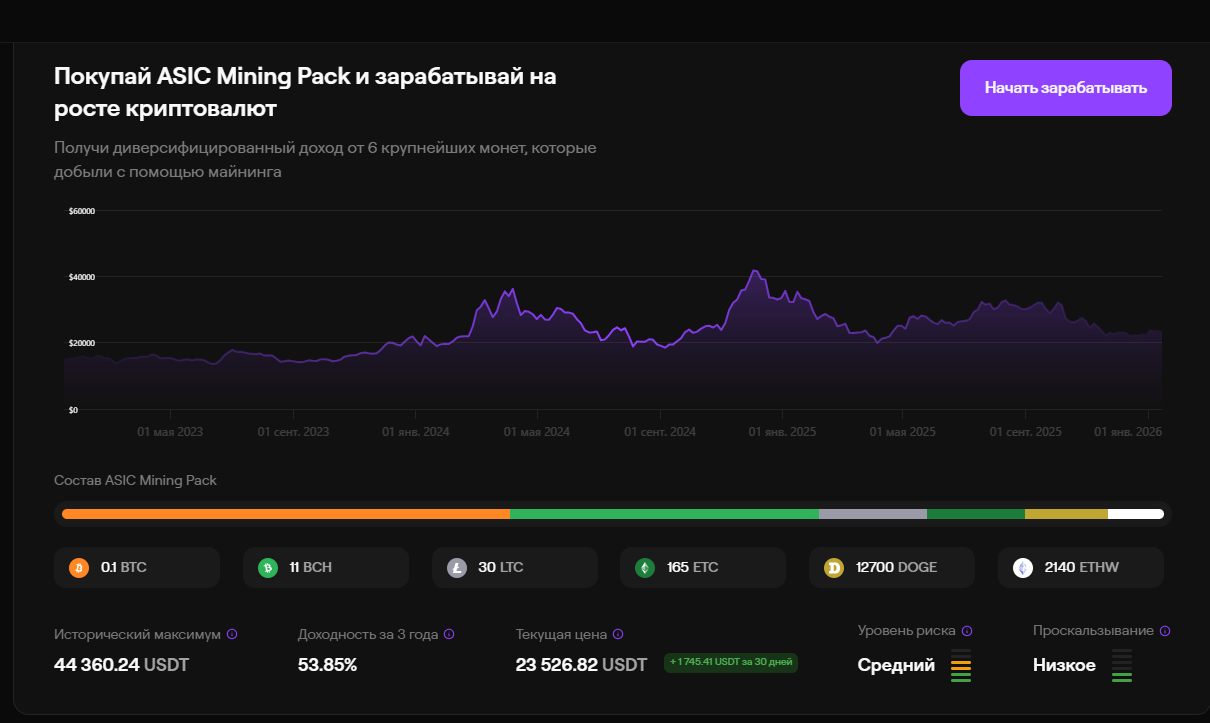
For those who don’t want to manage dozens of positions manually, the EMCD ecosystem offers Indesk. This tool lets you invest in crypto indexes–balanced sets of multiple assets–with just one click.
For example, the ASIC Mining Pack index by EMCD combines 6 major coins earned through mining. It lets you invest in the whole market at once instead of picking a single coin, which significantly lowers your risk of a mistake.
Indesk Parameters
| Parameter | Value |
| Minimum purchase | 155 USDT |
| Maximum purchase | 5000 USDT |
| Transaction fee | 1.5% |
| Index composition | From 2 to 10 coins |
Advantages of Indesk:
- One click instead of ten: You buy a ready-made set of assets without wasting time on each coin individually.
- Full transparency: You can always see the asset shares, their current price, and performance in the interface.
- Automation: The system handles the structure and token counts, removing the manual routine.
- Accessibility: Integrated with the EMCD ecosystem, so you can use mining profits or Coinhold funds to invest.
Bitcoin and Altcoin Ratio in Your Portfolio
Bitcoin is the base asset because it is the market leader with a massive market cap. Many experts suggest putting 30% to 50% of your funds into bitcoin to build a strong foundation. This helps your investment portfolio stay stable even when the market is shaking.
The share of altcoins shows how much you could potentially earn, but it also increases your total risk. You choose the ideal ratio yourself. If you are conservative, keep their share low. If you want an aggressive approach, you can give them more than half of your assets.
Risk Management in Crypto
Good risk management helps control potential losses. Your main goal is to protect your capital when the market falls and let it grow during a bull trend. Again: only invest money that won’t change your lifestyle if you lose it.
In the long run, the market usually forgives small timing mistakes if you stay disciplined. To survive the storm when volatility is high, use protective assets like stablecoins. They also act as "free cash" to buy at great prices when the market dips.
How to Evaluate a Crypto Asset Before Buying
Research a coin well before adding it to your portfolio. To judge the risks, check these key points:
- Market Cap: Big projects are more stable than small ones with low liquidity
- Price History: Check how much the price swings when the rest of the market falls
- Team Reputation: Public data and an active community reduce the chance of a scam
- Real Value: It is better if the project has a real-world use, not just hype
Risk Assessment Criteria
| Criteria | Low Risk | High Risk |
| Market Cap | Market Top 10 | Outside Top 200 |
| Liquidity | High on major exchanges | Low, only on local sites |
| Transparency | Public audit and whitepaper | Anonymous team, no docs |
A Low-Volatility Crypto Portfolio
If you want to sleep soundly, build a low-volatility portfolio. This type of portfolio uses assets that have already proven they are reliable.
The main parts are stablecoins and bitcoin. Keep risky altcoins to a minimum. This helps your capital grow steadily. To make your money work for you, use tools like Coinhold at EMCD for passive income.
How Many Coins Should You Have?
As a beginner, you need to find a middle ground to keep everything under control. Too few assets make you dependent on one project. Too many, and you won’t be able to track important news.
The best range is between 5 and 12 different digital assets. This is enough for diversification without requiring you to manage your money 24/7.
Example distribution:
- Core (50-60%): BTC and Ethereum as the most reliable foundations.
- Stability (20-30%): Stablecoins or ready-made Indesk indexes.
- Growth (10-20%): Promising mid-cap altcoins.
Crypto Portfolio Rebalancing: How Often to Update
Rebalancing is simply restoring the asset proportions you originally set. Over time, some coins grow faster than others, which shifts your risk level. By selling some of the growth and buying assets that dipped, you lock in profits and keep your balance.
How often you rebalance depends on your strategy. Usually, people do it once a quarter or if an asset’s share shifts by more than 10%. With Indesk, a risk team handles this for you.
To build a great portfolio, find the balance between risk and reward. Spread your investments, use reliable tools, and check your structure regularly. Discipline is your secret to long-term success.
FAQ
1. How do I build my first crypto portfolio?
Start by splitting your funds between stablecoins and high-cap assets like bitcoin. You can follow ready-made strategies or pick coins yourself. The main goal is to balance your holdings to protect against market drops
2. What role does bitcoin play in investing?
Bitcoin is the foundation of any strong portfolio. Its movement usually sets the tone for the whole market. Most investors keep their main capital in BTC. Understanding how it relates to altcoins helps you plan better trades
3. What is risk management?
It is a way to control your potential losses. You decide in advance how much of a drop you can handle and never put all your money into one asset. This keeps you disciplined and calm
4. How do I choose a coin to buy?
Always research a coin before adding it to your list. Check the team behind it and the project’s real-world value. A deep check reduces the chance of losing money on bad projects
5. What is the best asset ratio?
The right balance depends on your goals. Conservative investors usually prefer more bitcoin. Your own comfort with price swings should decide how many risky tools you use
6. Do I need to watch charts all the time?
Avoid checking your balance too often. This prevents emotional decisions. It is better to stick to your plan and rebalance occasionally. This helps you find the best moments to take profits
7. How do I start using crypto in daily life?
Any crypto solution should be simple and clear. Start by choosing a reliable wallet and learning the basics. Understanding the value of bitcoin is your first step toward financial literacy